
Lieferung heute & morgen

Qualitätsgarantie

Willkommens-Angebote freischalten: KOSTENLOSE Lieferung | Bis zu 80 % RABATT | Kostenlose 30-Tage-JoyPlus-Testphase
App herunterladen
Cleaning hard floors like parquet, tile, or laminate can be time-consuming, especially when vacuuming and mopping are separate chores. In homes with children or pets, floor care can quickly become a daily task. A cordless wet & dry vacuum combines these two processes, offering an efficient solution that saves time while achieving a high level of cleanliness.
As your Joybuy Product Recommendation Officer, my mission is to provide you with clear, objective guidance in the market of wet & dry vacuums. This article highlights key features to look for when making your selection and presents a curated list of models for 2026 to help support your purchasing decision.
Technology in household appliances is advancing rapidly. To find a device that meets your specific needs, several technical features are particularly important.
A key advantage of modern devices is the wet & dry vacuum with self-cleaning. After cleaning your floors, the brush roller is automatically cleaned in the base station. High-end models use hot water (e.g., 70°C or 100°C) to effectively dissolve stuck-on dirt and greasy residue. Subsequent hot air drying prevents the growth of bacteria and unpleasant odours. Some devices also offer sterilisation using electrolysed water, which allows for chemical-free disinfection of your floors—an important feature for households with toddlers or allergy sufferers.
Dirt often collects along baseboards and in corners. Look for models with an edge-to-edge brush design that enables thorough cleaning right up to the wall. A flexible joint is also practical, allowing the wet & dry vacuum to glide flat under furniture like sofas or beds. A tilt angle of up to 180° is a good indicator of high flexibility.
Suction power, often measured in Pascals (Pa), is a key indicator of the device's ability to pick up both dry and wet debris. Values around 20,000 Pa are a good benchmark for powerful performance that can also tackle pet hair. The battery runtime should be suitable for the size of your home. Runtimes of 40 minutes or more are generally sufficient for cleaning areas up to 300 m?. Intelligent sensors that detect the level of dirt and automatically adjust suction power and water flow contribute to a more efficient clean and longer battery life.
Based on the criteria mentioned above, we have compiled a selection of models that stand out for their technical specifications and features.
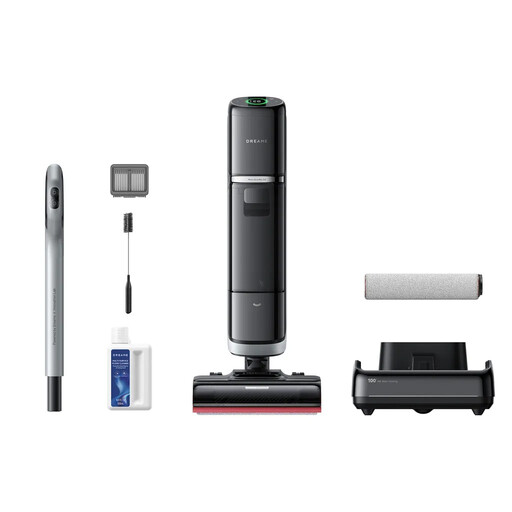
Why It Stands Out: The Dreame H15 Pro focuses on intensive cleaning with heat. Its ThermoRinse technology dispenses 85°C hot water directly onto the brush during operation to dissolve stubborn messes like oil and dried-on stains. After cleaning, it performs a ThermoTub Self-Cleaning cycle at 100°C in its station.
Pros:
Who Is It For? This model is ideal for households with high hygiene standards and for the demanding task of cleaning kitchen floors. Tech-savvy users who value automated and deep cleaning will find this to be an excellent solution.
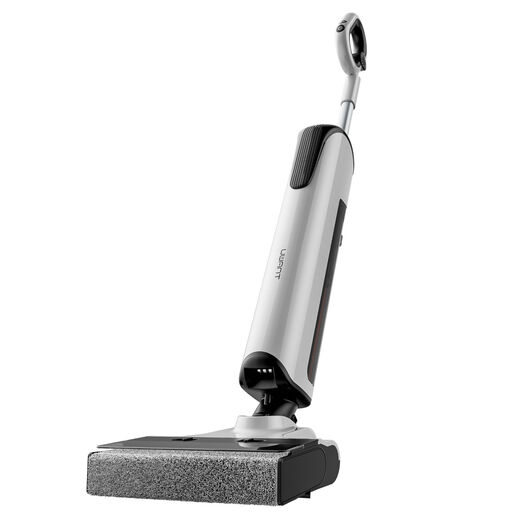
Why It Stands Out: The UWANT D700 focuses on chemical-free hygiene and user-friendliness. It generates electrolysed water that, according to the manufacturer, eliminates 99.9% of germs. Its edge cleaning is particularly precise, with a gap of just 2 mm to the wall. The push-in base station simplifies docking after use.
Pros:
Who Is It For? The UWANT D700 is aimed at users with large living spaces who are looking for a hygienic yet eco-friendly cleaning solution. Its simple operation makes it a great choice for anyone who values convenience.

Why It Stands Out: The Deerma VX200 is equipped with a dual brush roller system that rotates at 840 RPM to deliver double the cleaning power in a single pass. Its bi-directional drive system makes it easy to manoeuvre forwards and backwards.
Pros:
Who Is It For? This model is a great option for households with high levels of dirt, such as those with multiple pets. The dual brush provides enhanced mechanical cleaning power that is effective even on heavily stuck-on grime.
The models featured here already cover a wide range of requirements. If you haven't found the perfect device for your specific needs or would like to get a more comprehensive overview, you can find more alternatives in our Wet Dry Vacuums category.
A vacuum with a mopping function operates on a two-tank system. One tank is filled with fresh water, while the second tank collects the dirty water that is vacuumed up. A rotating brush roller is continuously moistened with clean water, scrubbing the floor and picking up dissolved dirt and loose particles. The suction then transports the dirty water directly into the separate tank, ensuring you are always cleaning with fresh water.
Yes, most modern wet & dry vacuums are suitable for sealed hard floors, including parquet and laminate. However, it is important to choose models with adjustable water flow to avoid oversaturating the floor. Always follow the device manufacturer's instructions and the care guidelines for your specific flooring. Special caution is advised for unsealed or oiled wood floors.
It is recommended to activate the self-cleaning function after every use. This ensures the brush roller remains hygienically clean and ready for its next job. Regular self-cleaning prevents the build-up of dirt, the growth of bacteria, and the development of unpleasant odours, which helps maintain the device's lifespan and cleaning performance.