
Lieferung heute & morgen

Qualitätsgarantie

Willkommens-Angebote freischalten: KOSTENLOSE Lieferung | Bis zu 80 % RABATT | Kostenlose 30-Tage-JoyPlus-Testphase
App herunterladen
Maintaining hard floors in a busy household can be a recurring challenge. Whether it's spilled liquids in the kitchen, muddy paw prints in the hallway, or everyday crumbs under the dining table, the combination of vacuuming and then mopping costs time and effort. A cordless wet-dry vacuum combines these two steps, offering an efficient solution to clean hard floors like parquet, tile, or laminate in a single pass.
This article serves as a guide. We will introduce the crucial criteria to consider when selecting a wet-dry vacuum and present a selection of models with different feature sets to help you make your decision.
Technological advancements in recent years have significantly improved the performance and convenience of wet-dry vacuums. To find the right device for your needs, you should consider the following aspects.
The core function of a wet-dry vacuum is to pick up both dry and wet debris. Suction power, often specified in Pascals (Pa), is an indicator of how powerfully the device picks up particles and liquids. For households with pets, a wet-dry vacuum for pet hair with high suction power and a brush system that effectively collects hair without tangling is particularly important.
Models with dual brush rollers can increase cleaning performance per pass, as the floor is scrubbed and polished simultaneously. This is especially beneficial for stubborn, dried-on stains.
One of the most important convenience features of modern devices is the wet-dry vacuum with self-cleaning. After cleaning the floors, the device cleans itself in its station. High-end models use hot water (e.g., 70°C) for this purpose to hygienically clean the brush roller and dissolve greasy residues.
Subsequent hot air drying prevents the growth of bacteria and unpleasant odours in the brush and the device. Some vacuums also offer sterilisation of the mopping water through electrolysis, enabling chemical-free floor hygiene that is safe for children and pets.
The efficiency of a hard floor cleaner is also evident in its handling. A crucial detail is the capability for edge cleaning. Models with an edge-to-edge brush design can pick up dirt right along baseboards and in corners, making manual follow-up work unnecessary.
For larger living spaces, battery life is a key factor. Runtimes of around 40 minutes have become a good standard, allowing for the cleaning of areas over 100 m? without interruption. An assisted drive system (forward and reverse) also makes maneuvering the device easier and reduces physical effort.
Based on the criteria mentioned, we have compiled a selection of devices that are suited for different user profiles due to their specific features.

Why it stands out: The Deerma DEM-VX900W focuses on maximum automation and convenience. The all-in-one base station not only handles self-cleaning and hot air drying but also automatically refills the vacuum's fresh water tank. An additional 5-litre tank in the station ensures that enough water is available for multiple cleaning sessions.
Advantages:
Who it's for: Ideal for users in large houses or apartments who are looking for a time-saving, low-maintenance cleaning solution with a high standard of hygiene.

Why it stands out: The Deerma VX200 is designed for maximum cleaning performance. Its dual brush roller system scrubs the floor at 840 revolutions per minute, according to the manufacturer, ensuring an intensive deep clean. The hygiene functions are also comprehensive: self-cleaning is performed with 70°C hot water, followed by 70°C hot air drying. Additionally, the device sterilises the mopping water via electrolysis.
Advantages:
Who it's for: Perfect for demanding households, especially those with children or pets, where maximum cleanliness and germ reduction are a top priority.
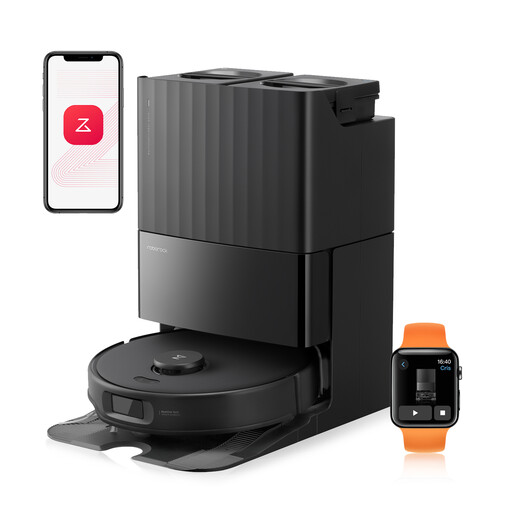
Why it stands out: As a robot vacuum and mop, the Roborock Qrevo Edge presents an alternative to a manual vacuum with a mopping function. It cleans floors completely autonomously. Its special feature is the FlexiArm Design, an extendable mop that precisely reaches edges and corners. The station washes the mops with 75°C hot water and then dries them to ensure hygiene.
Advantages:
Who it's for: For tech-savvy users and busy individuals who prefer a "set-it-and-forget-it" solution and want to fully automate the cleaning process.
If our recommendations don't include the right device for you, or if you are interested in other product worlds, it's worth taking a look at our Designer Skirt category.
After the device is placed in its base station, the self-cleaning cycle begins. During this process, the dirty brush roller is rinsed with fresh water from the tank. The dirty water is suctioned into a separate container. Advanced models use heated water for a better clean and then dry the brush with warm air to prevent odours and mould build-up.
Most modern cordless wet-dry vacuums are designed for sealed hard floors, including parquet and laminate. They release only a controlled amount of water, so the floor does not become oversaturated. However, it is always advisable to check the specifications from both the flooring and the device manufacturer. Special care is recommended for delicate or oiled wood floors.
A cordless wet-dry vacuum (also known as a floor washer) uses a rotating, damp brush roller that actively scrubs the floor while simultaneously suctioning up dirt and excess water. A classic vacuum with a mopping function is often a standard vacuum cleaner with an attached water tank and a microfibre cloth. This cloth is dampened and passively wipes the floor, which is more suitable for removing light dust than for stubborn stains.