
Lieferung heute & morgen

Qualitätsgarantie

Willkommens-Angebote freischalten: KOSTENLOSE Lieferung | Bis zu 80 % RABATT | Kostenlose 30-Tage-JoyPlus-Testphase
App herunterladen
A cordless wet-dry vacuum can pick up dust, crumbs and wet messes in one go. For homes with tiles, vinyl, laminate or sealed parquet, this is a practical solution. However, the devices differ significantly in battery life, water management, edge cleaning and maintenance effort.
If you only look at a high Pa rating or a long runtime, you often miss important details. Three typical buying misconceptions are particularly relevant:
A wet-dry vacuum works with a clean water tank and a dirty water tank. The capacity determines how often you need to refill or empty it while cleaning. Small tanks can be sufficient for flats and often allow a more compact design. For large areas, larger containers are more practical.
It is also important whether the wet-dry vacuum reliably picks up liquid after mopping. If too much water is left on the floor, this can be problematic with sensitive laminate, parquet or cork. With these materials, you should only work as damp as the floor manufacturer permits.
A base station with roller washing and drying reduces the manual maintenance effort. However, it does not replace the regular inspection of the tank, filter and suction channel.
The stated runtime of a cordless wet-dry vacuum usually refers to a specific cleaning mode. For your buying decision, several values are therefore relevant:
Models with a 180-degree lie-flat function can reach under sofas, beds or cupboards. Also check the specific lying height. A device that is 13 or 15 cm high will not automatically fit under every piece of furniture.
With many devices, a narrow strip remains along skirting boards or furniture edges. A designated edge cleaning feature can reduce this area, but should not be equated with completely gap-free cleaning.
For households with pets, anti-hair wrap is useful. Nevertheless, hair must be regularly removed from the roller, side brushes and suction opening. Look for easily removable components and available replacement rollers.
The following selection organises models according to specific usage situations. Details such as suction power, tank volume, weight and runtime come from the respective product information.
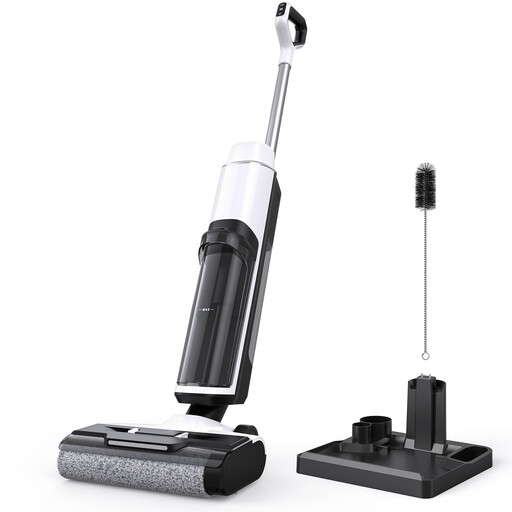
Why this product fits the profile: This model combines cordless cleaning with three modes, self-cleaning and a maximum runtime of up to 30 minutes. With a 910 ml fresh water tank and a 600 ml dirty water tank, it is suitable for regular cleaning routines on hard floors.
The designated self-cleaning addresses the maintenance effort after mopping. However, the runtime should still be planned according to your floor area and the selected mode.
15,000 Pa maximum suction power, dual side brushes and a dirty water tank with a 600 ml capacity.
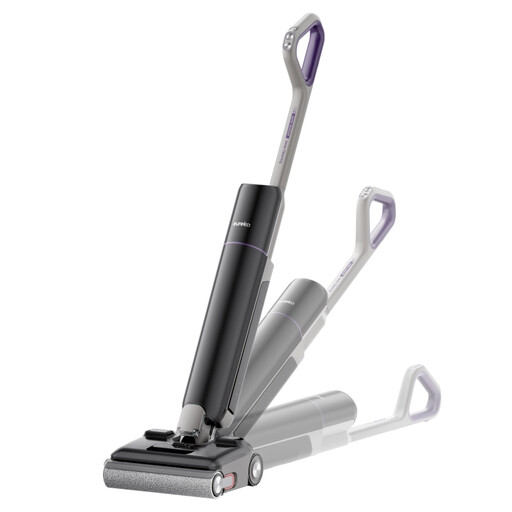
Why this product fits the profile: This device is interesting for users who want to combine reach, edge treatment and automated roller maintenance. The product data states 24,000 Pa, up to 60 minutes runtime and a 180-degree lie-flat design with a height of 13 cm.
The specification of three sides for edge cleaning makes the relevant criterion more understandable than a general advertising claim. Use remains limited to suitable indoor hard floors.
100-degree roller self-cleaning with subsequent 5-minute drying, plus DirtSense for automatic adjustment of cleaning performance.
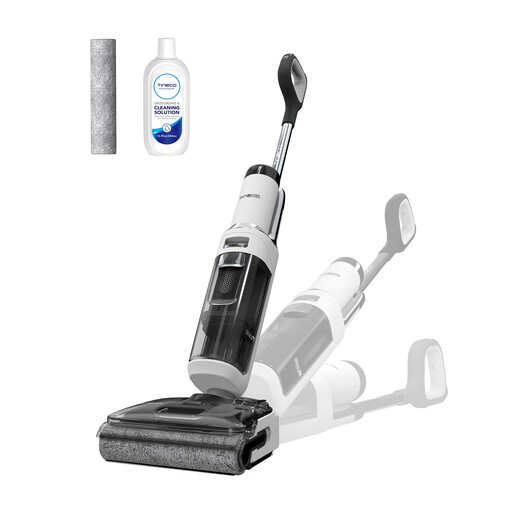
Why this product fits the profile: For regular cleaning under low furniture, this model offers a 180-degree flat design with a 13 cm lying height. It is intended for indoor hard floors such as vinyl, tiles, laminate and sealed wood.
The three-sided edge cleaning and the designated FlashDry self-cleaning address two common weak points. The roller and filter still need to be maintained according to the instructions.
Up to 40 minutes runtime, 70-degree roller washing and a stated 5-minute drying in the station.
A hard floor cleaner with a roller picks up dirt and liquid in one pass. It suits households that regularly want to remove crumbs, spilled drinks or paw prints.
A steam cleaner, on the other hand, works with heated water and, depending on the model, requires a power cable. It does not necessarily suck up liquids and is not suitable for every floor. With laminate, parquet, cork and sensitive coatings, you must follow the manufacturer's instructions. A steam cleaner is mainly useful if you also want to clean grout, glass, kitchen areas or certain textiles.
A classic floor mopping machine can be suitable for larger areas, but is often heavier or less flexible. For daily use in a flat, weight, turning circle and storage are therefore important counter-arguments.
In addition to the purchase price, ongoing costs arise from:
Only use the approved cleaning solutions. With the Eureka FloorShine 880, for example, the use of the intended Eureka cleaning solution is recommended. Additional acidic or alkaline agents can cause foaming or damage.
After each use, the dirty water tank and roller should be emptied or rinsed. Even a floor cleaner with self-cleaning should not be left permanently with damp components in the station if no drying function is provided.
We have compiled a complete, regularly updated list of products that fully meet these strict selection criteria and the safety regulations in force in the EU.
That depends on the sealing and the specifications of the floor manufacturer. Choose a low water output and avoid standing moisture. Sealed wood is explicitly mentioned for some models; untreated parquet is not automatically suitable.
The runtime is often between approximately 30 and 60 minutes, depending on the model and cleaning mode. For a realistic assessment, you should consider the intensive mode, the charging time and the size of the area to be cleaned.
Yes. Dirty water should be emptied promptly, and the roller and filter should be rinsed and dried according to the instructions. The self-cleaning function reduces individual steps, but does not replace basic maintenance.