
Lieferung heute & morgen

Qualitätsgarantie

Willkommens-Angebote freischalten: KOSTENLOSE Lieferung | Bis zu 80 % RABATT | Kostenlose 30-Tage-JoyPlus-Testphase
App herunterladen
A cordless wet & dry vacuum promises to tackle two of the least favourite household chores—vacuuming and mopping—in a single, quick step. The idea of saving time and effort is tempting. However, the market is flooded with devices making grandiose marketing claims that often fail to deliver in practice. Before you make a purchase, it's crucial to understand the common pitfalls that can lead to disappointment and an unused appliance collecting dust in a corner.
As your Joybuy Product Recommendation Officer, I'll help you navigate through the marketing noise. We will focus on the objective features that truly matter and uncover three common flaws that only become apparent after purchasing many models:
To avoid a bad purchase, don't be swayed by marketing buzzwords; rely on verifiable technical data instead. Three key metrics are crucial for the performance and longevity of a vacuum with a mopping function.
Suction power, often specified in Pascals (Pa), describes the vacuum pressure the device can generate. A higher Pa value is a good indicator of its ability to reliably pick up heavier debris, fine dust from crevices, or stubborn pet hair. For a wet-dry vacuum, a range between 15,000 Pa and 25,000 Pa is a solid benchmark for most hard floor applications. Also, pay attention to the motor power in Watts (W), as it is directly related to suction strength.
Battery capacity is measured in milliampere-hours (mAh). A higher capacity potentially allows for a longer runtime. However, the crucial figure is the manufacturer's stated runtime in standard or auto mode, not the maximum time in eco mode. For an average 80 m? (approx. 860 sq ft) home, you should plan for a runtime of at least 30-40 minutes in standard mode to avoid a multi-hour charging break in the middle of cleaning.
A high-quality cleaning station is more than just a charging dock. It should not only rinse the brush roller with fresh water but also feature integrated hot air drying. This is the only way to completely remove residual moisture and effectively prevent the growth of germs and odours. This is a critical feature for the long-term hygiene and maintenance convenience of the device. A wet & dry vacuum with self-cleaning and a drying function represents significant added value.
Instead of making a one-size-fits-all recommendation, we have identified models that offer specific solutions for different types of households and their unique requirements.
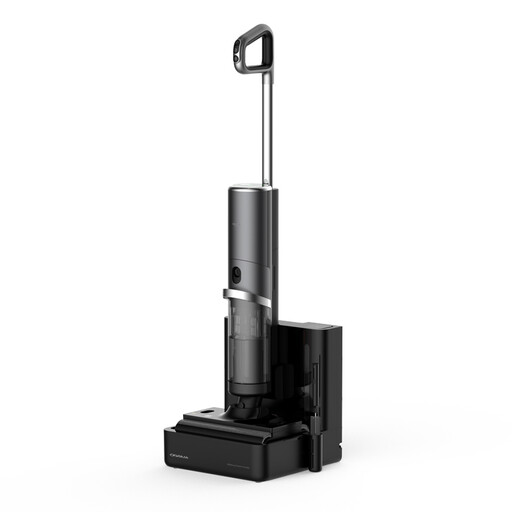
Why This Fits Their Persona: Ideal for large households where efficiency and low maintenance are top priorities. The long runtime and fully automated station minimise interruptions and manual intervention.
The all-in-one base station, with automatic water refilling and hot air drying, completely solves the hygiene problem of damp, smelly brush rollers.
40-minute runtime for large areas; station with a 5L auxiliary fresh water tank and hot air drying for maximum autonomy.
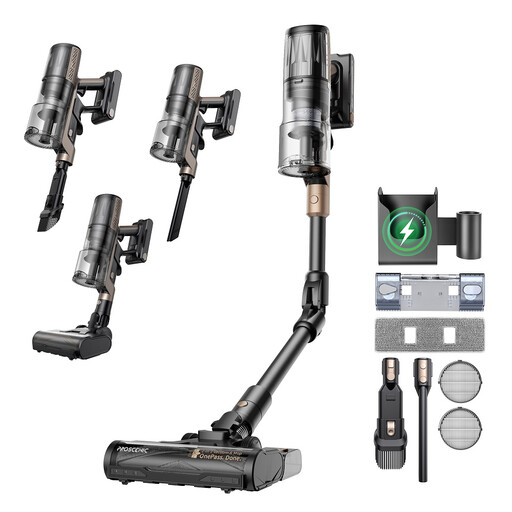
Why This Fits Their Persona: Engineered for the challenges of pet hair. The combination of high suction power and a special brush design ensures efficient hair pickup on both hard floors and carpets.
The V-shaped anti-tangle brush with serrated blades actively cuts through hair, preventing the annoying tangles that are a common problem with conventional brush rollers.
High suction power of 70 kPa (according to the manufacturer) for deep-seated dirt; 6-stage HEPA filtration system that traps 99.9% of particles.
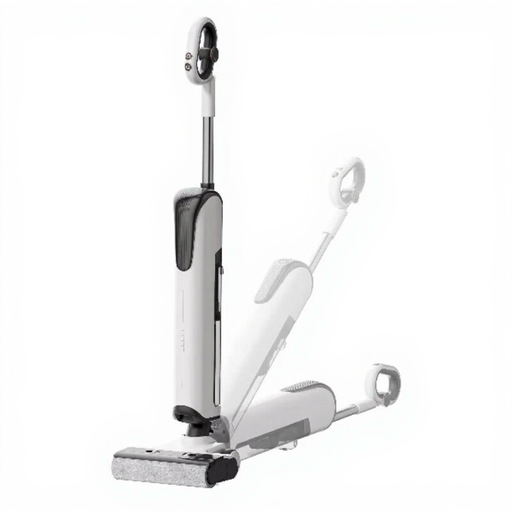
Why This Fits Their Persona: Perfect for homes with lots of furniture and hard-to-reach areas. Its slim design and high manoeuvrability allow for a thorough clean without having to move furniture.
The design allows for edge cleaning with a gap of just 2-4 mm and can reach under furniture as low as 13.5 cm, thus avoiding the typical cleaning gaps.
Slim design for cleaning under furniture; 60°C air drying in the docking station to prevent odours; IPX6 waterproof brush for easy manual cleaning.
We have compiled a complete, up-to-date list of products that fully meet these strict selection criteria and German safety regulations.
For daily and weekly cleaning of hard floors like tile, laminate, or sealed parquet, a cordless vacuum and mop can replace both appliances and significantly reduce your workload. For high-pile carpets, a specialised vacuum cleaner is still recommended. Likewise, very dried-on or sticky stains may require manual pre-treatment.
Yes, most modern devices are suitable for sealed wood floors. It is crucial to choose a model where the water output is adjustable. For sensitive floors like parquet or laminate, the lowest water setting should be used to prevent moisture from seeping into the joints. Models like the UWANT D100 offer special modes for wood floors with minimal water usage.
Maintenance intervals depend on the frequency of use and the type of dirt. It is recommended to empty and rinse the dirty water tank after each use. The HEPA filter should be cleaned under running water every 1-3 months, according to the manufacturer's instructions, and allowed to dry completely. Replacing the filter is generally advisable every 6-12 months. The brush roller should be regularly checked for trapped hair or debris and, on models without a drying function, should be manually set out to air dry.