
Lieferung heute & morgen

Qualitätsgarantie

Willkommens-Angebote freischalten: KOSTENLOSE Lieferung | Bis zu 80 % RABATT | Kostenlose 30-Tage-JoyPlus-Testphase
App herunterladen
A single device that vacuums and mops simultaneously—the cordless wet dry vacuum promises to be a significant time-saver for floor cleaning. However, the market is flooded with models making bold advertising claims. All too often, what seems like a helpful gadget turns out to be a bad investment after just a few months. Certain design flaws and exaggerated marketing specs frequently lead to frustration and unnecessary expenses.
This guide, created by the Joybuy Product Recommendation Team, reveals the three most common pitfalls to avoid when buying and explains which technical features you should really focus on to find a suitable and durable device for your home.
Many devices look convincing at first glance, but the devil is in the details. Pay close attention to these three points to avoid disappointment:
To avoid the problems mentioned above, you should look at the objective performance data before making a purchase. These three parameters are crucial for the functionality and longevity of a cordless hard floor cleaner.
Instead of relying solely on the advertised runtime, you should use the battery capacity as a benchmark for comparison. This is specified in milliampere-hours (mAh) and volts (V). A battery with 4000 mAh at 21.6 V generally offers more solid and consistent performance than a smaller battery. Also, pay attention to the charging time: a device that takes four to five hours to charge should provide a reasonable usage time. Models with a swappable battery offer additional flexibility for cleaning large areas.
An effective cordless wet-dry vacuum always operates with a dual-tank system. This ensures that dirty water is collected separately from the fresh water, so you are always mopping with clean water. For self-cleaning, models with hot water rinsing and integrated hot air drying are the more advanced choice. These features significantly reduce maintenance and prevent the build-up of bacteria and odours in the brush roller.
For a thorough clean, especially as a vacuum mop for pet hair and stubborn dirt, the brush design is key.
Based on the objective criteria mentioned above, we have compiled a selection of devices that are suitable for different user profiles and needs.
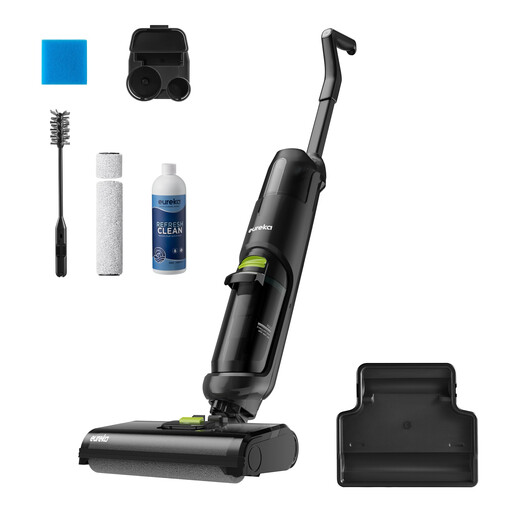
Why this model is a good fit: It offers core functions like vacuuming, mopping, and self-cleaning in an accessible package. Ideal for small to medium-sized apartments or as a solid entry-level device that reliably performs the basic tasks of a vacuum mop.
The advertised runtime of up to 30 minutes is realistic for standard cleaning tasks. The self-cleaning function thoroughly rinses the brush and hose, preventing immediate build-up.
The self-propelling feature assists with forward movement, making it easier to handle. The dual-tank system ensures consistently hygienic cleaning with fresh water.
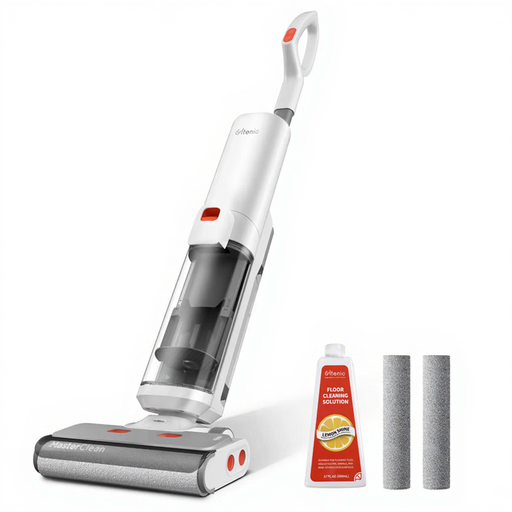
Why this model is a good fit: With extra-large water tanks (1 litre) and a long runtime of up to 45 minutes, this device is designed for large areas and households with high cleaning demands, such as those with children and pets.
The dual edge cleaning effectively captures dirt along baseboards. The large 4000 mAh battery delivers a practical runtime that is impressive even outside of Eco Mode.
The large tanks allow for cleaning up to 185 m? without interruption. The water volume can be adjusted via an app to suit the floor type, which is particularly beneficial for sensitive floors.
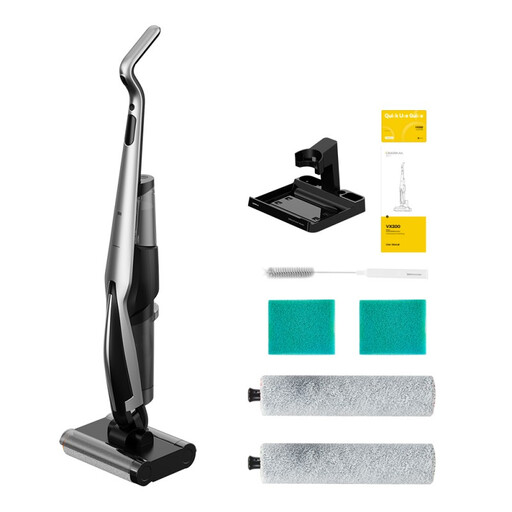
Why this model is a good fit: This device is aimed at users who place the highest value on hygiene, convenience, and low maintenance. It combines powerful cleaning performance with advanced self-cleaning technologies.
The self-cleaning with 70°C hot water and subsequent hot air drying actively combats the main cause of odours and mould—a damp brush roller. The strong suction power of 22,000 Pa ensures effective dirt removal.
The dual brush roller provides an intensive clean. Additionally, the electrolysed water sterilisation feature allows for hygienic floor care without the use of chemical cleaning agents.
We have compiled a complete, up-to-date list of products that fully meet these strict selection criteria and German safety regulations.
No, it is strongly recommended to only use low-foaming cleaning solutions specified by the manufacturer or those suitable for vacuum mops. Conventional floor cleaners can create excessive foam and damage the device's sensors and motor. Some models, like the Deerma VX200, even offer chemical-free cleaning through electrolysed water.
The lifespan of consumables depends on the frequency of use and the type of dirt. As a general rule, filters should be replaced every 3 to 6 months to ensure optimal suction power and air quality. The brush roller is more durable but should be replaced when it shows visible wear, typically after 6 to 12 months. Regular cleaning after each use significantly extends the life of both components.
Most cordless wet dry vacuums are well-suited for sealed hard floors such as laminate, tile, vinyl, and sealed parquet. Caution is advised for sensitive, unsealed, or oiled wood floors. For these, choose a model where the water output can be manually controlled and reduced to a minimum to prevent the wood from swelling. Always read the instructions from both the flooring and the device manufacturer.