
Lieferung heute & morgen

Qualitätsgarantie

Willkommens-Angebote freischalten: KOSTENLOSE Lieferung | Bis zu 80 % RABATT | Kostenlose 30-Tage-JoyPlus-Testphase
App herunterladen
A cordless leaf blower can clear leaves, dust, grass clippings and light snow from lawns, driveways, patios or garages without a power cable. At first glance, choosing one seems simple: insert the battery, start the airflow and get to work. In practice, however, unclear performance specifications, short runtimes and unsuitable designs often lead to disappointing purchases.
This guide explains which details really matter when choosing a cordless leaf blower and which model may suit different usage profiles.
High speeds such as 40,000 or 800,000 rpm may sound impressive, but on their own they reveal little about usable performance. Air speed, airflow volume, nozzle design and the ability to adjust the airflow are also important.
A lower setting is usually sufficient for dry leaves on a patio. Wet grass or a dense pile of leaves may require a stronger airflow. A leaf blower with multiple speed settings is therefore more practical for adapting to different tasks.
The Ah rating describes the battery’s electrical capacity, but it is not a reliable substitute for a specific runtime figure. Actual operating time depends on factors including the power setting, temperature, battery age and breaks during use.
If you are working on larger properties, look for a leaf blower with 2 batteries or a kit that includes a spare battery and charger. It is also important to check whether both batteries are used at the same time, used alternately or simply kept as a reserve.
An inexpensive bare tool is not automatically a complete kit. Check whether the battery and charger are included, which nozzles are supplied and whether replacement batteries can be purchased. With battery platforms such as Makita or DeWalt, compatibility should not be judged by shape alone. The voltage, contacts and manufacturer approvals must all match.
Air speed is often stated in m/s or mph. It describes how quickly air exits the nozzle. Airflow volume may be specified in m³/h or CFM, for example, and describes how much air is moved over a given period.
When making your choice:
Descriptions such as leaf and snow blower should therefore always be considered alongside the specific airflow performance data. A compact cordless leaf blower is not automatically suitable for heavy, wet snow.
A leaf blower with battery and charger is ready to use, provided the battery is sufficiently charged. For occasional jobs on a small patio, a single battery may be enough. For longer periods of use, two batteries, a higher capacity and a charger with a suitable charging time are worthwhile.
Pay attention to:
A lightweight handheld leaf blower is practical for short jobs and for cleaning vehicles, furniture or hard-to-reach areas. A rotating handle can help you adjust your posture when working at ground level or overhead. A leaf blower with a brushless motor is often promoted as requiring less maintenance; nevertheless, the air intake, fan and housing should be regularly cleared of debris.
When using the tool, safety goggles and hearing protection are appropriate personal protective equipment. Keep children, pets and bystanders away. Never point the nozzle at people or animals, and disconnect the battery from the tool before carrying out cleaning or maintenance work.
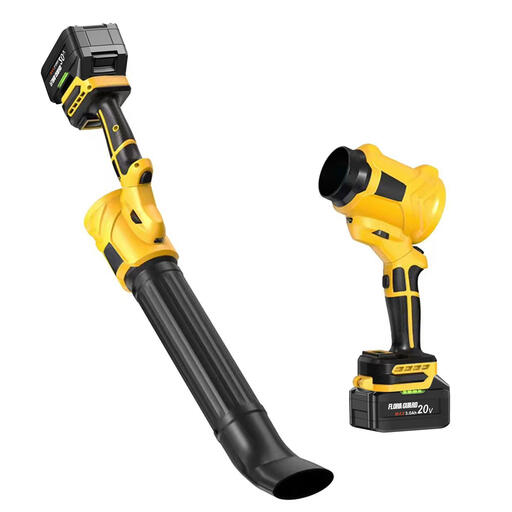
Why this product suits the profile: The set includes two 4000 mAh batteries, a charger and six speed settings. This makes it suitable for small to medium-sized cleaning jobs around patios, garages and paths.
The six settings avoid a simple on-off control. According to the product details, the battery and charger are included.
600-watt brushless motor, maximum wind speed of 50 m/s and a handle that rotates through 180°.
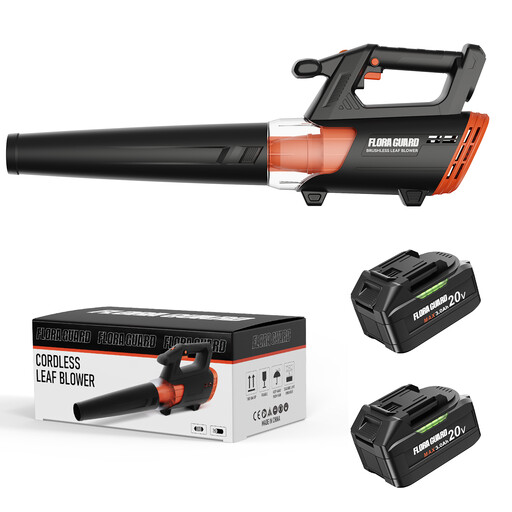
Why this product suits the profile: The combination of 600 CFM, 190 mph, a brushless motor and six settings provides clearly stated technical specifications for users who like to compare products in detail before buying.
Airflow volume and air speed are stated separately. This makes it easier to assess the product against offers that specify only a rotational speed.
600 CFM airflow volume, 190 mph wind speed, six settings and an ergonomic handle.
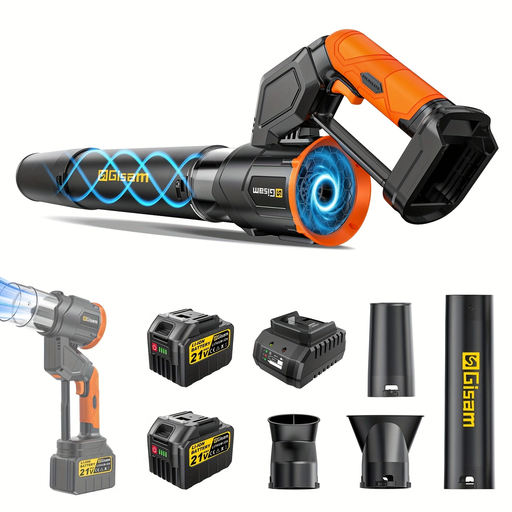
Why this product suits the profile: Two 6.0 Ah batteries, three speed settings and a handle that rotates through 180° appeal to users who want to tackle lawns, driveways, vehicles and elevated areas with one tool.
The adjustable handle position and three included nozzles cover ground-level, overhead and detailed work instead of offering just one standard position.
Two 6.0 Ah batteries, three nozzles, a brushless motor and airflow of up to 850 m³/h according to the product details.
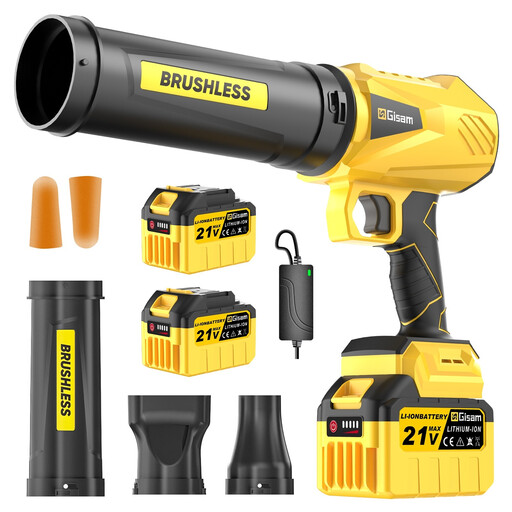
Why this product suits the profile: The low tool weight without the battery and variable-speed control make it appealing for vehicle care, workshops, narrow areas and short cleaning sessions.
Variable-speed control allows finer adjustment than fixed speed settings. Before buying, check the actual battery capacity on the product page.
Variable airflow control, three nozzles, low tool weight and two batteries according to the product description.
We have put together a complete, regularly updated list of products that fully meet these strict selection criteria and the safety regulations applicable in the EU.
There is no universally applicable runtime. It depends on the battery capacity, selected setting, temperature and condition of the battery. Manufacturer specifications should therefore be treated as a guide. For longer jobs, two batteries or an additional spare battery are worthwhile.
Light, dry snow can be cleared depending on the airflow performance and nozzle. A handheld tool may not provide enough power for wet, heavy or compacted snow. Also check the safety instructions and do not use the tool on slippery or unsuitable surfaces.
Running costs mainly come from charging the battery. They can be roughly calculated using the battery voltage, capacity, charging losses and your individual electricity tariff. A kit with two batteries often costs more to buy, but provides more stored energy for longer periods of use.