
Lieferung heute & morgen

Qualitätsgarantie

Willkommens-Angebote freischalten: KOSTENLOSE Lieferung | Bis zu 80 % RABATT | Kostenlose 30-Tage-JoyPlus-Testphase
App herunterladen
A cordless wet and dry vacuum cleaner can pick up crumbs, dust and spilled liquids from hard floors in a single pass. This is practical for families, pet owners and car owners who want to clean regularly without a power cable. However, these appliances vary considerably in terms of tank design, battery life and maintenance requirements.
A rating such as 15,000 or 22,000 Pa describes the maximum suction power under certain conditions. On its own, it says little about how effectively the brush roller picks up liquid or whether streaks are left behind after mopping. Other key factors include the design of the floor roller, the water supply and the extraction of dirty water.
A cordless wet vacuum with a small clean-water tank may need frequent refilling in larger homes. Similarly, a stated runtime may apply only to Eco or Standard mode. Check how long the appliance runs in your preferred mode and whether the tank capacity is suitable for the area you want to clean.
A vacuum cleaner with self-cleaning will usually rinse the brush roller and parts of the internal system. The dirty-water tank still needs to be emptied and rinsed. Hair, filters and the roller also require regular care. If water remains inside the appliance, unpleasant odours may develop. A drying function can reduce this effort, but it does not replace checking the appliance after use.
For a wet and dry vacuum cleaner with a mopping function, separate clean- and dirty-water tanks are a sensible choice. This allows the appliance to mop with clean water while collected liquid and dirt are deposited in a separate tank. Look for:
For the models mentioned here, capacities range from 650 ml of clean water and 550 ml of dirty water in the Deerma VX200 to 910 ml and 600 ml in the Lubluelu T8A, respectively.
A cordless vacuum and mop should suit the size of the area and your cleaning routine. Manufacturer figures vary depending on the mode, floor covering and level of dirt. Examples include:
A shorter runtime may be sufficient for a small kitchen or individual spills. In a larger home or across several floors, a longer operating time is more practical. When cleaning car seats and upholstery, hose length, nozzles and the weight of the appliance are also more important than a high maximum power rating.
A wet vacuum cleaner for hard floors becomes heavier during cleaning as it fills with water. The appliance’s own weight affects how easily you can manoeuvre it around table legs, chairs and tight spaces. Depending on their design, the products mentioned weigh approximately 3.3 to 6.8 kg.
Also check the intended area of use. Many vacuum and mop cleaners are designed for sealed hard floors. Carpets, delicate surfaces and unfinished wood should only be cleaned if the instruction manual expressly permits it. Burning objects, sharp metal items, fuels and aggressive chemicals must not be put into a wet and dry vacuum cleaner.
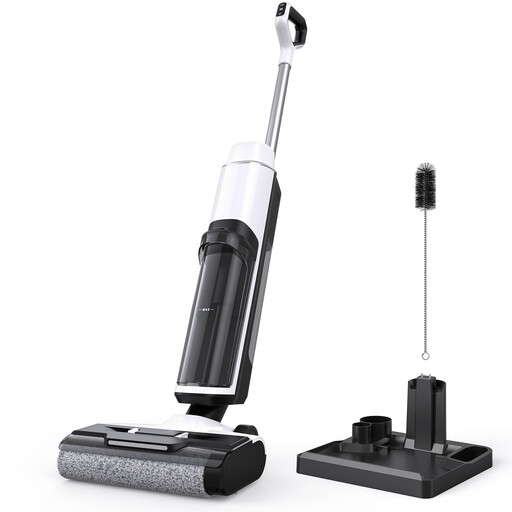
Why this product suits this profile: This model combines dry vacuuming and mopping, offers three cleaning modes and remains relatively easy to handle at 3.85 kg for regular hard-floor cleaning.
The separate tanks hold 910 ml of clean water and 600 ml of dirty water. Self-cleaning is started at the touch of a button, although the tank and brush roller still need to be maintained separately.
15,000 Pa maximum suction power, brushless motor, LED display, voice prompts and up to 30 minutes of runtime.
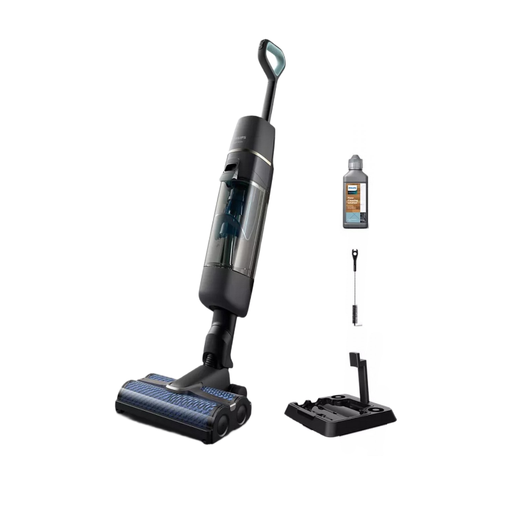
Why this product suits this profile: Three modes, an LCD display and automatic cleaning make it easier to adapt to everyday dirt and more demanding messes on hard floors.
The 670 ml clean-water tank and 600 ml dirty-water tank are separate. The display provides information about the battery level and maintenance; the dirty-water tank should be rinsed after every use.
Up to 25 minutes of runtime, three suction modes, LCD display and automatic cleaning of the brushes and internal components.
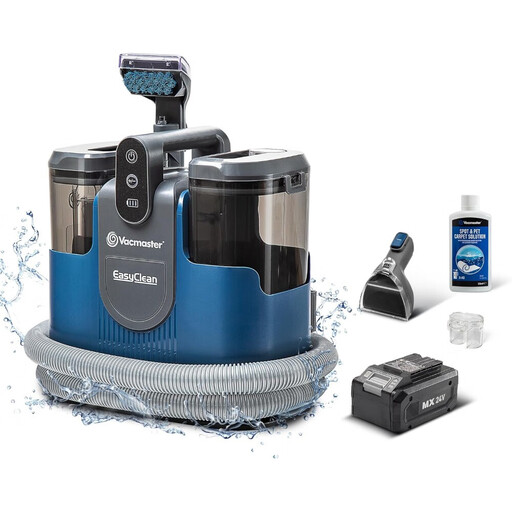
Why this product suits this profile: Its design is intended for carpets, upholstery, stairs and car seats. This makes the cordless washing vacuum cleaner suitable for households with a variety of cleaning tasks.
With 1.6 l of clean water and 0.8 l of dirty water, the tanks are larger than those of many compact floor vacuum and mop cleaners. The hose-cleaning function helps reduce residue inside the hose.
15 kPa suction power, up to 55 minutes of battery life, 1.8 m hose and accessories for carpets and car seats.
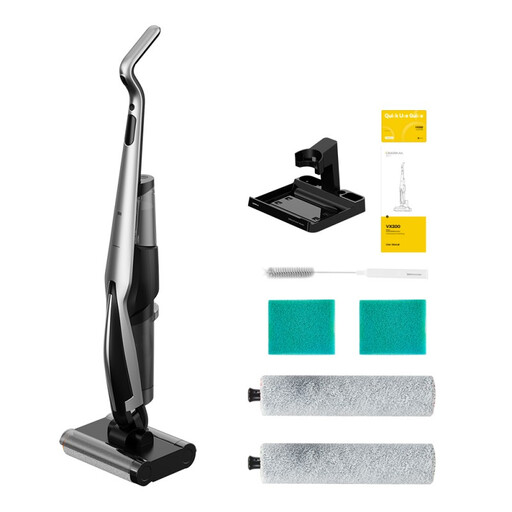
Why this product suits this profile: The dual-roller system and stated runtime of up to 40 minutes are designed for cleaning larger hard-floor areas.
The specifications state that the separate tanks hold 650 ml and 550 ml. The stated hot-water self-cleaning and warm-air drying functions should be used according to the instruction manual.
22,000 Pa maximum suction power, dual roller, bidirectional drive, plus stated 70-°C cleaning and 70-°C warm-air drying.
We have put together a complete, regularly updated list of products that fully meet these strict selection criteria and the safety regulations applicable in the EU.
In addition to the purchase price, there are ongoing costs for electricity, filters, brush rollers and, where applicable, cleaning solution. A cordless wet vacuum cleaner usually runs on a rechargeable lithium-ion battery. Its actual service life depends on charging cycles, storage and temperature. Only use the charger supplied with the appliance or one approved by the manufacturer.
After every wet-cleaning session, you should:
A washable filter can help reduce the need for replacement parts. For allergy sufferers, a clearly described filtration system is relevant; however, a stated filter specification is not a general promise of health benefits. For pet hair, look for an easily accessible brush roller and the best possible hair pick-up.
No. Most appliances in this category are designed for sealed hard floors. Laminate, parquet, natural stone and delicate finishes should only be wet-cleaned in accordance with the manufacturer’s instructions. Carpets and upholstery often require a special washing-vacuum attachment.
Depending on the model and cleaning mode, runtime is often between approximately 20 and 55 minutes. Turbo or intensive programmes use more energy. For a reliable estimate, compare the manufacturer’s stated runtime for your preferred mode with the area to be cleaned.
Yes. The dirty-water tank should be emptied and rinsed after every use. Even when self-cleaning is available, the brush roller, filter and seals should be checked. This helps prevent damp residue from remaining inside the appliance.