
Lieferung heute & morgen

Qualitätsgarantie

Willkommens-Angebote freischalten: KOSTENLOSE Lieferung | Bis zu 80 % RABATT | Kostenlose 30-Tage-JoyPlus-Testphase
App herunterladen
A cordless wet and dry vacuum cleaner can pick up dry dirt and handle liquids or cleaning water in a single step. For households with hard floors, pets or little time, that sounds practical. In reality, however, its usefulness depends heavily on the design, maintenance requirements and limitations of use.
Many purchasing decisions do not fail because of suction power, but because important details are overlooked. The following criteria will help you compare cordless floor cleaners objectively and choose a model that suits your home.
Figures such as 16,000 or 24,000 Pa describe a technical peak value. They do not automatically show how well a floor washer performs in everyday use. The brush design, water distribution, dirt detection and how easy the device is to manoeuvre are also crucial.
A cordless floor washer with a high Pa rating can still be impractical around hair, sticky residue or edges if the brush becomes clogged quickly or it cannot clean sufficiently close to skirting boards.
“Up to 40 or 50 minutes” generally refers to a particular operating mode and ideal conditions. In Turbo mode, on heavily soiled floors or with dirt detection activated, the runtime may be shorter.
When choosing a device, the area to be cleaned should therefore matter more than a single maximum figure. In larger homes, a higher-capacity battery, an efficient automatic mode or short charging breaks can make a real difference.
A self-cleaning floor washer rinses the brush roller and, depending on the model, may also dry it with warm or hot air. Nevertheless, the dirty-water tank, filter, suction channel and brush area must still be checked regularly.
A drying function reduces residual moisture on the roller, but it is no substitute for emptying and rinsing the tank after every use. Even a supposedly hygienic hot-air function should not be understood as a complete guarantee against germs or odours.
A wet and dry vacuum cleaner needs separate compartments for clean and dirty water. Larger tanks reduce interruptions, but they often make the appliance heavier. Compact containers may be sufficient for smaller flats; over larger areas, a dirty-water capacity of around 600 to 900 ml is more practical.
Also check whether cleaning products may only be used according to the manufacturer’s instructions. Incorrect or excessive amounts can lead to foaming and operating problems.
For a floor washer for hard floors, an easily accessible brush roller, simple hair removal and cleaning as close to the edges as possible are important. Claims such as “three-sided edge cleaning” or a gap of less than 0.5 cm should be specified clearly in the product data sheet.
Pet owners should also look for an anti-tangle design. It can reduce hair wrapping around the brush, but it does not eliminate the need for regular checks.
A low-profile lay-flat or stretch mechanism makes it easier to clean underneath beds, sofas and cupboards. The actual lay-flat height and possible angle of inclination are important here. A device with a 170° lay-flat function is not automatically suitable for use under every piece of furniture, as the furniture’s height and the available turning circle also matter.
For parquet, laminate and sealed wood, the model should be expressly designed for these surfaces. Unsealed wood, delicate coatings and carpets are not automatically suitable.
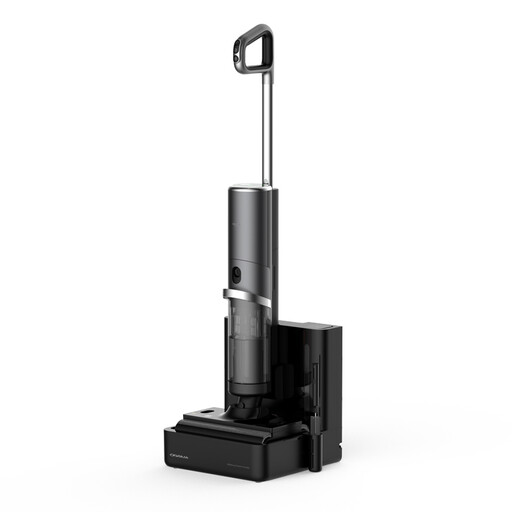
Why this product suits this profile: This cordless model offers up to 40 minutes of runtime, a 0.6-litre tank and a simple combination of vacuuming and mopping for everyday use on hard floors.
The stated runtime and tank size are clearly specified. The dirty-water tank must still be emptied and rinsed after use.
Cordless operation, 130-W power rating, 2,200-mAh lithium-ion battery and 0.6-litre tank.
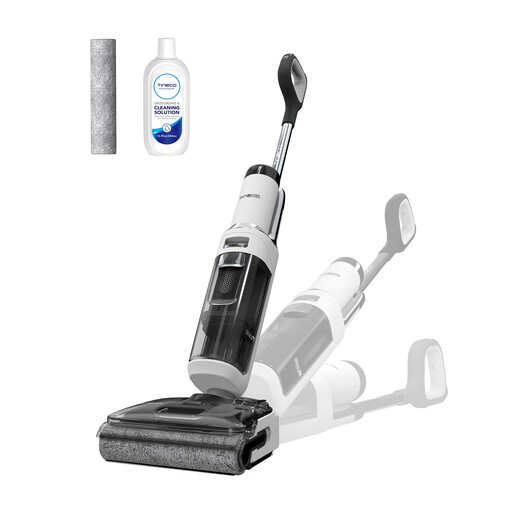
Why this product suits this profile: Its 180° design and 13 cm lay-flat height are intended for cleaning underneath lower furniture. According to the product information, the model is suitable for sealed hard floors such as tiles, laminate and wood.
The specified lay-flat height makes furniture compatibility easier to assess than a general marketing claim about manoeuvrability.
180° flat design, 40 minutes of runtime and 70°C FlashDry self-cleaning with a stated duration of five minutes.
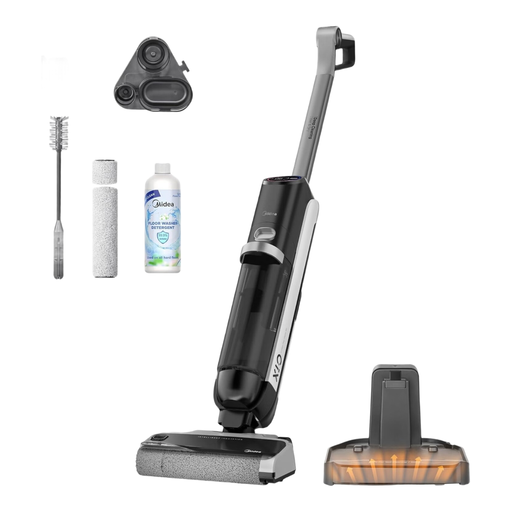
Why this product suits this profile: Its stated dirt detection is suitable for changing levels of soiling. An anti-tangle brush and a dedicated edge brush are useful in homes with pet hair and lots of edge areas.
Automatic adjustment is combined with a specific anti-tangle and edge-cleaning design. The brush and tank still need to be cleaned regularly.
220-W rating, 170° tilt, LED display and self-cleaning with 60°C hot air and a stated drying time of around 30 minutes.
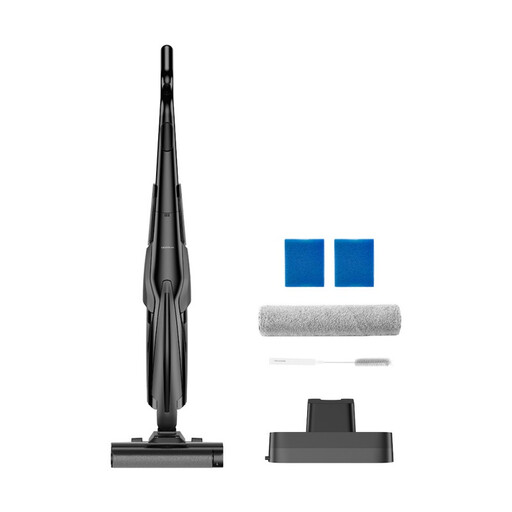
Why this product suits this profile: For larger areas, the stated runtime of up to 50 minutes, 22,000 Pa suction power and 180° lay-flat function provide useful points of comparison.
In addition to suction power, washing and drying figures for the roller are provided. This makes it easier to assess the model against products that only advertise Pa figures.
22,000 Pa, 100°C washing and drying specification, 120° steering and up to 50 minutes of maximum runtime.
We have put together a complete, regularly updated list of products that fully meet these strict selection criteria and the safety regulations applicable in the EU.
In addition to the purchase price, there are costs for filters, brush rollers, cleaning products and electricity. Before buying, check whether replacement parts are available and which components need to be replaced regularly. A larger battery can increase the area cleaned per charge, but if it develops a fault, it may be more expensive to replace.
The following routine is recommended for daily use:
That depends on the surface and the manufacturer’s approval. Sealed parquet may be suitable when used with a device designed for it. Unsealed or particularly delicate wood should not be wet-cleaned without explicit approval. A low water output and working quickly are also important practical considerations.
Runtime depends on battery capacity, operating mode, brush resistance and the level of soiling. “Up to” figures should be treated as a point of comparison. For larger homes, a runtime of at least 40 minutes or a replaceable battery system is advisable, provided the manufacturer offers one.
Hot-air drying can reduce residual moisture in the brush roller after the self-cleaning programme. This is particularly practical if you use the appliance frequently. However, depending on the duration, it increases electricity consumption and does not replace rinsing the tank, filter and suction channel. The key question is whether the feature fits your own cleaning routine.