People who train and keep an eye on their protein intake
If you’d like to take a snack with you after training, it’s worth looking beyond the protein per 100 g and considering how much you actually plan to eat.


Corn snacks can make a convenient nibble at a Christmas market. But if protein after exercise is your main priority, the figure in grams alone isn’t enough to help you choose. The peanut flips reviewed each contain 14 g of protein per 100 g, but protein accounts for only around 11% of their energy. So compare the nutritional information for the specific product, and check its ingredients and allergens before you decide.
If you’d like to take a snack with you after training, it’s worth looking beyond the protein per 100 g and considering how much you actually plan to eat.
You may be more interested in a handy pack and a snack shape that’s easy to share or dip. A higher protein value might be appealing, but it won’t be your only consideration.
If you need to avoid peanuts, for example, or pay attention to precautionary ‘may contain’ statements, the label on the specific product will help determine whether it’s right for you – the brand name alone won’t.
First decide whether protein, a snack to share or the ingredients matter most to you. Then compare the nutritional information per 100 g and check the pack’s labelling.
| Criterion | What to check | Who it matters to |
|---|---|---|
| Protein after exercise | Compare protein and energy per 100 g, and take your planned portion into account too. | If I want to plan my protein intake after training, I’m interested in how much my actual snack portion contributes. Around 50% of shoppers would make protein their main buying criterion. |
| A snack to take along and share | Choose the product shape and pack size according to whether you’ll be snacking alone or sharing with others. | For a visit to the market, I’d like something handy that’s easy to share; protein isn’t the deciding factor. This would be the top priority for around 30% of shoppers. |
| Ingredients and allergens | Check the ingredients list, highlighted allergens and any ‘may contain’ statements on the specific pack. | If I need to avoid peanuts or other ingredients, I’ll first check whether the product is suitable for me. This check would come first for around 20% of shoppers. |
The protein figure in grams doesn’t tell you what proportion of the total energy comes from protein. Based on the manufacturers’ information, protein accounts for around 11% of the energy in the peanut flips reviewed.
Compare protein and energy using the same measure, and check which nutritional claim appears on the specific pack.
The funny-frisch and Lorenz flips reviewed contain peanuts. Lorenz also states that ErdnußLocken Classic may contain milk and gluten.
If you have a peanut allergy, peanut flips aren’t suitable. Check the ingredients and ‘may contain’ statements on other products too.
Whether a product is a corn cake, a tortilla or labelled vegan doesn’t tell you what proportion of its energy comes from protein. For example, EDEKA24 lists 5.2 g of protein per 100 g for Chio Tortillas Salted.
Decide what matters most to you, then compare the nutritional information per 100 g for each product.
Erdnuss Flippies are an example of corn and peanut flips to consider if you’re comparing protein levels within this type of snack.
ErdnußLocken Classic are another specific variety of corn and peanut flips to compare nutritional values.
Tortillas Salted are a salted corn snack to consider if you’re looking for tortilla-style snacks to share or dip.
Snack Day is a brand name to look out for when shopping for specific corn snacks.
REWE lists corn cakes and protein-focused snacks as separate product categories – a useful starting point if you want to compare different types of snack base.
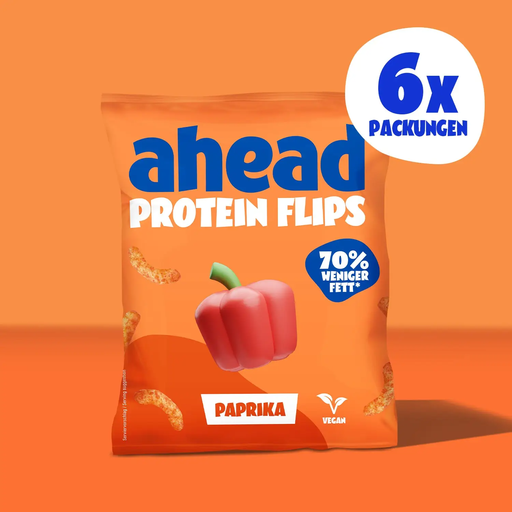
If you’re looking for individually portioned packs of paprika flips for a trip to the market, you could take a look at this multipack. Check the labelling on the specific product to decide whether it suits your protein goals and ingredient requirements.
 No image available
The 50 g packs could be handy for a snack on the go or for sharing. Before you buy, compare the protein and energy information, and check the ingredients and allergens on the product label. The name alone doesn’t confirm a particular proportion of energy from protein.
No. The figure in grams tells you neither what proportion of the total energy comes from protein nor how much protein your portion provides. The KIN Lebensmittel-Institut sets a minimum protein energy contribution of 20% for the ‘high protein’ claim. So, when comparing a specific product, check protein and energy using the same measure, and pay attention to its labelling.
The funny-frisch and Lorenz varieties reviewed each provide 14 g of protein per 100 g, but protein accounts for only around 11% of their energy. If protein intake is your main goal, check the amount you actually eat and compare other types of snack using their own nutritional information too.
For packaged corn snacks, check the ingredients list, highlighted allergens and any ‘may contain’ statements on the pack you buy. The peanut flips reviewed contain peanuts. If you’re buying unpackaged food, ask the seller about its ingredients and allergens.
No. Fat and protein are listed separately in the nutritional information. EDEKA24 lists 4.1 g of fat and 9.5 g of protein per 100 g for Alnatura Bio Mais-Amaranth Waffeln Rosmarin. To make your choice, compare both values and the energy information with those of the specific alternatives.