If you’re looking for protein in a crunchy snack
You want something savoury to nibble on after a workout and to know how much protein you’ll get from the amount you eat. The protein per serving is a more useful guide than the product name alone.


If you’re looking for a crunchy snack with as much protein as possible after a workout, compare the nutrition information per 100 g and work out how much is in the portion you actually plan to eat. Corn as an ingredient, or the word ‘protein’ on the pack, won’t answer that question: corn-based protein flips, soya-based crisps and classic corn tortillas all contain different amounts of protein. According to the consumer advice centre, you generally don’t need an additional protein product if your diet already meets your needs.
You want something savoury to nibble on after a workout and to know how much protein you’ll get from the amount you eat. The protein per serving is a more useful guide than the product name alone.
You want to enjoy the texture of corn snacks while checking the ingredients in the specific variety. A corn base alone doesn’t tell you whether a product contains allergens or is suitable for a vegan diet.
You’re looking for an easy post-workout snack without seeing it as an essential part of recovery. The consumer advice centre points out that extra protein is generally unnecessary if your diet already meets your needs.
First decide whether protein per portion or the familiar taste of corn tortillas matters more to you. Then check the ingredients, allergens, fat and salt, comparing like with like.
| Criteria | What to check when buying | Who it matters to |
|---|---|---|
| Protein per serving | Compare the protein per 100 g with the amount you’ll eat. ahead Nutrition lists 24 g per 100 g and 6 g per 25 g serving for Protein Flips Paprika. | If I reach for flips or crisps after a workout for their protein, I want to know how much my portion provides. For around 39% of consumers, protein content is the top priority. |
| Corn base and ingredients | Check the corn content and any labels for the specific variety; read the ingredients and allergen information on the pack. | I want corn flavour, but I also need to consider my requirements around ingredients and allergens. Around 23% of consumers give this need priority. |
| Fat and salt | Compare the fat and salt information per 100 g, and take the serving size into account. | If I snack regularly after a workout, I want to keep an eye on fat and salt as well as protein. For around 23% of consumers, this nutritional profile is the main criterion. |
| Flavour and texture | Decide whether you’d prefer classic corn tortillas or a snack with a higher protein content. Chio lists 5.2 g of protein per 100 g for Tortillas Salted. | I value the familiar tortilla texture more than getting as much protein as possible. Around 15% of consumers put flavour and snack format ahead of protein content. |
Corn being the main ingredient doesn’t automatically mean a product is high in protein. Chio lists 5.2 g of protein per 100 g for Tortillas Salted; ahead Nutrition lists 24 g per 100 g for Protein Flips Paprika, which contain corn and pulses.
If protein is your main priority, compare the nutrition information per 100 g and then for your portion. Choose classic tortillas for their flavour and texture, rather than assuming they’ll provide a lot of protein.
A higher protein content doesn’t make a snack essential after a workout. According to the consumer advice centre, you can also meet your protein needs with everyday foods that contain protein.
Judge the snack by its ingredients and nutritional information, and by the role you want it to play alongside your other meals.
A corn snack may contain wheat, while higher-protein varieties may contain soya or milk ingredients. So the product category name is no substitute for checking the individual pack.
For every variety, check the current ingredients list and allergen information, as well as any stated properties such as vegan or gluten-free.
A single comparison claim about fat tells you neither the protein content nor the salt in a serving. The figures used for comparison and the amount you actually eat affect which numbers matter when making your choice.
Start by comparing fat, salt and protein per 100 g, then work out the amounts for your portion if needed.
The brand’s Protein Chips are an alternative made with lentil flour and pea protein, rather than classic corn tortillas.
The tortillas have the classic texture of a corn snack; ingredients and protein content vary by variety.
Kichererbsen Chips Paprika are a pulse-based snack, not corn tortillas.
According to ahead Nutrition, Protein Flips Paprika combine lentil and chickpea flour with corn flour and rice protein.
LowCarb.one High Protein Chips Paprika use a recipe with soya protein concentrate rather than a prominent corn base.
This selection features paprika-flavoured protein flips as a crunchy post-workout option. To help you decide, compare the nutrition information on the specific pack with the amount you plan to eat.
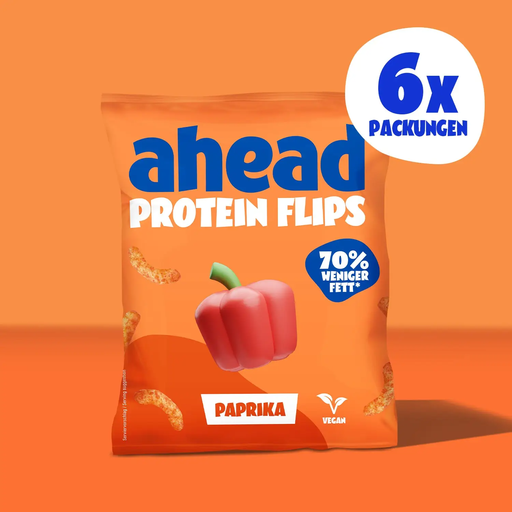 No image available
A crunchy post-workout snack if you’re looking for protein flips instead of classic corn tortillas.
Paprika flavour in a tray of six 50 g bags. Check the protein and salt content in the nutrition information on the specific pack.
Under EU Regulation (EC) No 1924/2006, at least 20% of a food’s total energy value must come from protein for it to be described as high in protein. When choosing a snack, you should also check how many grams of protein are in the portion you’ll actually eat.
An additional protein product isn’t automatically necessary: according to the consumer advice centre, you can also meet your needs with everyday foods that contain protein. Whether you fancy a crunchy snack is a separate question from whether you need extra protein.
The ingredients and allergen information for the specific variety are what matter. The Layenberger crisps described here use soya protein concentrate; Chio describes Tortillas Salted as vegan but notes that they may contain wheat. A corn base alone doesn’t mean a product is suitable for someone with an allergy.
The pack shows you the information for the product you’re actually buying. Chio points out that packs with the old and new labelling may both be on sale at the same time, so check the ingredients and allergens on the product you choose.