
Lieferung heute & morgen

Qualitätsgarantie

Willkommens-Angebote freischalten: KOSTENLOSE Lieferung | Bis zu 80 % RABATT | Kostenlose 30-Tage-JoyPlus-Testphase
App herunterladen
A corner desk can transform unused room corners into productive workspaces. However, the selection is vast, and not every model that looks appealing online holds up to daily use. Many buyers only discover after assembly that their new desk wobbles, the storage is impractical, or the surface scratches easily. Before you make a decision, it's important to know the typical pitfalls and focus on the features that truly matter.
This guide will help you separate the wheat from the chaff. We'll highlight the three most common flaws found in budget-friendly models and explain which parameters are crucial for long-term satisfaction.
To avoid the problems mentioned above, you should check three core parameters before buying. These largely determine the functionality and longevity of your new workspace.
An L-shaped desk is the classic solution for corners. Measure your available space precisely and pay attention to the side lengths of the desk. It's important to distinguish between:
For maximum flexibility, especially for a PC desk for small spaces, reversible models are an excellent choice. With these, you can decide whether the longer or shorter side is positioned on the left or right. A desk depth of at least 50 cm is recommended to ensure enough distance from the monitor and space for your keyboard and documents.
The stability of a desk is directly linked to the materials used. A proven combination for a sturdy home office desk is:
Modern workspaces require more than just a tabletop. Thoughtful features increase productivity and keep things tidy:
Based on the criteria above, we have identified several models suitable for different user profiles.
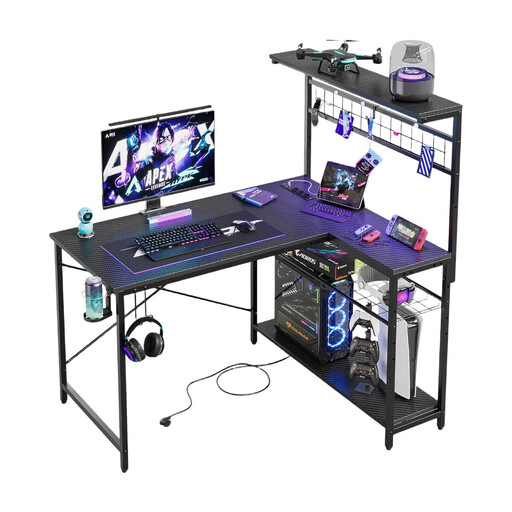
Why This Fits Their Persona: Ideal for students or small apartments where every inch counts. The reversible design and vertical shelves make optimal use of space, while the integrated outlets and LED lighting create a modern work and gaming environment.
The robust carbon fibre finish is more durable than simple foil laminates. The integrated power supply solves the hidden problem of cable management, which often leads to clutter on basic desks.
Integrated power hub with 3 power outlets and 2 USB ports. Includes RGB lighting for a customisable atmosphere.
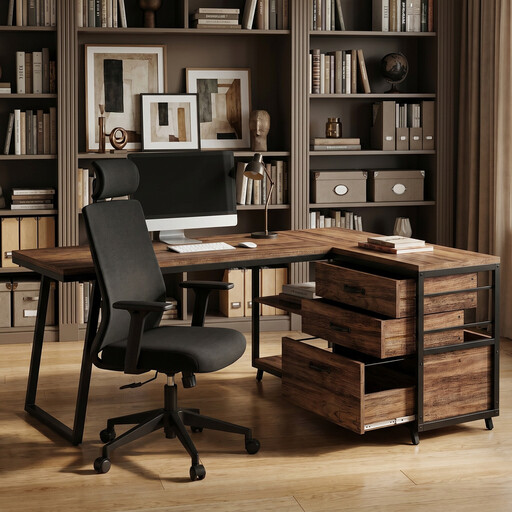
Why This Fits Their Persona: Perfect for home office professionals who need to neatly store documents, files, and office supplies. The combination of open and closed storage offers flexible organisation for a tidy workspace.
Directly addresses the "impractical storage" pitfall with three functional drawers, including a large one for files, plus two open shelves. The sturdy metal frame provides essential stability.
Extensive and versatile storage thanks to the combination of drawers and shelves. The reversible design allows for flexible adaptation to any room layout.
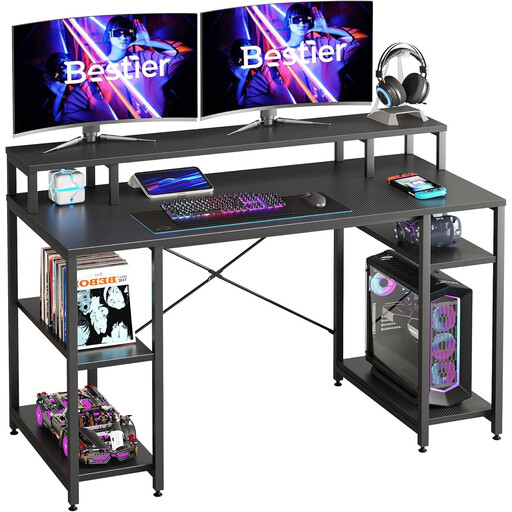
Why This Fits Their Persona: While not an L-shaped desk, this 140 cm wide model offers a massive surface area, ideal for multi-monitor setups in gaming or video editing. The monitor stand improves ergonomics during long sessions.
The explicitly mentioned X-shaped crossbar actively counteracts the problem of instability. The use of P2-grade engineered wood is a clear material specification that indicates higher quality than basic foil-covered desks.
Ergonomic monitor stand for better posture and more usable desk space. Adjustable shelves can accommodate a large PC tower.
We have compiled a complete, up-to-date list of products that fully meet these strict selection criteria and safety requirements.
The load capacity varies by model and construction. Look for the maximum load capacity in the product details. Models with a solid metal frame and additional bracing can typically support between 50 kg and 75 kg (approx. 110-165 lbs), which is sufficient for a standard setup with multiple monitors and accessories. Always check the manufacturer's specifications.
A reversible desk, which can be assembled with the corner on either side, offers great flexibility in room layout. The assembly is generally no more complicated than for a fixed-orientation model. The instruction manual usually includes separate, clearly marked steps for a left- or right-hand configuration. It's a good idea to decide on your preferred orientation before you begin assembly.
Although designed for 90-degree corners, many L-shaped desks can also be placed flexibly. For example, you can place one side against a wall with the shorter leg extending into the room, where it can act as a room divider. For walls with non-standard angles, precise measurement is essential to ensure the desk fits without leaving awkward gaps.