
Lieferung heute & morgen

Qualitätsgarantie

Willkommens-Angebote freischalten: KOSTENLOSE Lieferung | Bis zu 80 % RABATT | Kostenlose 30-Tage-JoyPlus-Testphase
App herunterladen
Unused corners in living spaces are often wasted potential. Whether in the living room, kitchen, or bathroom, these areas offer an opportunity for additional storage and can enhance your room's aesthetic. A corner shelf is a functional solution to put these spaces to good use. It helps create order while keeping decorative items, books, or everyday essentials within easy reach.
This guide introduces different types of corner shelves and explains the key criteria to consider when making your selection. The goal is to provide you with an informed basis for your decision, so you can find the perfect solution for your needs and interior style.
Before you decide on a model, a few practical considerations can be helpful. The following points will help you narrow down your options and find a shelf that meets both your functional and aesthetic requirements.
The installation method is a crucial factor. Your choice will depend on the type of walls you have, your DIY skills, and the terms of your rental agreement.
The material influences not only the look and durability of the shelf but also where it can be used.
Measure the intended corner carefully before making a purchase. Consider not only the width and depth but also the height. A tall, narrow shelf utilises the space up to the ceiling, while a flat corner wall shelf serves as a discreet surface for individual objects. Floating shelves create a light and airy look, whereas freestanding shelves offer more storage but also take up more floor space.
Here is a selection of different corner shelves, each suited for various applications due to their specific features.

Why It Stands Out This corner wall shelf from EUGAD is distinguished by its modern S-shaped design and its impressive height of nearly 1.50 m. With six tiers, it provides ample vertical storage without taking up much floor space. The white laminate finish ensures a clean and contemporary aesthetic.
Pros
Who It's For This shelf is an excellent choice for those looking for a stylish yet high-capacity storage solution for their living room, bedroom, or office and who prefer a secure, wall-mounted installation.
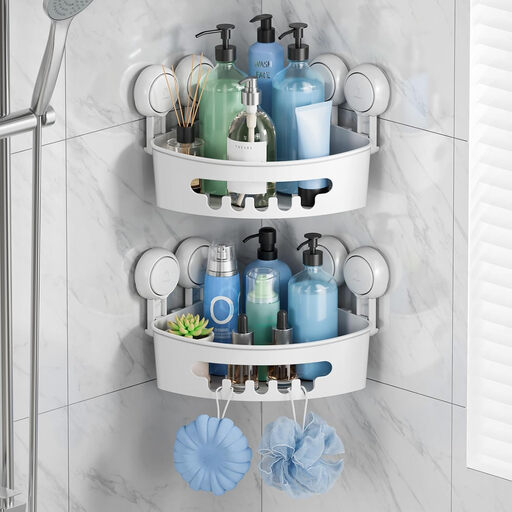
Why It Stands Out The TAILI shower caddy is a prime example of a no-drill corner shelf. It uses a patented suction cup technology that adheres to smooth, non-porous surfaces like tile, glass, or mirrors. Installation is tool-free and takes only seconds.
Pros
Who It's For Ideal for anyone seeking a hassle-free and flexible storage solution for the shower or bathroom. It's especially practical for renters and people who need a solution that can be removed quickly without leaving residue.
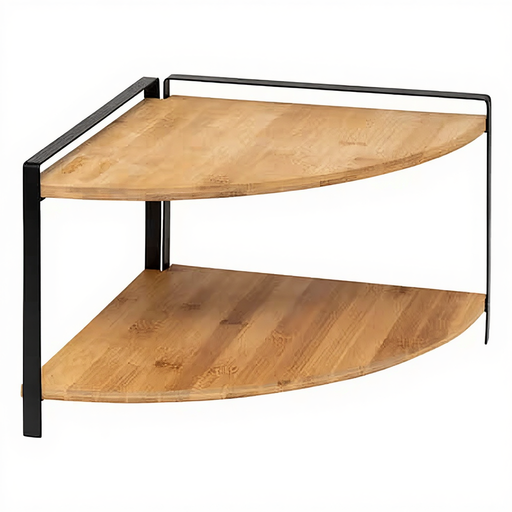
Why It Stands Out The "Ordera" by 5Five is a small corner shelf with minimalist charm. The combination of a black metal frame and bamboo shelves (wooden corner shelf) creates a modern yet natural look. With its two tiers, it serves as a compact corner wall shelf.
Pros
Who It's For This shelf is aimed at individuals looking for a discreet and stylish storage option for small items who also appreciate a trendy design. It requires wall mounting with drilling.
The products featured here cover a range of needs, from large-scale storage to specialised bathroom solutions. If you are specifically looking for more options for your kitchen or want to compare additional designs, you can find a wider selection in our Kitchen Corner Organisers category.
The load-bearing capacity of a no-drill corner shelf depends heavily on the fastening system (suction cups, adhesive pads) and the condition of the wall surface. High-quality models with premium suction cups, like those from TAILI, can hold up to 10 kg according to the manufacturer. It is crucial to always follow the manufacturer's specific instructions and only mount the shelf on suitable, smooth, and clean surfaces.
For use in the bathroom, water-resistant materials are essential. Plastic (like ABS), rust-proof stainless steel, and powder-coated metal are excellent options as they do not rust and are easy to clean. A corner shower caddy made from these materials is particularly durable. Bamboo is also a popular choice due to its natural resistance to moisture, but it should not be exposed to direct, constant wetness.
Precision is key when installing a hanging shelf that requires drilling. Use a spirit level to ensure the shelf is perfectly straight. Choose anchors and screws that are appropriate for your wall type (e.g., concrete, drywall, brick). Mark the drill holes accurately, drill the holes to the correct depth, and insert the anchors flush with the wall. You can then securely screw the shelf to the wall. If you are unsure, it is advisable to consult a professional.