
Lieferung heute & morgen

Qualitätsgarantie

Willkommens-Angebote freischalten: KOSTENLOSE Lieferung | Bis zu 80 % RABATT | Kostenlose 30-Tage-JoyPlus-Testphase
App herunterladen
Unused corners in living spaces are wasted potential. A corner shelf can be a functional yet aesthetic solution to create storage and display decorative items. However, the selection is vast, and not every model lives up to its promises. Many buyers are frustrated by wobbly structures or ill-fitting dimensions.
As your Joybuy Product Recommendation Officer, I'll help you identify the crucial criteria. This guide will show you how to avoid common purchasing pitfalls and find a shelf that perfectly suits your needs and your living space.
Before you make a decision, you should be aware of the most common flaws that often only become apparent after the purchase.
To make an informed decision, focus on the following three technical parameters. These will help you objectively assess the quality and suitability of a corner shelf.
The first fundamental decision concerns the type of installation. Both options have specific advantages and disadvantages.
The material determines not only the look but also the durability and where the shelf can be used.
Measure the intended corner precisely before you order. Consider not only the width and depth but also the height. A small corner shelf can liven up an empty corner, while a tall corner shelf offers maximum storage in a minimal footprint.
A crucial, often overlooked value is the maximum load capacity per shelf. This is specified in kilograms (kg) and is a reliable indicator of stability. For heavy items like books or binders, the load capacity should be correspondingly high.
Here are some models tailored to specific user profiles and room situations.
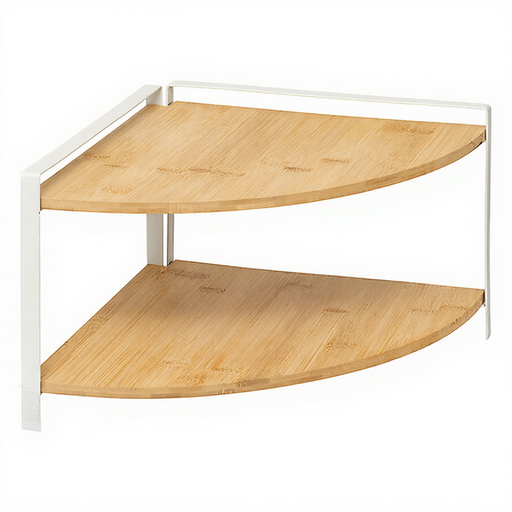
Why this model is a great fit: Ideal for anyone looking for a quick and straightforward solution for small nooks in the kitchen or bathroom. This compact shelf organises spices, toiletries, or small utensils without taking up valuable counter space.
This model is specifically designed as a small corner shelf for lightweight items. It doesn't create the false impression of being suitable for heavy loads, thus avoiding the problem of overloading and instability.
The combination of metal and plastic is suitable for use in rooms with varying humidity, like kitchens or bathrooms. Assembly is straightforward.
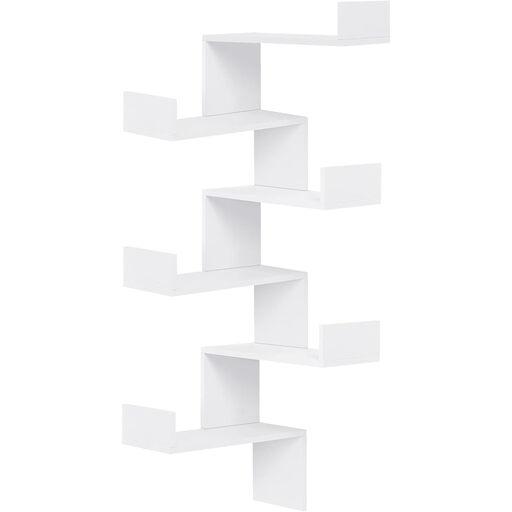
Why this model is a great fit: For users where design is the top priority. The S-shaped wall shelf is an eye-catching statement piece in the living room or office, primarily serving to display decor, plants, or collectibles. A classic example of a modern **white corner shelf**.
As a wall-mounted shelf, its stability depends on correct installation, which is clearly communicated. It avoids the typical instability of freestanding shelves and the problem of unsightly gaps, as it is mounted directly and flush in the corner.
The floating design utilises vertical space without occupying the floor. The six tiers offer flexible storage options. The laminated surface of the engineered wood is easy to clean.
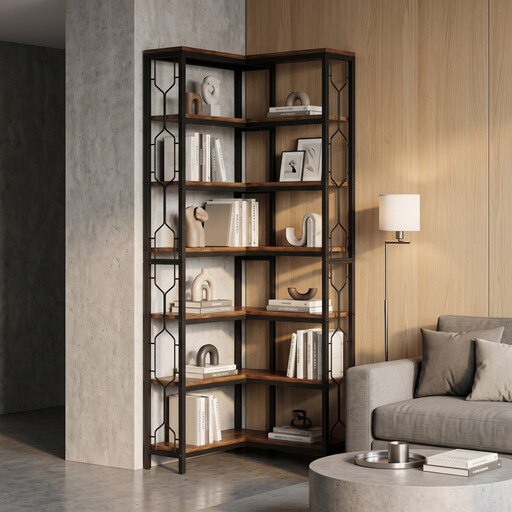
Why this model is a great fit: Perfect for anyone who needs a lot of storage for books, binders, or an extensive collection. At 200 cm tall, this freestanding shelf makes full use of the room's height in a **living room corner shelf** or home office and offers high load capacity thanks to its robust design.
It directly addresses the stability pitfall: a reinforced metal frame, adjustable feet for uneven floors, and an included anti-tip kit ensure a secure footing. The high load capacity of up to 45 kg per shelf is clearly specified.
Seven tiers provide maximum storage on a small footprint. The side guards prevent items from falling off. The L-shaped design ensures a flush fit in the corner.
If you prefer a wall-mounted solution, we have compiled a complete, up-to-date list of products that meet strict selection criteria and safety requirements.
For a wall-mounted shelf, choosing the right wall anchors is crucial and depends on your wall type (e.g., drywall, concrete, brick). Always use anchors suitable for your wall. For a freestanding shelf, using the included anti-tip kit is essential. This connects the top of the shelf to the wall and prevents it from tipping forward.
Bathrooms have high humidity. Therefore, choose materials that are water-resistant. These include plastic, powder-coated metal (stainless steel), bamboo, or engineered wood with a waterproof PVC laminate. Untreated particleboard or MDF are unsuitable as they can swell.
The load capacity varies greatly depending on the model, material, and construction. There is no one-size-fits-all answer. Always check the manufacturer's specification for the maximum load capacity per shelf. As a general rule, always place heavier items on the lower shelves to keep the centre of gravity low and increase stability.