
Lieferung heute & morgen

Qualitätsgarantie

Willkommens-Angebote freischalten: KOSTENLOSE Lieferung | Bis zu 80 % RABATT | Kostenlose 30-Tage-JoyPlus-Testphase
App herunterladen
In many homes, unused corners represent lost potential. A corner shelf can transform this area into a functional and aesthetic storage solution. However, the selection is vast, and not every model lives up to its promises. Before you make a decision, it's important to understand the common pitfalls that often only become apparent after the purchase.
Many buyers report three typical problems:
An informed approach helps to avoid these pitfalls and find a durable, functional piece of furniture.
To find a suitable corner shelf that meets your needs, you should check three key factors. These objective criteria will help you evaluate product quality independently of marketing claims.
The first decision concerns the type of shelf. Both variants have specific requirements for their location.
corner bookcase, typically offer a lot of storage space and require no drilling. Stability is the crucial factor here. Look for features like adjustable feet to compensate for uneven floors and an included anti-tip kit for securing it to the wall. This is an important safety aspect, especially in households with children or pets.floating corner shelf is ideal for creating a space-saving corner shelf design, as it keeps the floor clear. The critical point here is the wall's composition. Check whether your wall is made of solid concrete, brick, or drywall (plasterboard). The included mounting hardware is usually designed for solid walls. For drywall, you will need special hollow-wall anchors to ensure a secure installation.The material determines not only the look but also the durability and stability.
white corner shelf made from this material is versatile.solid wood corner shelf is more robust and durable, but also requires more maintenance and comes at a higher price point.industrial-style corner shelf. A powder-coated metal frame offers high stability and a modern aesthetic.Regardless of the material, the maximum weight capacity per shelf is a crucial piece of information from the manufacturer. Compare this value with your intended use. You will need a significantly higher load capacity for heavy books than for light decorative items.
Don't just measure the corner; also check the internal dimensions of the shelf. The depth of the shelves and the vertical clearance between them are relevant. Make sure that the items you want to store—be it books, binders, or vases—will actually fit.
Based on these objective criteria, we have identified several models suitable for different user profiles.
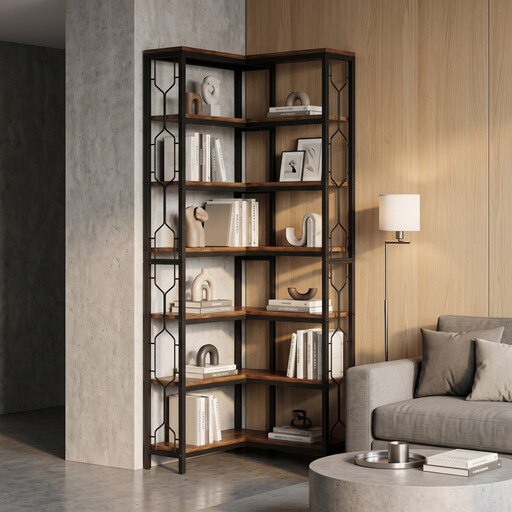
Why This Fits Their Persona: Ideal for users who need maximum storage for books, binders, or collections in a living room or home office. The industrial design complements modern interior styles.
Directly addresses the stability problem with a reinforced metal frame, adjustable feet for uneven floors, and an included anti-tip kit. The "E0-grade chipboard" material specification signals tested quality.
Very high load capacity of up to 45 kg per shelf, according to the manufacturer. Seven tiers provide extensive storage space. Side guards prevent items from falling off.
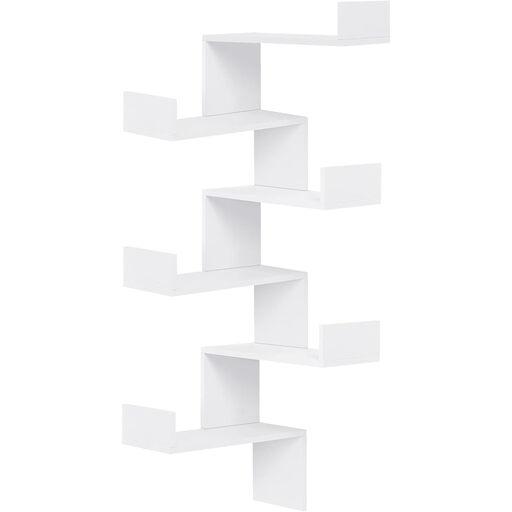
Why This Fits Their Persona: Perfect for those seeking a decorative element that also offers practical storage. Its modern S-shape design makes it a focal point in living rooms or bedrooms.
This shelf avoids the issue of impractical dimensions with six tiers that offer ample space for decor, books, or plants. The manufacturer's stated load capacity of approx. 10 kg per tier sets clear expectations for stability.
Combines storage with a striking, modern design. As a wall shelf, it creates an airy look and saves floor space. The white laminate surface is easy to clean.
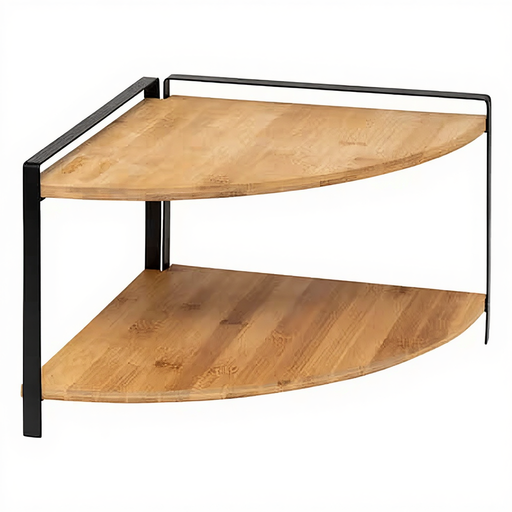
Why This Fits Their Persona: A compact solution for the kitchen, bathroom, or a small office nook. Ideal for organising spices, toiletries, or small office supplies without taking up much space.
The bamboo material is naturally more moisture-resistant than unsealed particleboard, making it better suited for bathrooms or kitchens. Its small size and specific use case bypass the stability issues of large bookcases.
A very space-efficient design with two tiers for vertical organisation. The bamboo material provides a warm, natural aesthetic and is a renewable resource.
We've compiled a complete, up-to-date list of products that fully meet these strict selection criteria and safety standards.
Safety depends on correct installation. First, identify your wall type. For solid walls (concrete, solid brick), the included anchors and screws are usually sufficient. For drywall (plasterboard), you must use special hollow-wall anchors that expand behind the board. Always use a spirit level to ensure the shelf is straight, and tighten all screws securely. If you are unsure, it is advisable to seek professional help.
For long-term durability, solid wood and powder-coated metal are excellent choices. For engineered woods like MDF or particleboard, the quality of the surface seal (laminate, veneer) is crucial. A good seal protects against scratches and moisture penetration. Look for certifications like the E1 standard, which confirms that the product has been manufactured to be safe for health.
The load capacity varies greatly depending on the model, material, and construction. There is no one-size-fits-all answer. Therefore, always check the maximum weight capacity per shelf in the manufacturer's product specifications. Distribute the weight evenly and place heavier items on the lower shelves to increase stability. Do not exceed the specified maximum load to avoid material damage or the shelf collapsing.