
Lieferung heute & morgen

Qualitätsgarantie

Willkommens-Angebote freischalten: KOSTENLOSE Lieferung | Bis zu 80 % RABATT | Kostenlose 30-Tage-JoyPlus-Testphase
App herunterladen
Unused corners are a common problem in many apartments and houses. They often look empty and collect dust, yet they hold valuable storage potential. A well-chosen corner shelf can not only make this space practical but also become a stylish element of your decor.
This article serves as a guide. It explains what to look for when making your selection and presents various models suited for different needs and interior styles. The goal is to provide you with a solid basis for making an informed decision to find the perfect solution for your home.
Before you decide on a model, there are a few fundamental aspects to consider. These will help you find a shelf that meets both your functional and aesthetic expectations.
The style of the shelf should harmonize with your existing decor.
Measure the available corner precisely. Pay attention not only to the width and depth but also to the height. A tall corner shelf makes optimal use of vertical space and is excellent as a corner bookcase. For smaller niches or rooms with sloped ceilings, a narrow corner shelf or a lower model is the better choice. Also, consider any potential obstructions like power outlets, light switches, or baseboards.
Stability is a crucial criterion, especially for tall freestanding shelves. Look for the following features:
Here is a selection of corner shelves that stand out for their different designs and functional features.

What Makes This Model Stand Out This shelf stands out with its unique S-shape, setting it apart from classic corner shelves. The modern design makes it a focal point in any room while providing organized display space.
Advantages
Who Is It For? This model is ideal for those looking for a functional living room corner shelf that also serves as a modern design element. It fits well in contemporary living rooms or offices.
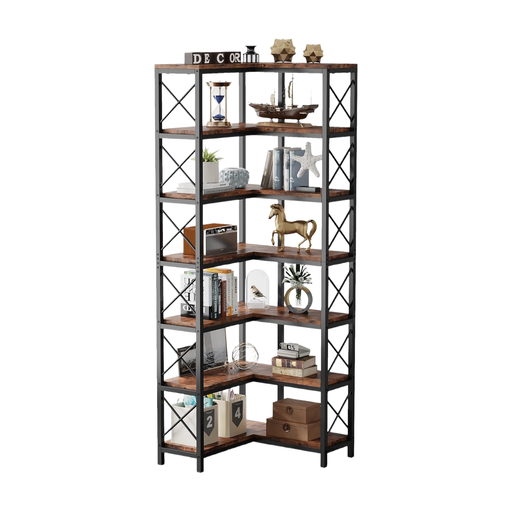
What Makes This Model Stand Out At 200 cm tall with seven tiers, this corner shelving unit is a solution for anyone needing maximum vertical storage. The industrial corner shelf design, with its black metal frame and X-shaped side braces, ensures high stability and a striking look.
Advantages
Who Is It For? Perfect for users with large book collections or those who need ample storage in a home office or living room. The industrial style appeals to fans of urban and modern design.
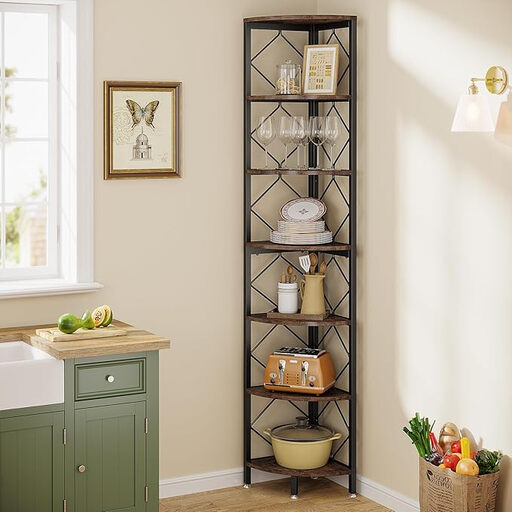
What Makes This Model Stand Out This narrow corner shelf, with its dimensions of 35 x 35 cm and a height of 200 cm, is specifically designed for very tight corners. It combines a space-saving footprint with impressive height, offering plenty of storage in the smallest of spaces.
Advantages
Who Is It For? Ideal for anyone looking for a vertical storage solution for very limited spaces. Its versatility makes it a practical addition to almost any room in the house.
Haven't found the right model for your needs in this selection? There is a wide variety of other designs, sizes, and materials that meet different requirements. If you're looking for more solutions, you can find a broader selection in our category.
? Discover more models in the Bookshelf & Standing Shelves category
The load capacity varies greatly depending on the model, material, and construction. It is usually specified per shelf by the manufacturer. For example, the featured industrial model from Tribesigns can hold up to 20 kg per shelf, while other models may be designed for around 10 kg or less. It is important to check this specification in the product details before purchasing and to always store heavy items on the lower levels.
A tall corner shelf should always be secured to the wall to prevent it from tipping over. Most manufacturers include an anti-tip kit for this purpose. This usually consists of a strap or bracket that is screwed to the shelf and the wall. Installation is straightforward and is an essential safety feature.
Most corner shelves are designed for standard 90-degree corners. In older buildings or with uneven walls, the angle may differ. Measure the corner before buying and check the product dimensions carefully. Adjustable feet can help compensate for minor unevenness in the floor, but they cannot correct for significantly different wall angles.