
Lieferung heute & morgen

Qualitätsgarantie

Willkommens-Angebote freischalten: KOSTENLOSE Lieferung | Bis zu 80 % RABATT | Kostenlose 30-Tage-JoyPlus-Testphase
App herunterladen
Unused corners in living spaces are wasted potential. A well-chosen corner shelf can not only create valuable corner storage space but also serve as a decorative element. However, the selection is vast, and not every model delivers on its promise. Many buyers are frustrated by wobbly construction, unsuitable materials, or designs that take up more space than they provide.
As your Joybuy Product Recommendation Officer, I'm here to help you avoid these common pitfalls. This guide will show you the crucial features to look for to find a functional and durable solution for your home.
Before you make a decision, you should be aware of the most common problems that often only become apparent after assembly.
To make an informed decision, focus on three objective criteria. These will help you distinguish quality from the subpar and identify a suitable shelf for the corner.
The material determines not only the look but also the robustness and maintenance requirements.
The construction is paramount for safe use.
Look beyond the simple external dimensions.
Here are some recommendations tailored to specific user profiles that meet the quality criteria mentioned above.
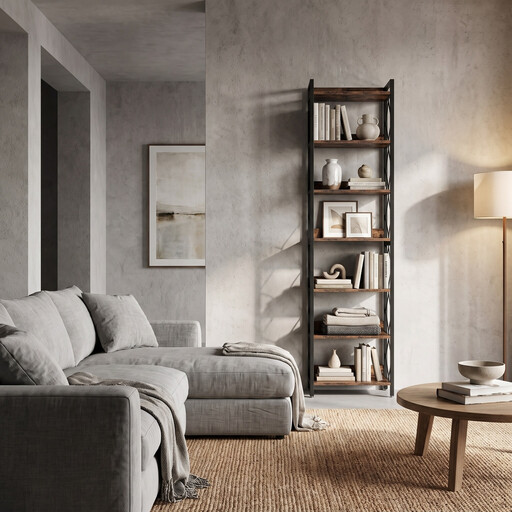
Why This Fits Their Persona: Ideal for anyone needing maximum vertical storage in a minimal footprint. At 200 cm high, it fully utilises the room's height in tight corners of apartments or small offices.
Counteracts the problem of instability with adjustable foot pads for uneven floors and an included anti-tip kit for secure wall anchoring.
Very slim design (35x35 cm footprint) with seven tiers for ample storage. The combination of a metal frame and particleboard provides a good balance of stability and aesthetics.
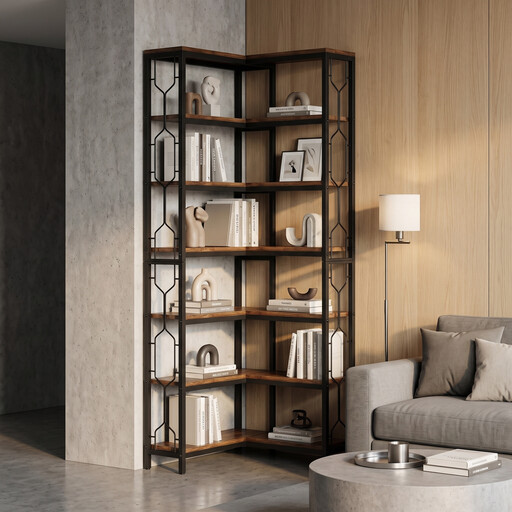
Why This Fits Their Persona: Perfect for loft or industrial-style interiors. The combination of a black metal frame and wood-tone shelves creates a striking, robust look for a living room or home office.
Addresses the pitfall of low load capacity. The reinforced metal frame and E0-grade particleboard allow for a high load capacity of up to 45 kg per shelf, according to the manufacturer.
High stability thanks to the metal frame, adjustable feet, and anti-tip kit. The side grids prevent items from falling and enhance the industrial design.
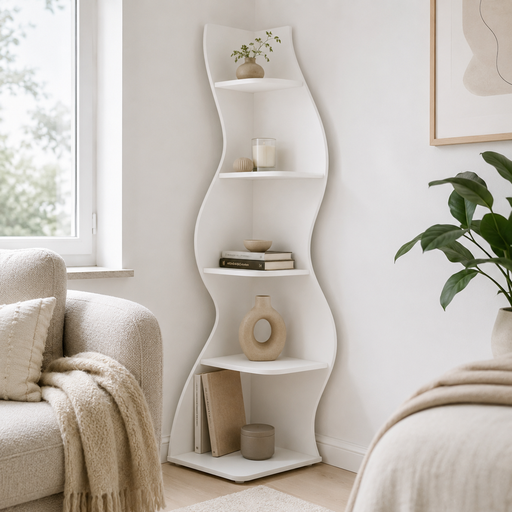
Why This Fits Their Persona: For those seeking a piece of furniture that is both functional and a design statement in its own right. The curved, unique shape makes it an eye-catcher in the living room.
Bypasses the trap of inefficient design. Despite its unusual shape, the five tiers offer good usable space for books, plants, or decor thanks to their thoughtful arrangement.
The design is a clear distinguishing feature. The neutral white colour blends seamlessly into various interior styles and visually brightens dark corners.
We have compiled a complete, up-to-date list of products that fully meet these strict selection criteria and UK/EU safety regulations.
1. How do you securely attach a corner shelf to the wall? The safest method is to use the included anti-tip kit. This usually consists of a bracket or strap that is screwed to the shelf and the wall. Use wall plugs and screws that are appropriate for your wall type (e.g., concrete, plasterboard). For a purely wall-mounted corner shelf, it is crucial to follow the manufacturer's assembly instructions precisely and not to exceed the maximum load capacity.
2. What material is suitable for a corner shelf in the bathroom? For damp environments like the bathroom, materials with a water-resistant surface are required. Recommended options include powder-coated metal, plastic, or specially treated or lacquered solid wood. Avoid uncoated particleboard, as it can swell with moisture and lose its shape and stability.
3. How much weight can a corner shelf hold? The load capacity varies greatly depending on the model, material, and construction. There is no one-size-fits-all answer. Always check the manufacturer's specification for the maximum load capacity per shelf. You can find this in the product's technical data. As a rule of thumb: heavy items like books or full binders belong on the lower shelves to keep the centre of gravity low and increase stability.