
Lieferung heute & morgen

Qualitätsgarantie

Willkommens-Angebote freischalten: KOSTENLOSE Lieferung | Bis zu 80 % RABATT | Kostenlose 30-Tage-JoyPlus-Testphase
App herunterladen
Unused corners in living spaces are wasted space. The right corner shelf can remedy this by creating valuable storage while also serving as a decorative element. However, the selection is vast, and not every model delivers on its promise. Many buyers are frustrated by wobbly construction, improper dimensions, or low-quality surfaces that can't withstand daily wear and tear.
This guide will help you avoid common purchasing mistakes. We'll show you the crucial features to look for to find a functional and durable solution for your home, whether it's for the kitchen, bathroom, or living room.
Before you make a purchasing decision, you should be aware of the most common weaknesses, which often only become apparent after assembly or during daily use.
To prevent these problems, you should check three key parameters before buying. These will help you objectively evaluate the quality and suitability of a corner shelf.
The material is a key determinant of stability and longevity. A wooden corner shelf, especially one made of solid wood, offers high stability and a warm aesthetic. Metal models often have an industrial style and are very robust. More affordable options made of MDF or particleboard can also be a good choice, provided the material is thick enough and the edges are properly sealed.
An indispensable value is the maximum load capacity per shelf. This manufacturer specification is crucial, especially if you are looking for a corner bookshelf that needs to hold heavy books. For a small corner shelf used for decoration, the requirements are lower.
The choice between a freestanding and a wall-mounted model depends on the intended use and the spatial conditions.
Measure the intended corner precisely before you order. Consider not only the height and width but also the depth of the shelf. A shelf that is too deep can look bulky in a small room. For a corner shelf in the kitchen on the countertop, compact dimensions are needed to keep enough workspace free. A tall, narrow shelf, on the other hand, makes optimal use of the room's height and creates a lot of storage on a small footprint.
Here are some recommendations tailored to different needs and living situations.
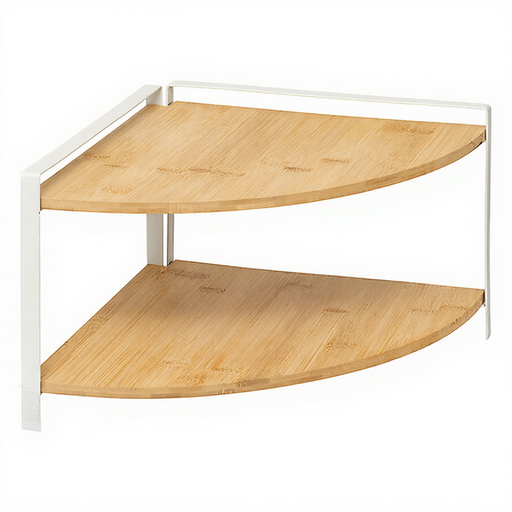
Why it's a good fit: Ideal for anyone looking for a quick and straightforward solution to create order on the kitchen counter or by the bathroom sink. It uses space efficiently without taking up much room itself.
The metal and plastic construction is sufficiently stable for its intended purpose—storing spices or bathroom essentials. Its compact size is specifically designed for countertops, avoiding fit issues.
Maximises unused space on kitchen or bathroom countertops. According to the manufacturer, assembly is simple and can be done quickly.
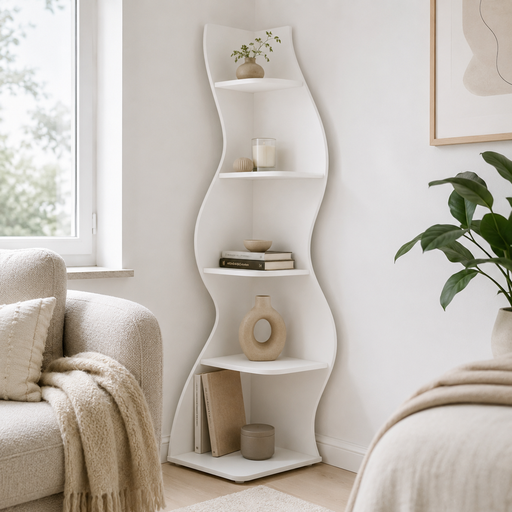
Why it's a good fit: For those seeking a piece of furniture that not only provides storage but also acts as a visual highlight in the living room or home office. Its unique design turns an empty corner into a focal point.
The design is intended for placement in a corner and mounting to the wall, which provides the necessary stability. The solid white paint finish is a deliberate design choice, not a fragile foil laminate.
The modern, sculptural design stands out from standard shelves. Five tiers offer ample space for books, plants, and decorative items.
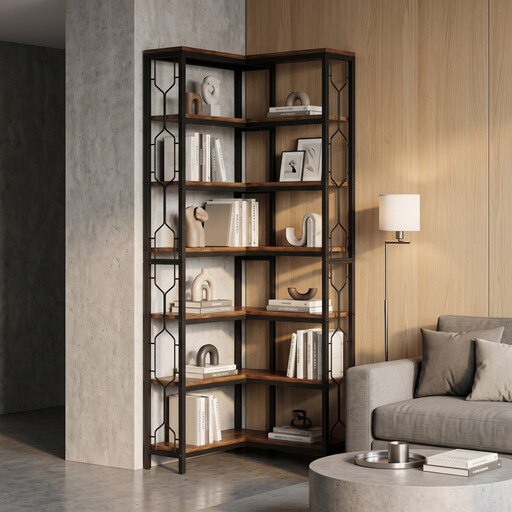
Why it's a good fit: Perfect for anyone who needs a robust freestanding corner shelf with maximum storage space. Ideal as a bookshelf or for storing extensive collections where a high load capacity is required.
The combination of a reinforced metal frame and E0-grade particleboard ensures high stability. According to the manufacturer, the load capacity is up to 45 kg per shelf. Adjustable feet and an anti-tip kit guarantee a secure stance.
Seven tiers provide an exceptional amount of storage space. The high load capacity makes it a reliable solution for heavy items like books or binders.
We have compiled a complete, up-to-date list of products that fully meet these strict selection criteria and UK safety regulations.
The load capacity varies greatly depending on the model and material. Always check the maximum load capacity per shelf specified by the manufacturer in the product details. Small countertop shelves often only support a few kilograms, whereas a robust freestanding corner shelf made of metal and wood can hold 40 kg or more per shelf. As a rule of thumb, always place heavier items on the lower shelves to increase stability.
For a floating corner shelf or for securing a tall freestanding shelf, correct mounting is crucial. Always use wall anchors and screws that are suitable for your wall type (e.g., drywall, brick, concrete). Even if mounting hardware is often included, it is wise to check its suitability for your specific wall. For tall, freestanding shelves, the included anti-tip kit should always be installed for safety reasons.
In theory, corner shelves are designed for 90-degree angles, but in practice, deviations can occur. Check the product dimensions carefully and look for customer photos or reviews that provide information on the precision of the fit. Sometimes, protruding mounting parts on the back can prevent the shelf from sitting flush against the wall. Measuring the corner accurately before buying prevents disappointment.