
Lieferung heute & morgen

Qualitätsgarantie

Willkommens-Angebote freischalten: KOSTENLOSE Lieferung | Bis zu 80 % RABATT | Kostenlose 30-Tage-JoyPlus-Testphase
App herunterladen
An unused corner can create additional storage space when the right corner shelf is positioned securely and fits the available area. However, people often consider only how it looks rather than the space it occupies. This can lead to unsuitable purchases: the shelf is too deep, wobbles on an uneven floor or offers less usable storage space than expected.
As a Joybuy Product Recommendation Officer, I have therefore organised the available information according to practical criteria. What matters is not promotional wording, but dimensions, material, load capacity, anti-tip protection and assembly requirements.
A corner shelf needs more than the right height. With an L-shaped model, you must also consider the length of both sides and the depth. For example, a shelf measuring 60 × 60 cm takes up considerably more floor space than a slim corner bookcase measuring around 32 × 32 cm.
Before buying, measure:
‘Up to 45 kg per shelf’ does not automatically mean that every use case is suitable for this weight. The load should be distributed evenly. Heavy books or files should go on the lower levels, while decorations and lighter items can be placed higher up.
Also check whether the stated capacity applies to one level, the complete piece of furniture or a particular type of assembly. With a tall, freestanding shelf, wall-mounted anti-tip protection is advisable regardless of its load capacity.
A wooden corner shelf may be made from solid wood, MDF or chipboard. These materials differ in weight, moisture resistance and surface finish. A metal corner shelf often has a metal frame, while the shelves are made from engineered wood.
For this reason, specific details are more useful than terms such as ‘robust’ or ‘industrial’:
A tall, multi-tier corner shelf makes efficient use of wall space, but it must be aligned securely. Alongside the overall size, check the distance between the shelves. Large decorative items, files or kitchen utensils will only fit if there is enough clear height.
Stable, sufficiently deep shelves are ideal for books. A living room shelf can also provide open space for plants and pictures. In a home office, depth, the height needed for files and secure anti-tip fixing are particularly important.
Adjustable feet can compensate for uneven surfaces. However, they do not replace wall fixing if the manufacturer supplies an anti-tip kit. If there are children in the household, the shelf should not be accessible for climbing. Follow the assembly instructions in full, and make sure the wall is suitable for the fixings used.
A freestanding shelf should be placed on a level surface. With tall models, it is advisable to check the stability again after loading.
A kitchen corner shelf must be able to cope with occasional moisture and grease deposits. When using one in the kitchen, therefore, check the care instructions and whether the surface is suitable. A shelf made from bamboo or engineered wood is not automatically suitable for permanently damp rooms.
In a living area or office, cleaning with a soft, dry cloth is often sufficient. Direct, heavy exposure to moisture should be avoided with engineered wood.
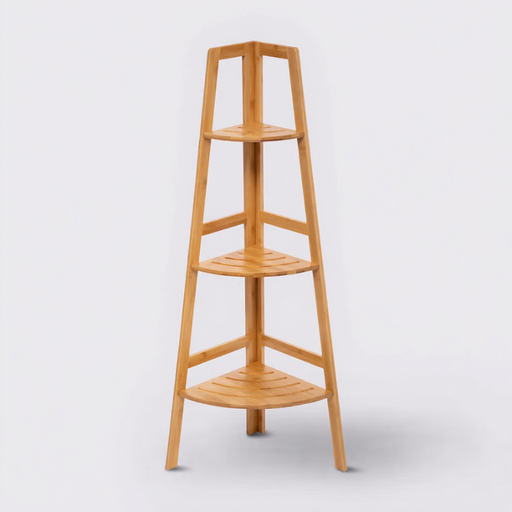
Why this product suits the profile: Measuring 32 × 32 × 103 cm, this compact corner shelf is suitable for smaller flats, bedrooms or narrow alcoves. Three levels provide space for light decorations, plants or small books.
The compact dimensions reduce the risk of overplanning a corner. The stated maximum load is 10 kg in total, or 10.0 kg according to the product information.
Bamboo frame, three shelves and FSC certification according to the product information. Designed for indoor use.
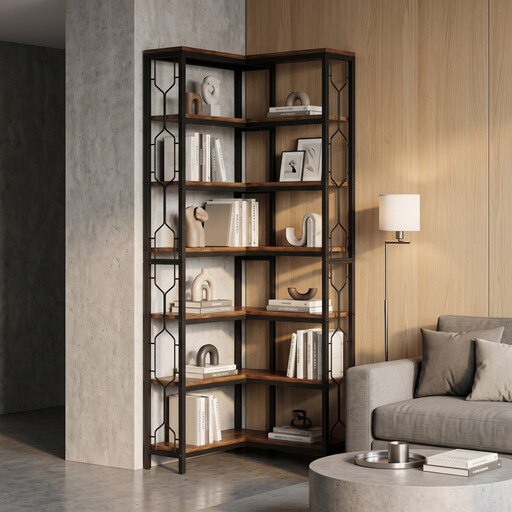
Why this product suits the profile: Measuring 60 × 60 × 200 cm, this L-shaped shelf is designed for users who want to store lots of books, plants or decorative items across several levels.
Adjustable feet and the supplied wall-mounted anti-tip kit address common stability issues. The product information states a capacity of up to 45 kg per level; the load must be distributed evenly.
Seven levels, E0 chipboard according to the product information and a powder-coated metal frame. Assembly is required.
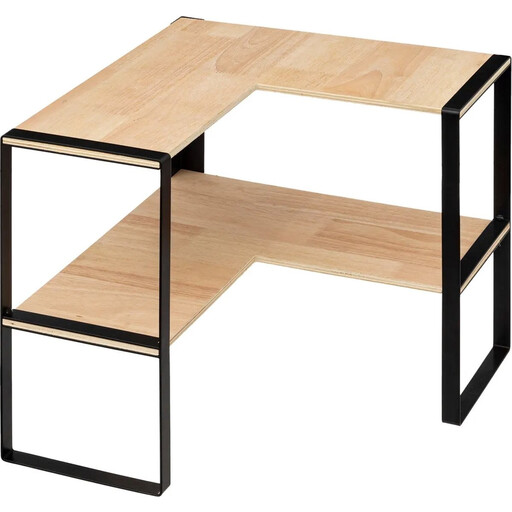
Why this product suits the profile: Measuring 40 × 40 × 35 cm, this kitchen corner shelf is designed for worktops, cupboards or the space beneath the sink. It is suitable for spices, food storage containers and smaller kitchen utensils.
Its modest height helps prevent the model from being used accidentally as a full-height freestanding shelf. The intended use is clearly limited to compact storage surfaces.
Two levels, steel and plywood components, and self-assembly according to the product description. The product weighs 2.26 kg.
We have put together a complete, regularly updated list of products that fully meet these strict selection criteria and the safety regulations applicable in the EU.
With a shelf for the living room or home office, arrange cables, decorative items and files so that they do not create an uneven load. Completely unload the piece of furniture before moving it.
That depends on its design. Compact models start at around 32 × 32 cm of floor space. Larger L-shaped shelves can occupy 60 × 60 cm or more. Measure both sides of the corner and take skirting boards and doors into account.
Stability depends on the construction, material thickness, connection points, floor condition and wall fixing. A wooden corner shelf with a metal frame may have a different load capacity from a model made entirely from wood. Therefore, compare the manufacturer’s specific load-capacity information.
With tall or narrow shelves, fixing them to the wall is generally advisable if anti-tip protection is provided. The shelf should not be used entirely freestanding, particularly when heavily loaded, placed on an uneven floor or used in a household with children. The assembly instructions and the condition of the wall are decisive.