
Lieferung heute & morgen

Qualitätsgarantie

Willkommens-Angebote freischalten: KOSTENLOSE Lieferung | Bis zu 80 % RABATT | Kostenlose 30-Tage-JoyPlus-Testphase
App herunterladen
Unused corners can quickly look untidy, even when only a few items need storing. The right corner shelf can keep spices, toiletries, books or supplies neatly organised. However, corner shelves vary considerably in terms of dimensions, load capacity, installation and materials.
It is therefore worth taking a close look at the actual product specifications before buying. This will help you avoid common mistakes and choose a shelf that suits your room, surface and intended use.
A corner shelf does not simply need to fit into the corner. You also need to take skirting boards, taps, doors, worktops and the distance from adjacent furniture into account. For example, a model measuring 40 cm wide and 40 cm deep requires a correspondingly large footprint. With a tall freestanding corner shelf, you should also consider the ceiling height and any sloping areas.
Measure the available space at several points. For a wall-mounted corner shelf, you also need to consider the position of the drill holes and the condition of the wall.
An indication such as “maximum load” often applies only to a uniformly distributed load. Heavy pots, drinks bottles or tools should therefore not be placed at a single point on a small shelf. Check whether the load capacity applies per shelf or to the unit as a whole.
For example, the PROBUILDER model is specified as supporting 175 kg per shelf with an evenly distributed load, with a total capacity of 875 kg. This does not mean that any amount of weight can be placed at a single point. An anti-tip device and a level standing surface are still important.
A wooden corner shelf may suit the look of a living room or home office, while a damp bathroom presents different requirements. Wood-based materials should be protected from prolonged exposure to moisture. Metal corner shelves are often suitable for cellars, larders or garages, provided that the corrosion protection is appropriate for the environment.
The installation method also affects everyday practicality:
A 3-tier corner shelf provides a compact solution for spices, cosmetics or small decorations. A 5-tier corner shelf or taller model makes greater use of vertical space, but requires secure anti-tip protection.
For the kitchen, the distance between the tiers is important if you want to store jars, frying pans or bottles. In the living room, you should also consider the shelf depth and the distance from windows, sofas or radiators.
Steel, MDF, solid wood, bamboo, plastic and plywood differ in terms of weight, care requirements and sensitivity to moisture. Look for specific information about the finish and cleaning instructions:
A certification such as FSC can provide additional information about the origin of the material used in wooden or bamboo products. However, it does not replace checking the dimensions, stability and care instructions.
Load a shelf from the bottom upwards and distribute the weight as evenly as possible. For tall freestanding shelves, using the supplied wall fixing is recommended where available. A shelf is not designed to be used as a step or ladder. In households with children, you should also prevent the furniture from being used for climbing.
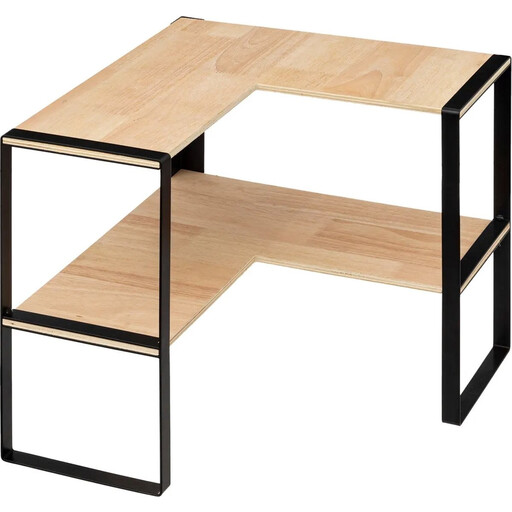
Why this product suits this profile: This compact corner shelf for a worktop, cupboard or space beneath the sink measures 40 × 40 × 35 cm and provides two tiers.
The fixed product dimensions and net weight of 2.26 kg make planning easier. Check the load limit with the supplier before filling it.
Steel frame with plywood shelves, two storage surfaces and self-assembly.
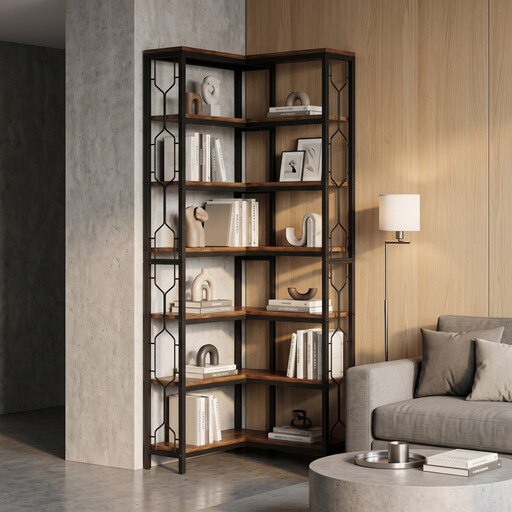
Why this product suits this profile: Standing 200 cm tall, this freestanding corner shelf combines seven tiers with a black-coated metal frame and E0 chipboard.
The product specifications state 60 × 60 × 200 cm, adjustable feet and an anti-tip kit for wall fixing. The stated load limit of 45 kg per shelf must not be exceeded.
Seven shelves, height-adjustable feet and supplied anti-tip protection.
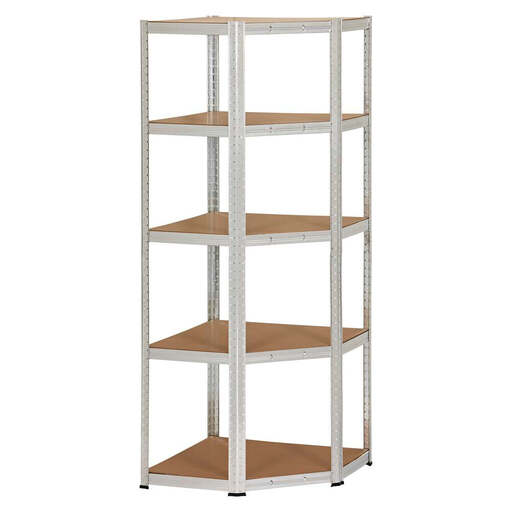
Why this product suits this profile: For garages, workshops, cellars or larders, this metal corner shelf provides five MDF shelves and a slot-together system without conventional screw fixing.
The stated load capacity explicitly depends on even weight distribution. Installation on a level surface and additional wall fixing are recommended.
Galvanised steel, five tiers and a stated total weight of 14.3 kg.
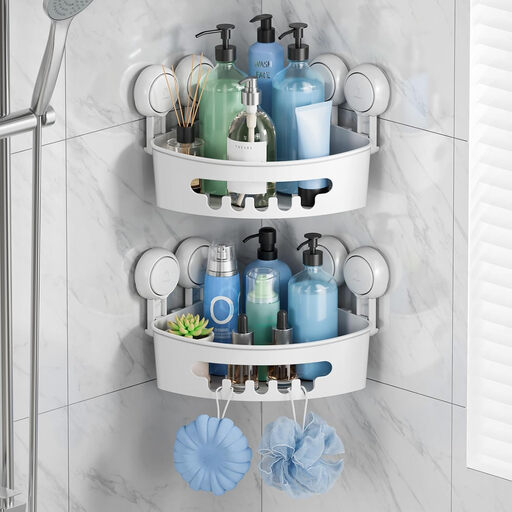
Why this product suits this profile: This two-piece corner shelf is designed for the bathroom or kitchen and attaches without drilling to smooth, non-porous 90-degree surfaces.
The suction-cup installation is not suitable for grout lines, textured tiles, wood, wallpaper or painted walls. The stated capacity of 22 lb must not be exceeded.
ABS baskets, removable construction and drainage holes for water run-off and ventilation.
We have put together a complete, regularly updated list of products that fully meet these strict selection criteria and the safety regulations applicable in the EU.
Place a freestanding corner shelf on a level surface and adjust any feet correctly. Tall models should be secured to the wall using the designated anti-tip protection. For a wall-mounted corner shelf, the wall plugs and screws must be suitable for the type of wall and the expected load.
Its lifespan depends on the material, moisture levels, installation and load. Evenly distributed weight, dry conditions and regular checks of screws or slot connections can help extend its useful life. Without specific information from the manufacturer, it is not possible to give a reliable general lifespan.
The price depends on factors including the material, size, number of tiers and installation method. A simple corner shelf for a worktop is generally priced differently from a tall metal shelf for a garage or workshop. Therefore, do not compare just the purchase price: also consider the fixing materials, assembly effort and suitable load capacity.