
Lieferung heute & morgen

Qualitätsgarantie

Willkommens-Angebote freischalten: KOSTENLOSE Lieferung | Bis zu 80 % RABATT | Kostenlose 30-Tage-JoyPlus-Testphase
App herunterladen
An unused corner can quickly feel like wasted living space. The right corner shelf can hold kitchen utensils, spices, wine bottles, glasses or decorations. However, not every model is suited to the same purpose. If you focus only on the design or the number of shelves, you can easily overlook important details.
A corner shelf usually needs two wall surfaces that meet at an angle of around 90 degrees. However, the space it actually takes up can be greater than you expect. Skirting boards, radiators, door frames and worktops that stick out can all reduce the available space.
Before buying, measure:
For example, a shelf with 40 cm sides needs enough clear space along both walls. In smaller rooms, a slim freestanding corner shelf with three tiers may be more practical.
A general claim such as “high load capacity” doesn’t tell you much. Wine bottles, tins and heavy ceramics create a much greater load than decorative items. Check whether the maximum load applies to the whole unit or to each shelf.
With a corner wine rack in particular, distribute bottles evenly. This reduces uneven loading and improves stability. The manufacturer’s information on bottle capacity, bottle diameter and maximum weight is what matters.
A tall, narrow shelf has a higher centre of gravity. Placing heavy items on the top shelves can make it less stable. Adjustable feet help you level it on a floor that isn’t completely even. For larger models, securing the shelf to the wall with a safety strap is an important part of installation.
Also check whether tools and clear assembly instructions are included. “Easy to assemble” doesn’t necessarily mean that no tools are needed.
A multi-tier corner shelf makes use of vertical space. Three tiers are often suitable for spices, toiletries or smaller decorative items. Four tiers offer more storage, but need to be loaded more carefully and may require wall fixing.
Kitchen requirements vary depending on where the shelf will go:
Bamboo is lightweight and works well with natural interior styles. For dry indoor spaces, a bamboo corner shelf can be a good choice for light to medium-weight items. Metal frames with MDF or engineered wood shelves offer a different combination of appearance and construction. In damp areas, check the care instructions and how well the material is protected against prolonged exposure to moisture.
An easy-care surface is also useful in the kitchen. A smooth, coated surface is generally easier to clean with a dry or slightly damp cloth. Avoid placing engineered wood near direct heat sources or in areas with consistently high humidity, unless the manufacturer says otherwise.
A corner wine rack with glass holders serves a different purpose from a simple corner shelf. Check:
For a home bar, integrated glass holders and open shelves can reduce the need for a separate serving trolley. For spices or pans, a compact two-tier shelf for a worktop, base unit or larder cupboard is often enough.
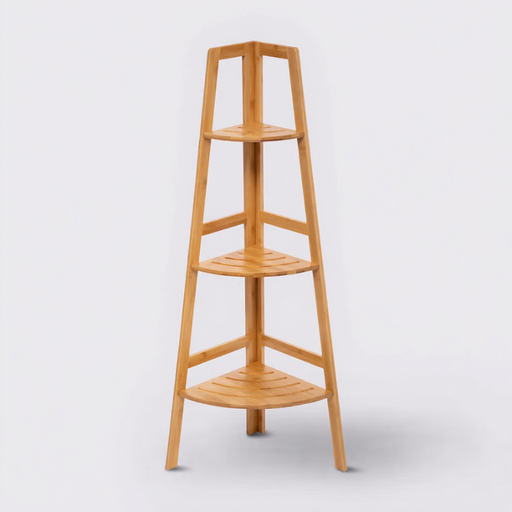
Why this product suits this profile: This three-tier bamboo model is designed for light to medium-weight items in dry indoor spaces. At 32 × 32 cm, it takes up relatively little floor space.
The product details specify three shelves and a maximum load of 10 kg. This makes it easier to plan how you’ll use it than relying on vague claims about storage capacity.
Bamboo construction, three tiers, a maximum load of 10 kg and FSC certification, according to the product details.
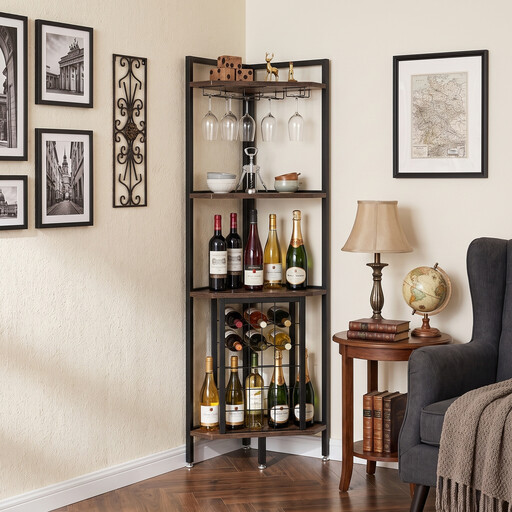
Why this product suits this profile: This tall model combines wine storage, glass holders and open shelves for the dining room, living room, kitchen or home bar.
The product details give dimensions of 40 × 40 × 160 cm and specify a bottle diameter of under 3.7 Zoll. They also mention adjustable feet and a safety strap for wall fixing.
Space for up to 18 bottles, six glass holders and three open shelves, according to the product description; metal frame and MDF shelves.
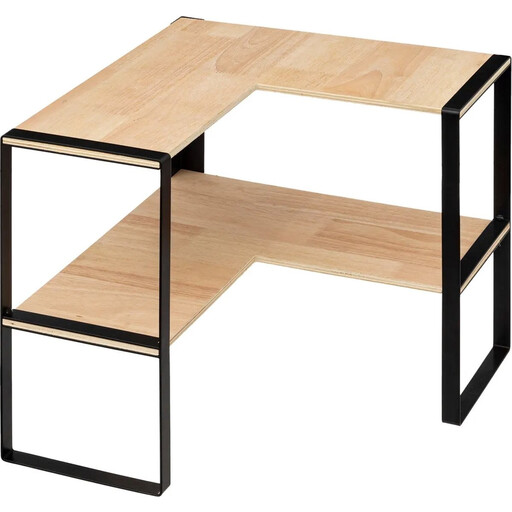
Why this product suits this profile: This compact model is designed for worktops, base units or kitchen cupboards, and is suitable for spices, food storage containers or pans.
The product description identifies it as a two-tier kitchen organiser. This helps prevent it being mistaken for a tall freestanding shelf designed to hold heavy bottles.
Steel and plywood construction, 40 × 40 × 35 cm, two tiers and self-assembly, according to the product details.
We’ve put together a complete, regularly updated list of products that meet these strict selection criteria and the applicable EU safety regulations in full.
Place a tall corner shelf on a level surface first, then adjust the feet. If the model has a safety strap, secure it to the wall as instructed. Before drilling, check for any wiring or pipes in the wall.
A few simple rules will help with everyday use:
It depends on the product dimensions. A model measuring 32 × 32 cm needs at least that much depth along each of the two adjoining walls. For a shelf measuring 40 × 40 cm, also allow for skirting boards, worktops that stick out and enough room to move around. The installation height must also work with doors, windows and wall cabinets.
Choose a level spot, adjust the feet and, if the shelf has a fixing point, secure it to the wall with the supplied safety strap. Heavy items belong on the lower shelves. Do not exceed the stated load limit.
A purpose-made corner wine rack is a better choice than a simple corner shelf, provided the bottle compartments and stated diameter suit your collection. Extra glass holders and open shelves are useful for a home bar. Distribute the load evenly and make sure tall models are securely fixed to the wall.