
Lieferung heute & morgen

Qualitätsgarantie

Willkommens-Angebote freischalten: KOSTENLOSE Lieferung | Bis zu 80 % RABATT | Kostenlose 30-Tage-JoyPlus-Testphase
App herunterladen
A corner sofa bed combines seating, a guest bed and often some extra storage. This makes it a great option for flats, apartments, open-plan living spaces and smaller bedrooms. However, unclear measurements, an unsuitable upholstery fabric or a complicated pull-out mechanism can quickly lead to a disappointing purchase.
The points below will help you tell marketing claims apart from product features that really matter.
A large corner sofa may fit in your room when set up for seating, but block doors, walkways or access to cupboards when extended. That’s why you should check at least these three measurements:
If you’re considering an L-shaped sofa bed, check whether you need the chaise section on the left or right. A reversible chaise can make planning your room easier, but not every model can actually be switched after assembly.
The term corner sofa bed simply means that the furniture can be converted into a sleeping position. It doesn’t automatically guarantee a particular width or height, or that it’s suitable for everyday use.
So check the following:
A living room sofa bed is often used as a guest bed. If you plan to use it more often for sleeping, compare the sleeping area measurements and the design particularly carefully.
Corduroy, linen-look fabric, velour and other upholstery materials differ in feel, care requirements and abrasion resistance. A description such as ‘premium’ doesn’t provide any objective information on its own.
Look for more specific details, such as:
A corduroy sofa can be a practical choice for households with children or pets, but it needs regular vacuuming and suitable stain care. Read the care instructions from the manufacturer before buying.
Measure the space where you plan to put the sofa, including skirting boards, doors and walkways. With a large corner sofa, the depth of the chaise section and the direction it pulls out are particularly important. In open-plan spaces, a freestanding model with an upholstered back can also be used as a room divider.
Allow for possible manufacturing tolerances, too. For example, the CARLOS models are listed with a margin of around 2 to 3 cm. If you’re fitting a sofa into a tight alcove, don’t plan right up to the very last centimetre.
The sleeping area should suit how you intend to use it. According to the product details, the CARLOS model has a sleeping area of around 200 × 130 cm and a storage compartment. It uses a mechanism beneath the seat to extend the sleeping area. You can access the storage compartment by lifting the seat.
A corner sofa with storage can hold duvets, cushions or throws. Check whether the lid can open fully and whether there’s enough space in front of the sofa to move around. Follow the safety instructions for moving parts and keep your hands clear of the mechanism when converting the sofa.
With a modular sofa, the connectors and the arrangement of the modules are key considerations. According to the supplier, the GTIMEX model measures 250 × 170 × 76 cm, has a seat depth of 65 cm and is available as a modular L-shaped sofa with corduroy upholstery. Its stated static weight capacity is 540 kg. This is the manufacturer’s figure for static weight and shouldn’t automatically be treated as the recommended capacity under movement or regular use.
Foam may change shape after unpacking and setting up the sofa. The GTIMEX model is listed as needing around 72 hours to expand. Follow the instructions supplied with the product for the correct set-up process.
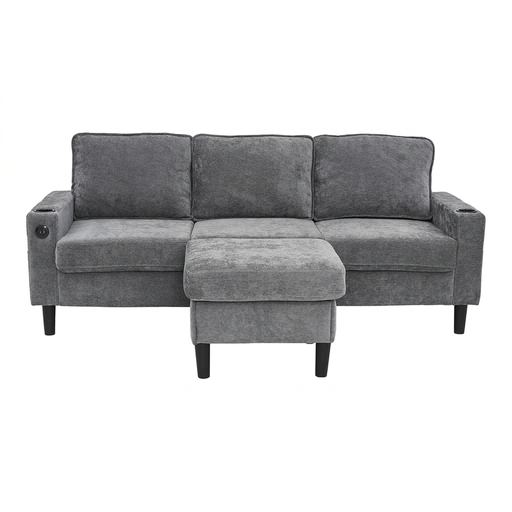
Why this product suits this profile: Measuring 137 × 202 × 80 cm, this compact model is designed for living rooms, apartments, lounges or bedrooms, and seats three people.
The specific overall dimensions and stated weight limit of 150 kg make it easier to plan how the sofa will fit and be used. The sofa bed function is paired with two built-in cup holders.
Three seats, grey linen upholstery, an L-shaped design and two cup holders; assembly required.
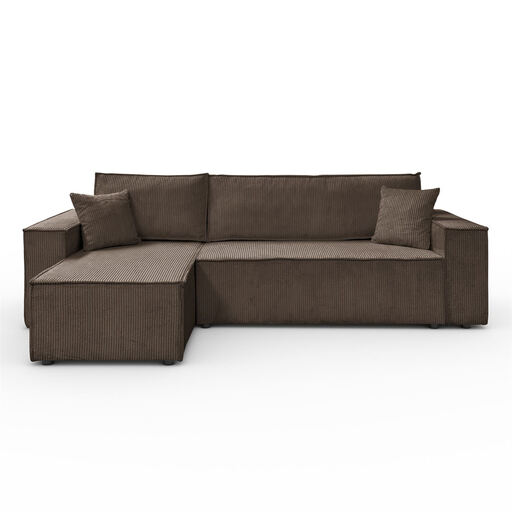
Why this product suits this profile: This model has a reversible chaise, a storage compartment and a sleeping area of around 200 × 130 cm. It’s upholstered in brown corduroy.
The product details specify the cushion construction, with zigzag springs and T30 foam, as well as an abrasion resistance rating of over 35,000 Martindale cycles. That gives you specific information to compare, rather than general claims about quality.
Storage compartment, chaise that can be fitted on the left or right, upholstered back for freestanding use and a stated 24-month warranty.
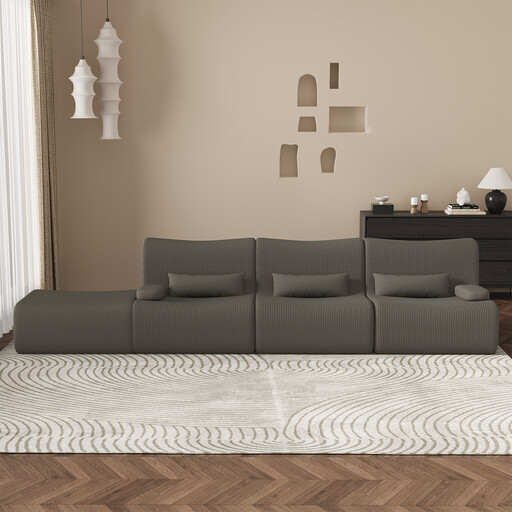
Why this product suits this profile: Measuring 250 × 170 × 76 cm, this modular sofa can be used in living areas, bedrooms or as a room divider. The product description says the modules can be combined.
The modular design and stated static weight capacity of 540 kg give you specific information for versatile use. According to the supplier, the sofa is delivered in two packages.
Corduroy upholstery, 65 cm seat depth, memory foam seat cushions and an estimated expansion time of around 72 hours after unpacking.
We’ve put together a complete, regularly updated list of products that meet these strict selection criteria and fully comply with the safety regulations in force in the EU.
As well as the space it occupies, allow room for the extended sleeping area and enough clearance to move around. Depending on the mechanism, the sofa may extend forwards or to the side. Make sure it doesn’t block doors, radiators or cupboard doors.
That depends on the sleeping area, cushion construction, frame and mechanism. Having a sofa bed function alone doesn’t indicate how long the sofa is designed to be used for. If you plan to sleep on it regularly, look for specific information about its construction and care.
The storage compartment should be large enough for the bedding you want to store and should open fully. Measure the space in front of the sofa and check that you can lift the seat without forcing it. Follow the manufacturer’s safety instructions when doing so.