Busy solo breakfast eaters
If you don’t want to weigh or decant anything before work, individually wrapped cereals can be handy. Still, check how much is in each sachet and which varieties are included in the pack.


An individually wrapped variety pack is a good fit if you want breakfast without weighing anything out and like having a choice of cereals. If ingredients and sugar content matter more to you, compare unsweetened cornflakes in standard packs; you’ll need to portion them yourself. A variety pack also doesn’t contain cornflakes exclusively.
If you don’t want to weigh or decant anything before work, individually wrapped cereals can be handy. Still, check how much is in each sachet and which varieties are included in the pack.
If the recipe matters more to you than having individual sachets, unsweetened cornflakes in a standard pack could be a good option. Compare the nutritional information per 100 g and remember that you’ll need to portion them yourself.
A variety pack offers a selection of cereals instead of the same type of cornflakes every time. You can only tell whether the varieties suit you by checking the ingredients and nutritional information for each one.
First decide whether individual packaging or the recipe matters more for your breakfast. Then compare the details of the products you’re considering, as a variety pack and a standard pack meet different everyday needs.
| Criteria | What to check | Who it matters to |
|---|---|---|
| Individually wrapped portions | Number of sachets and the amount in each one; don’t assume the stated number of portions matches the number of sachets. | If I’m having breakfast on my own and in a hurry, I want to be able to open a sachet without weighing anything out. Around 42% of consumers prioritise this easy portioning. |
| Sugar and ingredients | Compare sugar per 100 g on a like-for-like basis; check the ingredients, allergen information and may-contain warnings. | For my everyday breakfast, the ingredients matter more than having an individual sachet, even if I have to portion it myself. Around 33% of consumers put this comparison first. |
| Choice of varieties | Check which varieties are included and the information for each one, rather than assuming the figures for the mix apply to every sachet. | If I want to switch between flavours during the week, I need to like all the varieties in the pack. Choice is the main reason for buying for around 25% of consumers. |
Sachets make cereals easier to handle, but they tell you nothing about the sugar content. REWE lists 22 g of sugar per 100 g for the Kellogg’s variety pack as a whole, not for each variety individually.
Alongside the number of sachets, check the nutritional information and ingredients for the varieties included.
A statement about added sugar doesn’t tell you how much sugar the product contains in total. Lebensmittelklarheit explains that the sugar figure in the nutrition table also includes naturally occurring sugars.
Compare the sugar content per 100 g and check the ingredients list too.
Cornflakes with maize as the main ingredient can still contain other ingredients or carry may-contain warnings. These details are relevant when choosing the REWE Bio and EDEKA Bio products described here.
If you have an allergy or coeliac disease, check the current labelling on the specific product.
Kellogg’s Germany describes Variety as a selection of individually wrapped cereals; REWE lists eight small packs in the 205-g pack it sells.
The listed unsweetened organic cornflakes come in a 375-g standard pack, not a collection of individual sachets.
EDEKA sells unsweetened organic cornflakes and classic GUT&GÜNSTIG cornflakes, each with a different recipe.
Seitenbacher describes its cornflakes as a standard-pack option for people who want to portion their own breakfast.
Cini Minis are cinnamon-flavoured cereals, not a like-for-like alternative to unsweetened cornflakes.
This selection compares an individually wrapped variety pack with a standard pack of unsweetened cornflakes. Choose the option that best suits your breakfast routine: opening a sachet or deciding how much to serve yourself.
 No image available
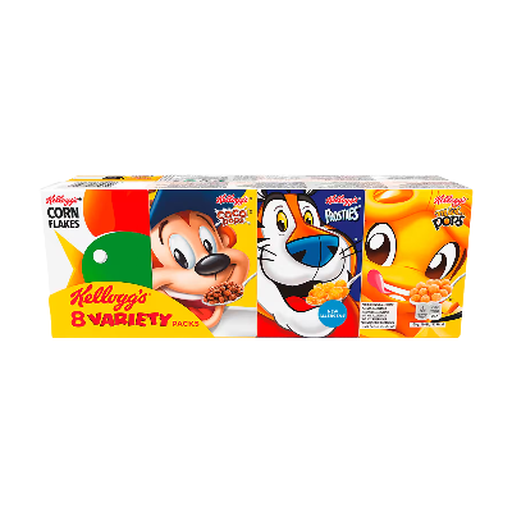
This selection of individually wrapped cereals is a good fit if you’re having breakfast on your own and don’t want to decant anything, and you’re happy with a mix of varieties.
The pack contains eight individual packs, weighing 205 g in total. Check the amount in each sachet to see whether it suits your needs; the mix isn’t made up of cornflakes alone.
 No image available
These cornflakes are worth considering if an unsweetened variety matters more to you than individually wrapped sachets.
You’ll need to portion the 300-g pack yourself. Before buying, pay particular attention to the current allergen information on the packaging.
No. The sachet size and the stated serving size don’t necessarily match. For a variety pack, compare the net weight, number of sachets and serving information on the current pack.
Compare the “of which sugars” figure per 100 g for each product. The ingredients list answers a different question: it shows what the product contains. According to Lebensmittelklarheit, the sugar figure in the nutrition table also includes naturally occurring sugars.
Check the ingredients list, highlighted allergens and any may-contain warnings on the current pack for the specific product. A maize-based recipe or the word “unsweetened” doesn’t tell you whether it’s suitable for your allergies.
Follow the storage instructions on the pack. For its cornflakes, for example, Seitenbacher recommends storing them in a cool, dry place in a tightly sealed container; this advice doesn’t automatically apply to every other product.