What should you look for when buying?
First, check the smallest quantity your recipe calls for. Then make sure the bowl, maximum capacity, display and available space are all a good fit for the scale.
| What matters |
What to check before buying |
Who is this important to? |
| Small increments |
Choose an increment that suits your recipe; don’t assume that a manufacturer’s stated increment is the same as independent proof of accuracy. |
When I weigh small amounts of cornflour, I want to know whether whole grams are enough or whether I need finer increments; around 36% of consumers prioritise small increments. |
| Limited worktop and storage space |
Compare the scale’s dimensions with your available worktop and storage space; check that the bowl sits securely and the display remains visible. |
In a small kitchen, I want to be able to put the scale away easily after cooking without losing sight of the display while weighing; around 29% of consumers prioritise a compact size. |
| Weighing ingredients in a bowl |
Check the tare function, container size and maximum capacity, including the container. |
When I weigh cornflour directly into my bowl, I want the tare function to reset the display and the container to stay within the permitted capacity; around 21% of consumers make convenient weighing in a container their top priority. |
| Care and power supply |
Check the cleaning instructions for the specific model, as well as the battery or rechargeable battery type and what’s included. |
For everyday use in the kitchen, I want to know how to clean the scale after cooking and whether it needs batteries or a rechargeable battery; around 14% of consumers prioritise care and power supply. |
Manufacturers quote different specifications for different models. The Soehnle Page Compact 300 Slate has a stated increment of 1 g and a maximum capacity of 5 kg; the CASO FinoCompact is specified in 0.1 g increments, with a maximum capacity of 500 g. The 500 g includes the container.
Joybuy products
The following Joybuy products include digital scales for kitchen use. Increments, container shape, dimensions and features vary by model, so choose one that suits your recipe and available space.
 No image available
Aigostar Duncan digital kitchen scale, up to 5 kg
The stated tare function is useful if you’re weighing ingredients in a container.
Stated dimensions: 18 × 14 × 2 cm. LCD display, multiple units of measurement and a maximum capacity of 5 kg.
View at Joybuy
 No image available
Digital kitchen scale with LCD display, 1 g, up to 5 kg
The stated tare function is useful for weighing ingredients in a container, as long as the total weight remains within the maximum capacity.
Stainless steel surface and LCD display. Stated increment: 1 g; maximum capacity: 5 kg.
View at Joybuy
 No image available
Digital kitchen scale with stainless steel surface, 1 g, up to 5 kg
The stated tare function is useful for weighing cornflour in a container.
Stainless steel surface and LCD display. Stated increment: 1 g; maximum capacity: 5 kg.
View at Joybuy
 No image available
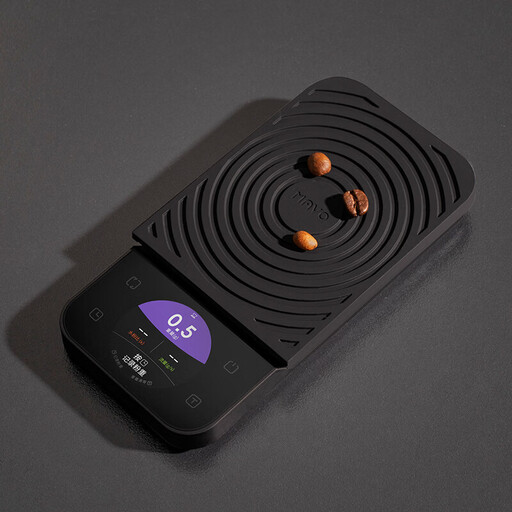
Smart Coffee Scale, digital kitchen scale
The product title describes it as suitable for kitchen use as well as making coffee.
Features listed include a touchscreen and pour-over, espresso and weighing modes. The product details shown here don’t specify an increment or maximum capacity. Check these before buying if they’re important for the quantities you need to weigh.
View at Joybuy
 No image available
Digital scale with removable bowl
The removable bowl may be useful if you want to weigh ingredients directly in a container.
Stated dimensions: 20.5 × 18 × 4.5 cm. Battery-powered, with a maximum capacity of 5,000 g.
View at Joybuy
Frequently asked questions
How do I weigh cornflour for a sauce in a container?
Place the container on the scale, use the tare function to reset the display to zero, then add the quantity required by your recipe. Make sure the container and ingredients together don’t exceed the maximum capacity. Dr. Oetker recommends first mixing cornflour with a little cold liquid, then stirring it into the hot sauce.
Does a display in 0.1 g increments automatically mean greater measuring accuracy?
No. The 0.1 g figure for the CASO FinoCompact describes the increment stated by the manufacturer, but it isn’t, on its own, proof of an independently verified measurement error. Also check whether the 500 g maximum capacity, including the container, is enough for your needs.
What should I know about batteries, rechargeable batteries and faults?
Check the power supply and what’s included with the specific model. The CASO FinoCompact doesn’t include two AAA batteries, according to the manufacturer; the ZWILLING Enfinigy 53011-051-0 has a rechargeable battery that can be charged via USB, according to the manufacturer. If consumer goods are faulty, the seller is generally responsible for the statutory guarantee. The Verbraucherzentrale says this generally lasts for two years from delivery. A voluntary manufacturer’s guarantee is separate.
Do I need a verified kitchen scale for cooking sauces at home?
You don’t need a verified scale for weighing ingredients when cooking at home. Germany’s National Metrology Institute (PTB) describes household scales as not subject to statutory minimum requirements. Verification requirements apply, among other cases, to scales whose readings are used to calculate charges in commercial transactions.
How should I dispose of an old digital kitchen scale in Germany?
Don’t put an old kitchen scale in your household rubbish. The Federal Environment Agency lists ways to return old electrical appliances, including recycling centres and, under certain conditions, retailers. Take removable batteries to a separate battery collection point.


