A cortado with milk just the way you like it
You want to measure out a small amount of warm milk yourself and create just a little foam. A manual steam wand gives you a separate step to control.


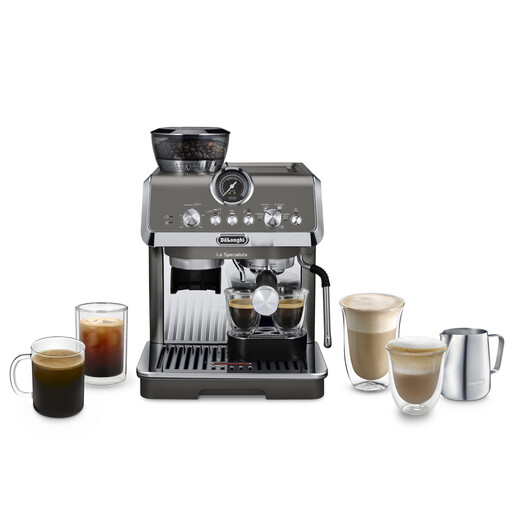
A portafilter machine with a steam wand is a good choice for a cortado if you want to control the espresso and small amount of milk yourself. A capsule machine needs a separate appliance to heat the milk, while a bean-to-cup machine takes care of more of the preparation for you. Consider how much space, hands-on preparation and cleaning you’re happy to fit into your daily single serving.
You want to measure out a small amount of warm milk yourself and create just a little foam. A manual steam wand gives you a separate step to control.
You want to influence how your espresso is brewed by adjusting the coffee grounds and preparation, and you’re happy to put in a few extra steps. Depending on your setup, you may also need a separate grinder.
You usually make one serving, so you’ll need to consider more than just the machine’s width: allow space for its depth, accessories and cleaning, too.
A good fit if: you want to control the espresso and small amount of milk yourself.
Bear in mind: grinding, tamping and frothing are all hands-on tasks, and the steam wand needs looking after.
A good fit if: you want to make espresso with a portafilter machine and simplify the frothing process.
Bear in mind: you’ll still need to prepare the coffee grounds and portafilter; check that it can handle the small amount of milk you need.
A good fit if: you’d rather make espresso easily than control the grind size and coffee grounds.
Bear in mind: you’ll need two appliances for the espresso and milk, as well as compatible capsules.
A good fit if: you want the machine to grind the beans and cut down on manual preparation.
Bear in mind: check that you can set the small amounts of espresso and milk you want; the milk system needs cleaning, too.
| What matters to you | What to check when buying | Who is this important to? |
|---|---|---|
| Small amount of milk | Check whether you can measure the espresso and milk separately, and whether you can froth the milk or just heat it. | I want to measure the milk myself and create just a little foam. Around 36% of consumers would put this milk texture first. |
| Control over the espresso | Check the filter baskets and whether you can brew with ground coffee; allow for a grinder if you want to grind your own beans. | If I want to influence how my espresso is brewed by adjusting the coffee grounds, I’m happy to put in a few extra steps. Around 29% of consumers would put this first. |
| Counter space | Measure the width, depth and height, as well as the space needed for filling, using and cleaning the machine; don’t forget any extra accessories. | I need room for the whole setup in my kitchen, not just the machine. Around 21% of consumers would put available counter space first. |
| Time and maintenance | Compare the preparation and cleaning needed for parts that come into contact with milk; if you’re considering a capsule machine, check which capsules it needs, too. | For a single cup, I want to keep preparation and maintenance manageable. Around 14% of consumers would put a quick single serving first. |
Even a narrow machine can take up a lot of worktop space once you add a grinder, milk jug or separate milk frother. With a capsule machine and milk frother, the espresso and milk appliances sit separately.
Measure the space needed for the whole setup, and check that you can reach everything to fill, use and clean it.
A milk programme or steam wand alone won’t tell you whether you can make the small amount of milk with just a little foam that you want.
Check the separate settings and the instructions for preparing small amounts of milk.
Capsule machines, portafilter machines and bean-to-cup machines involve different preparation and maintenance steps. Fewer hands-on steps while making a drink don’t necessarily mean there’s less cleaning to do.
Compare the maintenance and consumables required, as well as how the machine works. Depending on how you prepare your drink, you may need capsules or cleaning products; grinding beans may also require extra equipment.
The Dedica Duo EC890.M combines a slim portafilter machine with espresso programmes and a manual steam wand.
The Bambino Plus SES500 combines a portafilter machine with automatic or manual milk texturing.
The Classic E24 is a manually operated portafilter machine with a steam wand.
The Lapressa is a slim portafilter machine for single or double espresso, with milk frothed manually.
The Essenza Mini is available with a separate Aeroccino 3 milk frother.
The LatteGo 3300 EP3347/90 bean-to-cup machine combines a grinder with a removable milk system.
This selection includes portafilter machines with a steam wand, as well as a capsule machine with a separate milk frother, for making a single serving of espresso and milk.
 No image available
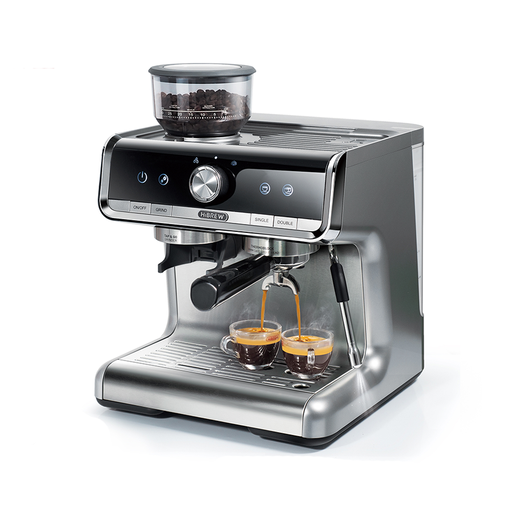
An option if you want to prepare the espresso and milk yourself.
The product name lists a 58-mm portafilter, 30 grind settings, a pre-infusion function and a steam function.
 No image available
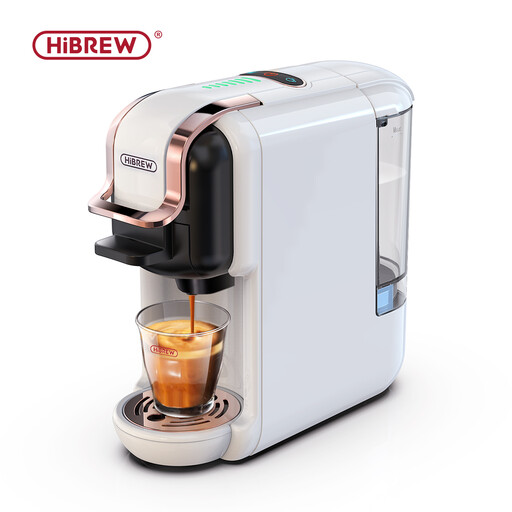
The listed steam function lets you prepare milk manually.
The product name lists support for Nespresso capsules, DG capsules, ESE pods and ground coffee, as well as a compact design.
 No image available
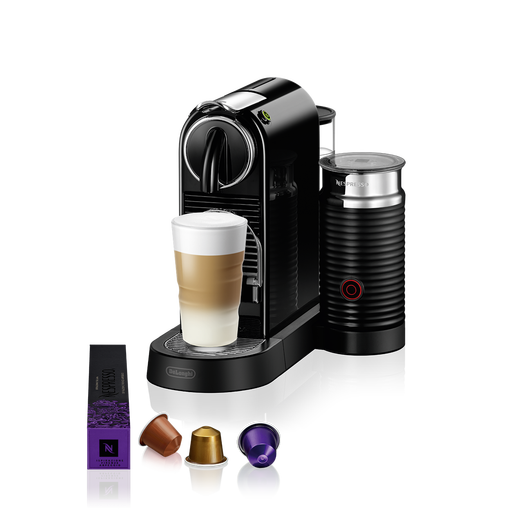
An option if you want to make espresso from a capsule and prepare the milk separately.
The product name lists an Aeroccino milk frother and two programmable cup sizes. Nespresso Original capsules are used to make the espresso.
 No image available
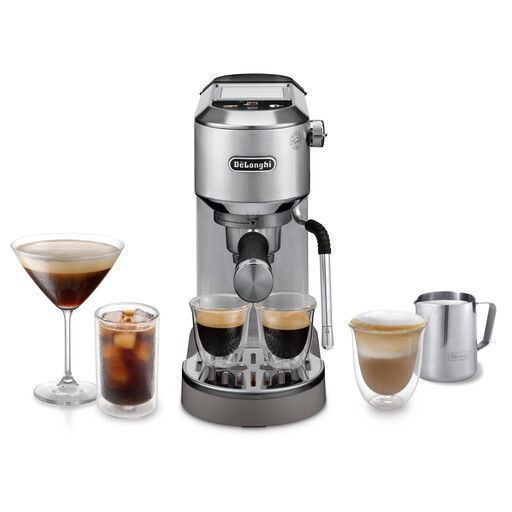
For a single serving, this model offers programmes for single and double espresso; milk is frothed manually.
De’Longhi lists this model as 15 cm wide. It doesn’t have an integrated grinder for preparing coffee from whole beans.
 No image available
An option if you want to prepare the espresso and milk manually.
Milk is frothed with the steam wand; according to the product information, it should be wiped and rinsed after use.
No, you don’t need a dedicated cortado button. The important thing is that you can make espresso and separately heat or lightly froth a small amount of milk; different machines handle this in different ways.
It depends on the model and the amount of milk you want to use. A manufacturer’s claim of automatic milk texturing doesn’t guarantee that the machine can handle every small serving; check the settings and the instructions for the specific model.
Clean all parts that come into contact with milk according to the instructions for your model, and keep up with regular machine maintenance. Removable and automatic milk systems still need cleaning.
Measure the available width, depth and height, and allow extra room to fill, use and clean the machine. If you have a separate milk frother or grinder, include the space it needs, too.
Check the mains voltage and product labelling for the specific appliance. According to the Federal Network Agency, CE marking is required for products covered by relevant EU harmonisation legislation and placed on the EU market. De’Longhi lists the Dedica Duo EC890.M as 220–240 V; this doesn’t tell you anything about other models.