Cortado enthusiasts
You want to adjust the amount of espresso and warm milk yourself, and don’t mind putting in more time to prepare and clean the machine.


For a cortado, you need to be able to prepare and measure out the espresso and a small amount of warm milk separately. Roast Coffee Company’s recipe uses roughly equal parts espresso and steamed milk. A portafilter machine gives you more hands-on control, a bean-to-cup machine makes serving coffee easier, and a capsule machine with a separate milk frother can keep preparation to just a few steps. Whichever option you choose, you’ll need to consider both the space it takes up and how to clean the parts that come into contact with milk.
You want to adjust the amount of espresso and warm milk yourself, and don’t mind putting in more time to prepare and clean the machine.
You share the machine with other people and need parts that are easy to access and clean, as well as clear cleaning responsibilities.
You have limited worktop space or want to make a drink in just a few steps. You’ll still need to allow for milk preparation and accessories.
A good choice if: You want to control the amount of espresso and milk yourself, and clean the parts that come into contact with milk after every use.
The trade-off: Measuring out the ingredients and preparing the milk take some hands-on work. This applies to the models mentioned here, not necessarily to all portafilter machines.
A good choice if: Several people want an easy way to make espresso, and you’ve agreed who’s responsible for the milk frother and brew group.
The trade-off: Easy coffee preparation doesn’t remove the need to clean the machine or measure out the right amount of milk for a cortado.
A good choice if: You value easy-to-make espresso portions more than choosing your own beans or grind size, and have room for a separate milk frother.
The trade-off: You’ll need to factor in the capsule type and regular capsule purchases, as well as the extra space and cleaning required for the milk frother.
| What matters | What to check before buying | Who it matters most to |
|---|---|---|
| Espresso and a small amount of milk | Check whether you can measure out the espresso and warm milk separately. | If I want to get the balance of espresso and milk right for my small glass, I need to be able to control both amounts myself. Around 29% of consumers put this control first. |
| Cleaning when the machine is shared | Check that the steam wand or milk container is easy to reach and whether the relevant parts can be removed. | If several people use the machine, I want to know who will clean the parts that come into contact with milk after each use. Around 23% of consumers prioritise cleaning that’s easy to organise. |
| Space for the machine and accessories | Measure the full worktop area, including space for the milk frother, grinder and cleaning. | If the kitchen worktop is shared and space is limited, I want to know in advance how much room the machine and accessories will take up together. Around 18% of consumers put the space required first. |
| Fewer preparation steps | Consider how you’ll prepare the espresso and milk separately, and remember to allow time for cleaning afterwards. | If several people make coffee one after another, I want a straightforward process with as few steps as possible. Around 18% of consumers prioritise a simple routine. |
| Ongoing purchases and responsibilities | Agree who’ll pay for coffee and cleaning products, and which accessories you’ll need for your chosen machine. | If we share consumables, I want to agree in advance what needs to be bought regularly and how the cost will be split. Around 12% of consumers put these ongoing costs and responsibilities first. |
A milk frother, grinder and other accessories also take up space. So the machine’s width alone won’t tell you whether you have room for the whole setup in your kitchen.
Measure the usable worktop and cleaning area, including the accessories you actually plan to use.
A separate accessory may take up valuable worktop space that’s needed for other things in a shared kitchen.
Roast Coffee Company describes a cortado as roughly equal parts espresso and warm milk. A milk programme designed for another drink won’t automatically give you this ratio.
Check whether you can measure out the right amount of milk for your glass.
Depending on the machine, the milk frother, brew group and separate milk containers need attention after use. The German Social Accident Insurance (DGUV) highlights the importance of hygiene rules in workplace kitchenettes.
Before sharing the machine, agree who’ll clean each part and the worktop after use.
The De’Longhi Dedica Style Barista Bundle ECKG6821.M listed by Joybuy includes a grinder and other accessories. It’s not the same purchase as the standalone EC685.M EX:4.
Compare the full model number and what’s included, not just the name ‘Dedica’.
The Dedica Style EC685.M EX:4 is a slim manual portafilter machine for making espresso and measuring out warm milk separately.
The Bambino SES450BSS4EEU1 is for people who want to control their portions and milk themselves using a portafilter and steam wand.
The Series 2200 EP2223/40 is a bean-to-cup machine with a classic milk frother, suited to making espresso in a shared kitchen.
The Essenza Mini and Aeroccino 3 set pairs a capsule machine with a separate milk frother for individual drinks.
The Joybuy models below include bean-to-cup machines, capsule machines and manual portafilter machines for making espresso with separately measured milk.
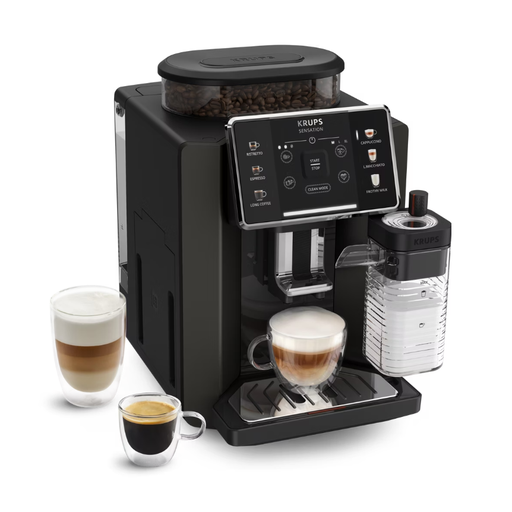 Image unavailable
A good fit if several people want to use a bean-to-cup machine for coffee and milk-based drinks.
The milk container needs cleaning after use. According to the product information, it’s dishwasher-safe.
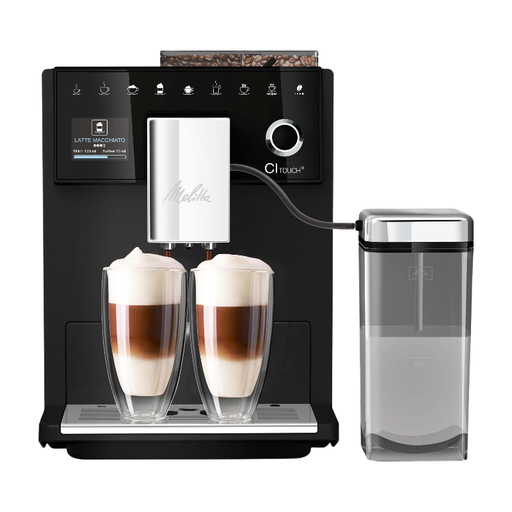 Image unavailable
An option for several people who want to share a bean-to-cup machine with an integrated grinder and milk frother.
For milk-based drinks, you’ll need to attach and fill a milk container. Cleaning it afterwards is part of the routine.
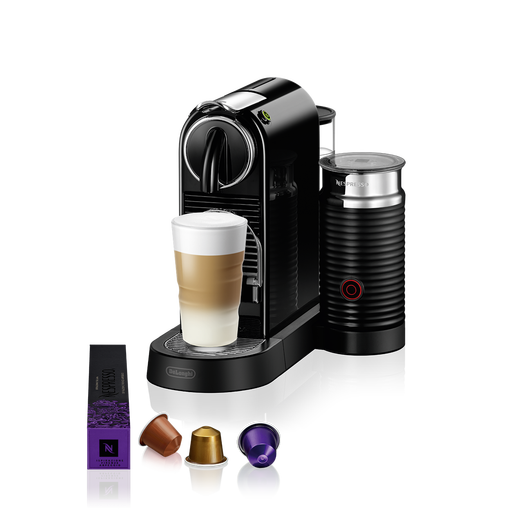 Image unavailable
A good fit if you want a set with a capsule espresso machine and a separate milk frother.
The machine requires compatible Nespresso capsules and, according to the product description, is intended for household use. Check the relevant requirements separately if you’re buying it for a workplace kitchen.
 Image unavailable
An option if you want to prepare the espresso and milk manually and adjust the amount of milk yourself.
The product name specifies single and double shots, as well as a steam wand. The wand needs cleaning after you prepare the milk manually.
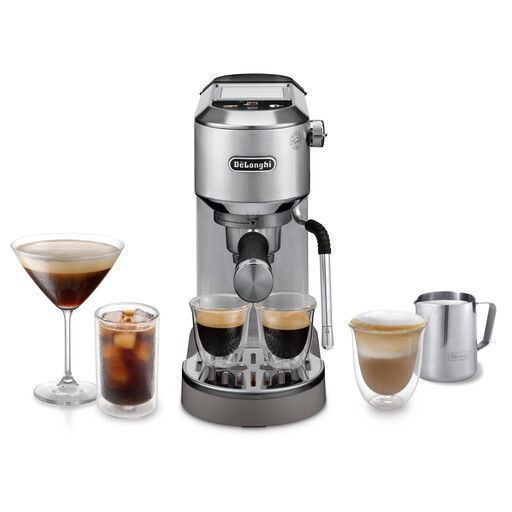 Image unavailable
A good fit if you want a portafilter machine with manual milk preparation.
The steam wand froths the milk and should be cleaned after use. You’ll also need ground coffee or a separate grinder to make your coffee.
No. What matters is being able to prepare and measure out the espresso and roughly the same amount of warm milk separately. Roast Coffee Company’s recipe describes a drink, not a set machine standard.
It depends on the machine. For the Philips EP2223/40, the manufacturer lists a two-part milk frother and a removable brew group. You should also agree who’ll clean the milk container, crockery and worktop after use.
Your statutory rights are against the seller; a manufacturer’s warranty is separate and voluntary. The Verbraucherzentrale explains the difference for Germany (as at 28 September 2026). Check the terms of any additional warranty separately.
Yes, if it’s genuinely a workplace kitchen: employers must assess work-related risks, and electrical equipment is covered by DGUV Regulation 3. TÜV Rheinland also says that privately owned appliances brought into the workplace require approval and inspection. These workplace rules don’t apply simply because several people share a private kitchen in a flat.
No. According to information from the European Union, the CE marking is the manufacturer’s declaration that a product meets the relevant EU requirements. No central EU body issues a general CE certificate.