
Lieferung heute & morgen

Qualitätsgarantie

Willkommens-Angebote freischalten: KOSTENLOSE Lieferung | Bis zu 80 % RABATT | Kostenlose 30-Tage-JoyPlus-Testphase
App herunterladen
A cosmetic science kit promises creative fun and a playful introduction to the world of science. Children can make their own soaps, bath salts, or creams—a fascinating idea. But reality often looks different: initial excitement quickly gives way to frustration when the set is incomplete, the instructions are incomprehensible, or the result doesn't meet expectations. As a Joybuy Product Recommendation Officer, I'll help you navigate the common pitfalls and choose a set that truly brings joy.
Many products on the market don't deliver what their colourful packaging promises. Watch out for these three common problems to avoid making the wrong purchase.
To ensure the science kit is a success, you should check three core aspects before buying. These features separate high-quality creative sets from inferior products.
A set designed for an eight-year-old must be structured differently from one for a twelve-year-old. Check the manufacturer's age recommendation. A good science kit for girls and boys in primary school focuses on simple mixing ratios and quick, rewarding results, such as making simple soap or bath salts. For older children, it can be more complex, for instance, with the creation of emulsions (creams). High-quality instructions are always illustrated, written in clear English, and explain not only the "how" but also the "why" behind the chemical reactions.
A compelling set includes all the necessary basic materials to complete at least one or two projects from start to finish. This includes not only the raw materials but also measuring cups, stirring sticks, and moulds. Pay attention to the following points:
The difference between a simple craft set and a true science kit lies in the learning effect. A good set, such as a Kosmos Cosmetics Lab, playfully teaches scientific principles. It explains why soap cleanses or how loose salt crystals become fragrant DIY bath salts. At the same time, the creative kit for kids should leave enough room for their own ideas, such as mixing colours or adding safe glitter.
Based on the criteria above, we have identified some products that are suitable for different interests and inclinations.
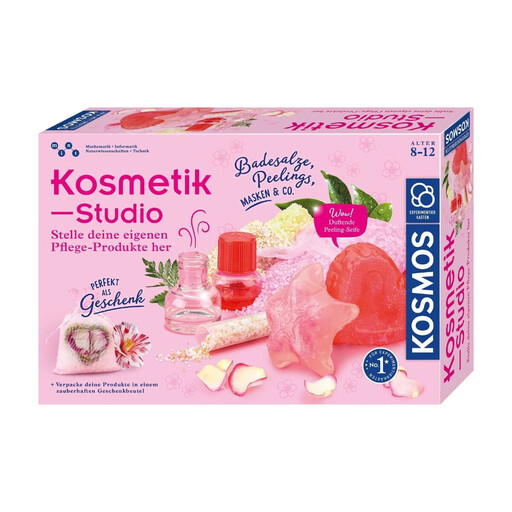
Why this kit is a great fit: It's ideal for children who are genuinely interested in how skincare products work. They can create scrubs, masks, bath salts, and soaps, turning the bathroom into a small wellness lab.
The set includes comprehensive equipment and a full-colour illustrated manual that explains the chemical principles in a simple way, avoiding the traps of unclear instructions and incomplete kits.
Combines creative crafting with genuine learning about the chemistry of cosmetics. The finished products can be used personally or packaged in the included gift bag.

Why this kit is a great fit: An excellent alternative for children who love crafting and design. Instead of making cosmetics, they create sparkling jewellery pendants. It's a perfect gift for girls aged 8 and up that promotes creativity and fine motor skills.
The process is simple, and the result is quickly visible. The set contains all the necessary materials, including casting moulds and jewellery cords, so no additional purchases are needed, and frustration from complex procedures is avoided.
Fosters design skills and results in a wearable, individual piece of jewellery. The sense of achievement is immediate and motivating.
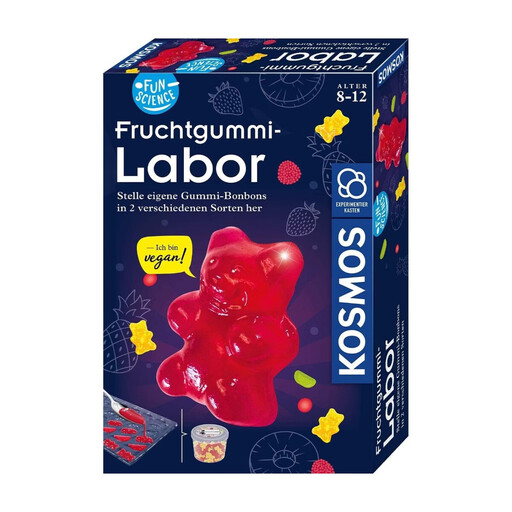
Why this kit is a great fit: For children who love scientific experiments but prefer an edible result. This set moves the lab into the kitchen, making the process of creating vegan gummy candies an educational experience.
The set is almost complete (only water is needed), and the instructions explain the science behind the gelling process. It offers real educational value rather than just being a baking mix.
Combines fun in the kitchen with the basics of food chemistry. The result is not only delicious but can also be given as a gift in the included jars.
If you're looking for more ideas that foster creativity and scientific thinking, we've curated a wide selection of products that meet our criteria for safety and educational value.
1. Are the ingredients in a cosmetic science kit safe for children? Reputable manufacturers selling their products in the EU must adhere to strict regulations. Look for the CE marking and a transparent list of ingredients. The products are generally designed for children's skin. Nevertheless, it is advisable to perform a small skin patch test, for example, in the crook of the elbow, before widespread use, especially for children with sensitive skin.
2. From what age is a DIY cosmetics kit suitable? Most kits for DIY cosmetics for kids are aimed at an age group of 8 to 12 years. At this age, motor skills and the ability to understand instructions are sufficiently developed. Younger children usually require more adult supervision. Regardless of age, use should always be supervised by an adult, especially for steps that require heat (e.g., melting soap).
3. What is typically included in a soap making kit for kids? A typical soap making kit for kids contains a base soap mass (often glycerin-based), special soap dyes, mild fragrances, one or more casting moulds (e.g., in animal or flower shapes), and illustrated instructions. Some sets also include dried flowers or glitter for decoration.