Photographing small costume details
You want to show seams, embroidery or fastenings clearly. Check the magnification of the specific lens you’re considering. Canon Germany and Nikon Germany offer advice on macro photography.


A camera kit with a standard zoom may be enough for full costumes and larger areas. For tiny seams, embroidery or fastenings, the maximum magnification of the lens you’re actually using is what matters. To capture colours consistently, plan your lighting and white balance as carefully as your camera: the Canadian Conservation Institute explains that even lighting can help show an object’s colours and tonal values. For historic or light-sensitive textiles, agree the lighting with the exhibition team.
You want to show seams, embroidery or fastenings clearly. Check the magnification of the specific lens you’re considering. Canon Germany and Nikon Germany offer advice on macro photography.
For consistent results, you need a repeatable set-up, controlled lighting and a carefully checked white balance – not just more megapixels. The Canadian Conservation Institute and Sony Germany explain these aspects of object photography and colour matching.
If you’re photographing historic or light-sensitive textiles, agree the photography method and lighting with the collection team responsible. The German Textile Museum in Krefeld highlights how sensitive textiles can be to light.
A good fit if: you’re mainly photographing full costumes and larger areas, and there’s enough space at the exhibition to frame the shot you want.
Bear in mind: a kit zoom isn’t automatically suitable for tiny details. Check the magnification of the included lens rather than comparing camera bodies alone.
A good fit if: you want small embroidery or fastenings to fill a large part of the frame. Compare the magnification and check that the lens is compatible with your camera mount.
Bear in mind: the standard zoom kits considered here don’t automatically include a macro lens. Focusing at close range also takes extra care.
A good fit if: your existing camera already captures the area you need, but you want to control the lighting and colour reproduction for a series of documentary photographs.
Bear in mind: additional lighting for sensitive historic textiles should be agreed with the team responsible.
| Buying priority | What to check before buying | Who is it important for? |
|---|---|---|
| Capture small details at a larger scale | Check the maximum magnification and the mount compatibility of the specific lens. | If you want tiny seams, embroidery or fastenings to fill the frame, the lens’s magnification matters. Around 29% of consumers put capturing enlarged details first. |
| Reproduce colours consistently | Check the white balance and make sure the camera position is stable for repeatable shots. | If you want to compare fabric colours and tonal values across an exhibition series, controllable lighting and a repeatable set-up are especially important. Around 23% of consumers prioritise colour control. |
| Photograph sensitive textiles | Ask the venue about its requirements for additional lighting and permitted camera positions. | Photography of historic or light-sensitive loans must be agreed with the team responsible. Around 18% of consumers prioritise a textile-friendly approach. |
| Frame both wider views and details | Check the angle of view and framing with the lens actually included, at the location where you’ll be taking the photographs. | If you need to photograph both full costumes and larger areas, the shooting distance and available space are key. Around 18% of consumers prioritise wider views and composition. |
| Understand what’s included and the overall system cost | Compare the exact kit version, included lens and charging accessories. | If you want to consider the lens and accessories you need together, check the complete kit rather than just the camera body. Around 12% of consumers put the overall system package first. |
Magnification varies from lens to lens. Canon lists the RF 85 mm F2 Macro at 0.5x, while Nikon gives the Z MC 50 mm a magnification ratio of 1:1. The product name alone won’t tell you how large a tiny stitch will appear on the sensor.
Compare the stated maximum magnification of the exact lens model with the size of detail you need to capture.
Kit contents vary. Nikon notes that the Z50II kit considered here does not include a charger.
Check the full kit name and list of included items before choosing a version.
Historic textiles can be sensitive to light. The lighting permitted at an exhibition depends on the specific object and the venue’s requirements.
Agree any additional lamps or flash with the team responsible, and choose your approach to suit the purpose of the documentation.
The EOS R50 kit with RF-S 18–45 mm is an option for wider shots. For closer details, Canon lists the RF 85 mm F2 Macro IS STM as a compatible RF lens, sold separately.
The Z50II kit with Z DX 16–50 mm covers wider shots. For small details, Nikon offers the Z MC 50 mm f/2.8 with a Z mount, sold separately.
The α6700 is an APS-C camera body with an E-mount. The FE 90 mm F2.8 Macro G OSS is a separate E-mount option for close-up photography.
If you already own a compatible Fujifilm X camera, the XF80mmF2.8 R LM OIS WR Macro is an option for capturing small details.
The OM-5 Mark II is an interchangeable-lens camera body. The M.Zuiko Digital ED 60mm F2.8 Macro, sold separately, is designed for small details.
Joybuy product options for this topic.
 No image available
The product title lists a 16–50 mm power zoom lens for framing a range of shots. For small costume details, check the lens’s magnification too.
The product is listed as an APS-C camera with a Sony E-mount. The description mentions a tilting screen and a weight of 396 g.
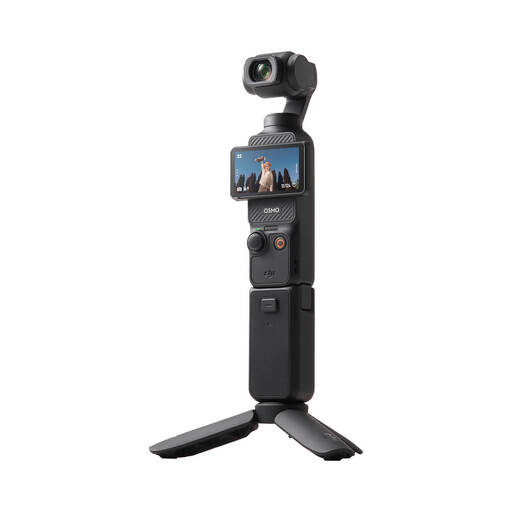 No image available
As a gimbal camera, it’s a different type of device from an interchangeable-lens camera. Check whether it can frame the costume details you need to capture.
The product details list a 1-inch CMOS sensor, a rotating 2-inch touchscreen and 10-bit D-Log M colour recording.
A standard zoom may be enough for wider shots. If you want a very small stitch to fill the frame, compare the maximum magnification of the lens you’ll actually be using. The standard zoom kits considered here don’t automatically include a macro lens.
The Canadian Conservation Institute explains that even lighting can illuminate a surface evenly and show its colours and tonal values. Also check the white balance, and agree any additional lighting with the team responsible if the textiles are sensitive.
Not for every shot. For a stationary detail with several depth levels, you can take a series of images with different focus points and combine them to extend the area in focus. A stable set-up is important.
Buying a camera doesn’t give you general permission to take or publish photographs. Check the rules at the specific exhibition venue, as well as the rights to the work shown and to the photograph. Section 58 of the German Copyright Act (UrhG) covers the organiser’s use of certain exhibited works to promote an event, where necessary for that purpose. Section 59 of the UrhG concerns works permanently located on public roads, streets or squares; it does not grant blanket permission to photograph indoors. The Federal Ministry of Justice and the Federal Office of Justice explain these provisions on the “Laws on the Internet” portal.