First, take a test photo to see whether a device you already own can capture the seams and embellishments you need clearly and at a large enough size – you may not need a new camera at all. For close-ups without changing lenses, a compact camera may be a good fit. For very small details, what matters with an interchangeable-lens camera is the macro lens you actually use, not just the camera body or kit zoom. Even lighting and a controlled white balance also help you capture fabric colours consistently.
Which approach is right for you?
Detail-focused photographers
If you need to show seams, beads or embroidery clearly, check the framing you want and how close the lens you’ll actually use can focus. A short minimum focusing distance alone doesn’t tell you how large the detail will appear in the image.
Colour-conscious photographers
If you need to keep a reliable record of fabric colours and materials for your project, factor in lighting and white balance. Changing light conditions can affect colour reproduction.
Casual photographers
If you only take photos on occasional project days, a device you already own or a compact camera that doesn’t need an interchangeable lens may be enough. Start with a test photo to check whether the framing and sharpness meet your needs.
What should you look for when buying?
A device you already own
A good fit if: A test photo shows the details you need clearly and at a large enough size.
Consider: Check the close-up function, magnification and space for additional lighting on the specific device.
Compact camera
A good fit if: You want to take close-ups without changing lenses; OM Digital Solutions says the Tough TG-7 can focus on subjects as close as 1 cm.
Consider: A short minimum focusing distance doesn’t prove 1:1 magnification or a particular level of image quality in low light.
Interchangeable-lens camera with a macro lens
A good fit if: You want very small details to appear large in the frame, or would like to expand your lens options later. Nikon states that its separate NIKKOR Z MC 50mm f/2.8 offers 1:1 magnification.
Consider: Check that the mount and included items are compatible. A separate lens’s macro capability doesn’t automatically apply to a camera kit supplied with a standard zoom.
| Priority |
What to check before buying |
Who is it important to? |
| Fine details |
Magnification of the included lens; sharpness in the framing you want. |
If I need to fill the frame with small seams or embellishments, the results from the lens I’ll actually use matter to me. Around 33% of consumers put magnifying fine details first. |
| Fabric colours |
White balance on the specific model; comparison shots taken in as consistent a light as possible. |
If I need to compare materials by colour, I want to take photos under similar lighting conditions. Around 27% of consumers prioritise consistent fabric colours. |
| Ease of use |
Take a test photo with a device you already own before buying; check the close-up function on the specific compact camera model. |
If I only need a camera for occasional project days, I want to manage without an additional interchangeable lens. Around 27% of consumers prioritise ease of use. |
| Room to expand later |
Check the camera body and lens mounts; distinguish between a kit zoom and a separately available macro lens. |
If I want to use the camera for other subjects later, having the option to choose a suitable lens matters to me. Around 13% of consumers prioritise expanding their camera system later. |
Avoid common buying mistakes
-
Assuming an optional lens’s macro capabilities apply to the camera kit
Canon lists the RF-S 18-45mm as part of the EOS R50 kit. The 1:2 magnification figure applies to the separate RF 35mm F1.8 MACRO IS STM, not to this kit zoom.
Check what’s actually included and the magnification of the supplied lens separately.
You may need an additional compatible lens to achieve the magnification you want.
-
Comparing only the minimum focusing distance
Minimum focusing distance and maximum magnification describe different things. When shooting very close up, you also need to make sure light can reach your subject.
Check the magnification and take a test photo to see whether you can frame the detail as you want.
-
Comparing fabric colours under changing light without checking
Different colour temperatures can affect how light and brightly coloured fabrics appear.
Keep lighting as consistent as possible for comparison shots and check the white balance.
Brands worth considering
OM SYSTEM
The Tough TG-7 is a compact camera for close-ups without changing lenses.
- OM Digital Solutions states that it can take close-ups from as near as 1 cm and has a sensor with around 12 million effective pixels.
- The minimum focusing distance doesn’t prove 1:1 magnification or independently verified detail quality.
PENTAX / Ricoh Imaging
The WG-8 is a compact camera with built-in lighting around the lens.
- Ricoh specifies a ring light made up of six LEDs, with nine brightness levels.
- These features alone don’t prove that fabric colours will be reproduced accurately in all conditions.
Canon
The EOS R50 is available as a kit with the RF-S 18-45mm; the RF 35mm F1.8 MACRO IS STM is a separate close-up option.
- Canon specifies 1:2 magnification for the separate RF 35mm lens.
- This figure doesn’t automatically apply to the RF-S 18-45mm supplied with the EOS R50 kit.
Sony
The α6400 is an E-mount interchangeable-lens camera; the SEL30M35 is a separate APS-C macro lens.
- Sony specifies a maximum magnification of 1× and a minimum focusing distance of 0.095 m for the SEL30M35.
- Check exactly which camera body and compatible lens are included.
Nikon
The Z50II is a Z-mount interchangeable-lens camera; the NIKKOR Z MC 50mm f/2.8 is a separate macro lens.
- Nikon specifies 1:1 magnification for the macro lens.
- This lens’s feature doesn’t automatically apply to a Z50II kit supplied with a different lens.
Joybuy products for documenting your project
The products below include simple cameras for taking photos and videos to document your project. For fine seams or comparing fabric colours, check the framing you want and the saved image file; instant prints aren’t always suitable for this.
 No image available
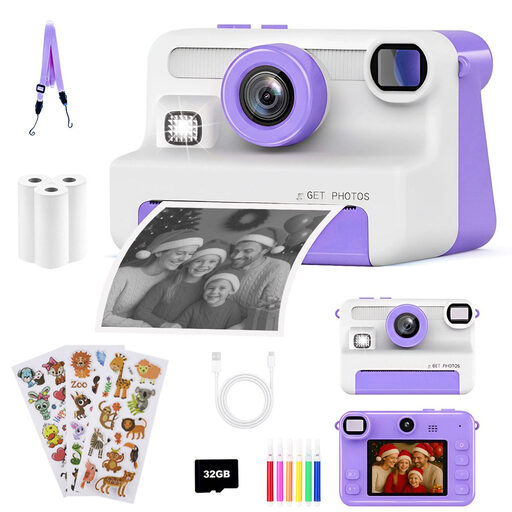
Fosmet instant camera for children
For basic photo and video documentation; the instant prints are black and white, so they aren’t suitable for assessing fabric colours.
1080P video, 30 MP, 2.4-inch display, 8× zoom, three rolls of instant film and a 32-GB card.
View at Joybuy
 No image available
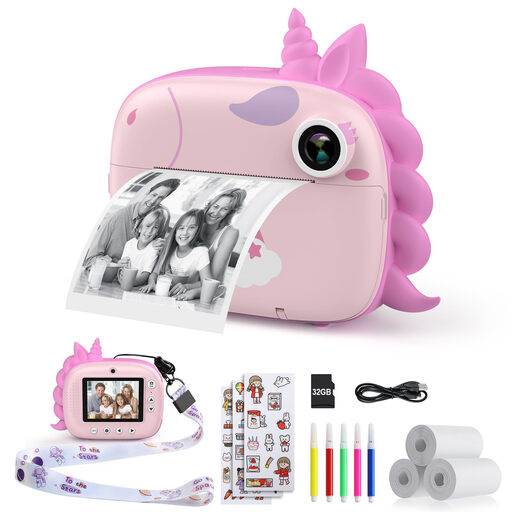
Digital camera with instant printing, 20 MP
For photo and video documentation; when comparing colours, use the saved colour image file rather than the black-and-white instant print.
Dual lens, 1080P video, three rolls of printing paper and a 32-GB TF card.
View at Joybuy
 No image available
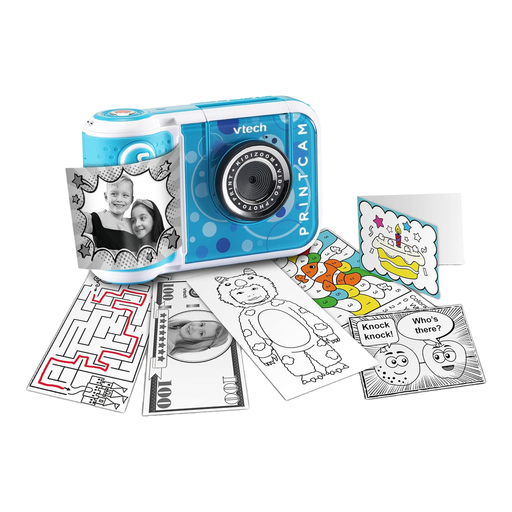
VTech KidiZoom Print Cam Blue
For basic photo and video documentation; the black-and-white instant prints aren’t suitable for assessing fabric colours.
Features instant printing, selfie and video modes, effects and games; the product name states that it’s for children aged 4 to 12.
View at Joybuy
Frequently asked questions
Is the minimum focusing distance in centimetres enough to assess tiny embroidery?
No. Also check the maximum magnification and take a test photo with the framing you want. Sony specifies both a minimum focusing distance of 0.095 m and maximum magnification of 1× for the SEL30M35; these are different measurements.
How can I avoid colour casts in costume photos?
Take comparison photos in as consistent a light as possible and check the white balance. Canon notes that cameras may capture white materials differently from the human eye when the surrounding light changes.
Do I need a particular lens for macro photos with an interchangeable-lens camera?
What matters is the framing you want and the lens you actually use. Check its magnification and mount: Canon specifies 1:2 magnification for the separate RF 35mm F1.8 MACRO IS STM; it isn’t included in the EOS R50 kit with the RF-S 18-45mm.
What are my rights if I buy a faulty camera?
For consumer purchases in the EU, you generally have a statutory legal guarantee of at least two years from the date you receive the goods, which you can claim against the seller. This is separate from any additional manufacturer’s warranty that may be advertised.
Can I share a costume photo publicly if classmates are recognisable?
Under § 22 KunstUrhG, you generally need the consent of anyone shown before distributing or publicly displaying an image of them. Exceptions and other data protection issues depend on the specific circumstances. For photos taken at school, also check the relevant rules set by the school and federal state. If the photo shows the costume without anyone being identifiable, the same personal-image issue doesn’t arise in the same way.


