
Lieferung heute & morgen

Qualitätsgarantie

Willkommens-Angebote freischalten: KOSTENLOSE Lieferung | Bis zu 80 % RABATT | Kostenlose 30-Tage-JoyPlus-Testphase
App herunterladen
A cosy sofa blanket should feel soft, provide warmth and complement your living space. In practice, however, unclear material details, unsuitable dimensions or complicated care instructions often lead to disappointing purchases. A blanket may look exceptionally fluffy in product photos, yet be too small, too warm or difficult to clean in everyday use.
This shopping guide from the Joybuy Product Recommendation Officer helps you distinguish marketing claims from verifiable product details. The focus is on materials, dimensions, care and the intended use.
The description warm blanket alone says little about how it will perform in everyday use. Material, weight, weave and size are the key factors. A polyester fleece blanket may be lightweight and warm, while a wool blanket has different care requirements and a different feel. If no material composition is provided, it is difficult to make a reliable assessment.
A small throw may be suitable for your lap, but it will not cover your entire upper body. For more comprehensive use on a sofa or bed, sizes such as 150 x 200 cm are more practical. Longer options, for example 130 x 230 cm, can be useful for wrapping yourself up, but they will not necessarily cover an entire sofa.
Fleece, flannel and faux fur are often easy to care for, but they must not be dried or ironed at excessively high temperatures. Polyester fibres can shrink or become damaged when exposed to high heat. With plaid blankets and decorative home accessories, you should also check whether fringes, textured surfaces or fine knits are suitable for the intended use.
For one person on the sofa, compact dimensions such as 125 x 150 cm are often sufficient. A 150 x 200 cm blanket is more versatile: it can be used to keep warm on the sofa, as an extra layer on the bed or as a shared blanket for two people. Smaller or lightweight sizes are easier to transport when travelling or camping.
If you are looking for a cosy blanket for the bed, you should also consider the bed width and the amount of overlap you want. A sofa blanket is not a substitute for a properly sized duvet, but it can be used as a decorative or additional layer.
A plaid blanket or checked pattern can be used as a visible home accessory. Neutral colours such as grey, black and white work well with many interior styles. Orange, green and gradient designs, on the other hand, add distinctive accents.
Textured materials can have a decorative appearance, but they require more care when cleaning. Before buying, it is worth checking the instructions for washing temperature, drying, bleach and ironing.
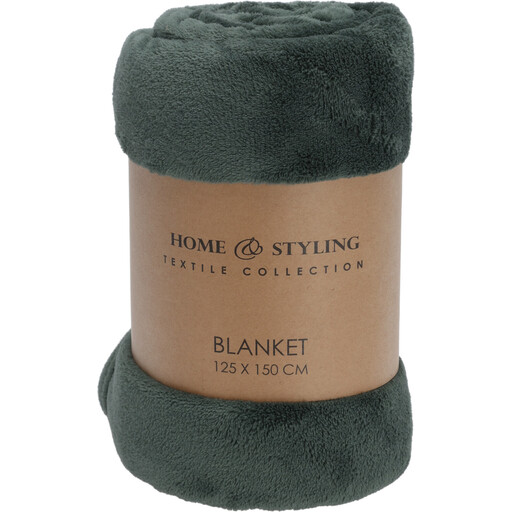
Why this product suits the profile: The compact 125 x 150 cm size is designed for personal use, an armchair or shorter evenings on the sofa. The green colour complements a range of interior styles.
The stated dimensions prevent the blanket from being mistakenly treated as a large bedspread or family blanket.
Compact size, green colour and the described fleece construction for everyday use around the home.
We have put together a complete, regularly updated list of products that fully meet these strict selection criteria and the safety regulations applicable in the EU.
Before using your blanket for the first time, check the care label and the information on the product page. The following points are useful for many polyester and flannel options:
If you have sensitive skin or known material allergies, check the material composition before buying. A synthetic polyester blanket should not be treated as equivalent to a natural-fibre blanket.
For one person, around 125 x 150 cm is often sufficient. A 150 x 200 cm sofa blanket provides more coverage and can also be used on the bed. For travel, camping or working from home, a smaller size may be easier to transport and store.
A polyester fleece blanket is usually easy to care for and often machine washable. A knitted blanket may be more sensitive to friction because of its loops, texture or fringes. The specific care instructions for the product in question should always be your guide.
Its lifespan depends on how often it is washed, the amount of friction it experiences, drying and the material. Gentle wash programmes, low temperatures and avoiding bleach can help reduce stress on the surface and colour. With heavily used blankets, seams, edges and bobbling should be checked regularly.