
Lieferung heute & morgen

Qualitätsgarantie

Willkommens-Angebote freischalten: KOSTENLOSE Lieferung | Bis zu 80 % RABATT | Kostenlose 30-Tage-JoyPlus-Testphase
App herunterladen
A cosy throw for the sofa should keep you warm, feel lovely and soft, and complement your home. Sofa throws also vary considerably in their material, dimensions, weight and care requirements. A fluffy surface alone doesn’t tell you whether a throw will be practical for everyday use.
As a Joybuy Product Recommendation Officer, I’ve picked out the most important things to consider when buying one and matched suitable styles to different needs. This can help you avoid common buying mistakes, whether you’re looking for a throw for the living room, a blanket for the bed and sofa, or a practical cover to take with you.
A very soft throw feels lovely, but that doesn’t necessarily mean it will be especially warm. Material, fabric density and size all play a part. A lightweight fleece throw may be enough for an evening on the sofa, while a thicker flannel or faux fur throw offers more coverage.
Weight should also suit how you plan to use it. A lightweight throw is practical for camping and travel. In the bedroom or as a decorative cover for the sofa, a heavier throw may sit better.
A small sofa throw will usually cover your upper body only. If you want to wrap up your legs and feet too, choose a larger size. 130 × 170 cm is often suitable as a personal throw, while 150 × 200 cm or 180 × 200 cm gives you more room on the sofa or bed.
A standard cosy throw usually won’t cover an entire double bed. Models such as the Atmosphera product, measuring 240 × 290 cm, are better suited to a large bed, as a light extra layer or as a decorative cover.
Fluffy fabrics can be sensitive to heat, bleach and intensive spin cycles. Before buying, check the instructions for machine washing, drying and ironing temperature. High temperatures can cause polyester to shrink or its fibres to change.
A machine-washable throw is practical for households where it gets frequent use. However, always follow the care label: “washable” doesn’t automatically mean that every programme or tumble dryer is suitable.
If you’re sensitive to certain materials, check the fabric details carefully. For fire safety, keep polyester textiles and other throws away from open flames, fan heaters, candles and cigarettes.
| Use | Practical guide | |---|---:| | Personal throw for the sofa | about 130 × 170 cm | | Sofa, armchair and travel | about 130 × 230 cm | | Throw for the bed and sofa | about 150 × 200 cm | | Generous coverage | about 180 × 200 cm | | Double bed or large bedspread | from about 240 × 290 cm |
How well a throw fits will depend on the size of your furniture, how much overhang you want and your height. A single sofa throw may be too small for a corner sofa, so two throws or a larger size may be more practical.
Look for neat stitching, even edges and a sturdy fabric border. Fringes and loose stitches can define the look of a knitted throw, but may also need extra care. For flannel, features such as anti-pilling or anti-static finishes are worth noting, but they should be treated as product features rather than a lasting guarantee.
For everyday care, it’s usually best to:
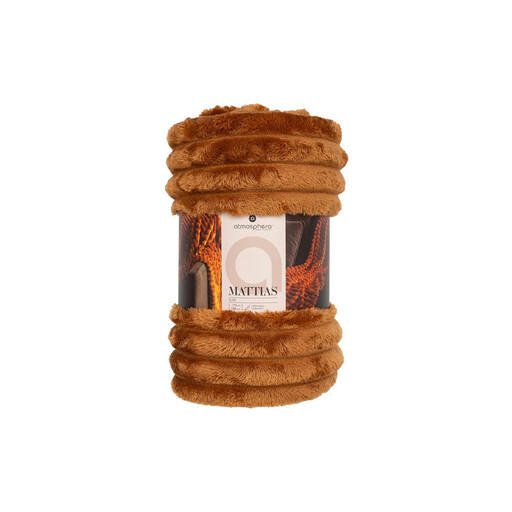
Why this product suits this profile: Its handy size is suitable for the sofa, as a bed cover, and for the office, travel and camping. The checked pattern makes it a decorative choice too.
The product details specify the material and size, as well as care instructions for a cold wash, gentle cycle and low tumble-drying temperature.
100% polyester flannel, a ribbed checked texture and, according to the product details, anti-pilling and anti-static finishes.
We’ve put together a complete, regularly updated list of products that meet these strict selection criteria and fully comply with the safety regulations in force in the EU.
For one person, around 130 × 170 cm is often enough. If you want to cover your legs and feet too, choose a 150 × 200 cm throw. For a large sofa or sharing, 180 × 200 cm is more practical. Always compare the dimensions with the width of your seat and how much overhang you want.
Its lifespan depends on the material, stitching, how often it’s washed and how it’s dried. Gentle wash programmes, low temperatures and avoiding bleach can help protect the surface. If you notice damage to the seams or fibres, don’t continue using the throw near heat sources.
Only if the care label says it’s safe to do so. Polyester and flannel throws usually need a low temperature. High heat can warp the fibres or cause them to shrink. Make sure the throw is completely dry before storing it in a cupboard or putting it back on the sofa.