Several aprons before you travel
If you want to smooth several ironable cotton aprons one after another, continuous steam output, tank capacity and the need to stop and refill are all worth comparing.


If you’re ironing several aprons one after another, a steam generator iron could be a good choice, provided their care labels allow steam and you have room for the unit and ironing board. For the occasional single apron, your existing steam iron may be the more space-saving option. Compare continuous steam output, tank capacity and ease of use; manufacturers’ figures are not comparative test results. Cotton alone doesn’t mean that every temperature or steam setting is suitable.
If you want to smooth several ironable cotton aprons one after another, continuous steam output, tank capacity and the need to stop and refill are all worth comparing.
Follow the care label on each apron. The cotton content alone doesn’t determine which temperature or steam setting is suitable.
If you only iron occasionally, weigh up the extra space a steam generator iron needs for use and storage against the benefits it offers for your needs.
A good fit if: You iron several aprons one after another, their labels allow steam and you have enough space.
Things to consider: The tank, unit and ironing board all take up space; care and maintenance depend on the model.
A good fit if: You only iron a single apron now and then and don’t want to make room for another appliance.
Things to consider: Check the instruction manual to make sure it has the steam function you need.
A good fit if: You want to freshen up an apron while it’s hanging and its care label allows steaming.
Things to consider: It’s not designed for creating a sharply pressed edge on an apron laid flat.
| What matters | What to look for | Who it matters most to |
|---|---|---|
| Several aprons | Check continuous steam output in g/min, tank capacity in l and whether you can refill as you go; make sure the figures apply to the exact model. | When I’m ironing several aprons before a trip, I want to avoid frequent refills or interruptions as much as possible. Around 33% of consumers put this need first. |
| Fabric care | Check the care symbol on each apron, whether steam is allowed and the temperature settings on the specific appliance. | It’s important to me to follow the care instructions and avoid damaging the fabric with unsuitable treatment. Around 27% of consumers give fabric care the highest priority. |
| Maintenance | Check the descaling method and water recommendations in the manual for the exact model. | I want to know what’s involved in filling and descaling the appliance day to day before choosing one. Around 20% of consumers put easy maintenance first. |
| Space | Consider the space it needs to use and store, as well as whether you already have an iron. | If I only iron occasionally, I don’t want to set aside space for another appliance unnecessarily. Around 20% of consumers prioritise a compact footprint. |
The care label tells you how the finished fabric may be treated. GINETEX Germany lists care symbols including ‘do not iron’ and ‘iron at a low temperature without steam’.
Check the label on each apron before ironing and follow its care instructions.
Manufacturers list these figures separately. When ironing several aprons, continuous steam output is a separate point of comparison and shouldn’t be confused with a single steam boost.
Compare continuous steam and steam boost figures in g/min separately, and take tank capacity into account too.
Philips notes that limescale can reduce steam output and leave residue on fabrics.
Check the descaling method for your exact model and follow its instruction manual.
The Pro Express Ultimate GV9567 is aimed at buyers who iron several aprons one after another and want to choose between different programmes.
The PerfectCare 7000 PSG7040/10 may appeal to buyers who don’t want to change the temperature setting when ironing several fabrics that are specifically marked as suitable for ironing.
According to Braun, the CareStyle 5 IS 5245 BL offers selectable Eco, iCare and Turbo settings.
The Silence Steam Pro DG9248 may appeal to buyers comparing tank capacity and storage features.
The Joybuy products below are steam generator irons for pressing fabrics. For cotton aprons, pay particular attention to each model’s stated continuous steam output, tank capacity and temperature settings.
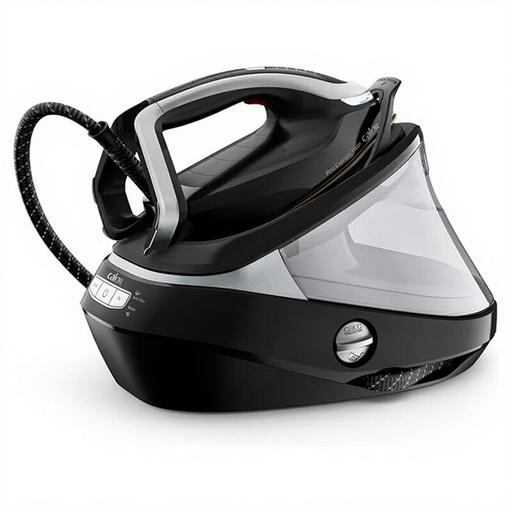 No product image available
If you’re ironing several aprons one after another, the stated continuous steam output is a useful point of comparison.
Figures listed include 180 g/min continuous steam, a removable 1,2-l tank and temperature settings by fabric type.
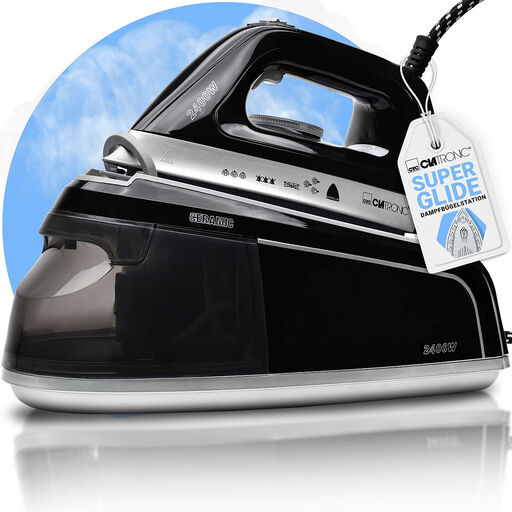 No product image available
Continuous temperature control is worth considering if you want to set the temperature according to the care label.
Figures listed include a consistent steam output of 90 g/min and a removable 1,2-l tank.
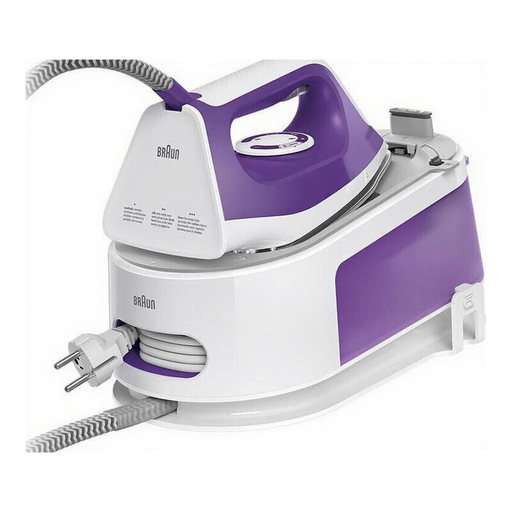 No product image available
Temperature settings are worth considering if you want to adjust the treatment to the care label on each apron.
Figures listed include 120 g/min continuous steam and a 1,5-l water tank.
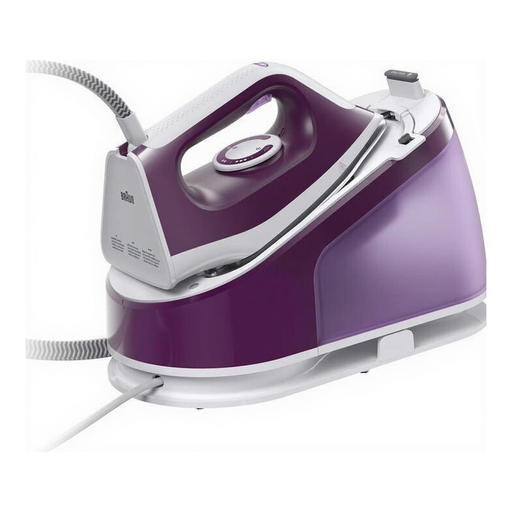 No product image available
The four temperature settings may be useful when checking the care instructions on your aprons.
Figures listed include 120 g/min continuous steam, a 1,7-l tank and a Calc’n clean descaling method.
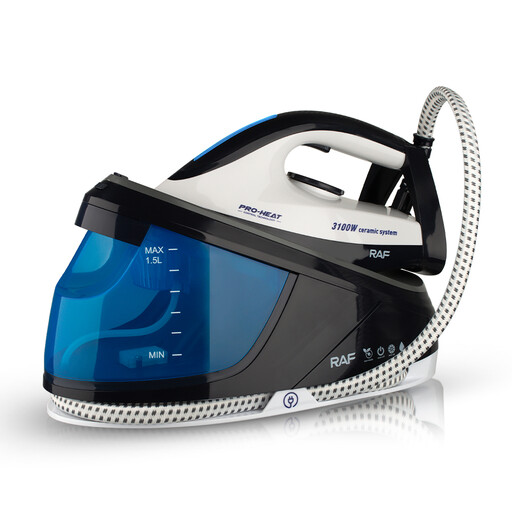 No product image available
The stated vertical steaming function may be useful if you also want to freshen up hanging fabrics; check their care labels first.
Figures listed include a steam output of 180 g/min and a removable 1,5-l tank.
No. Always follow the ironing symbol on the apron’s care label. GINETEX Germany lists care symbols including ‘do not iron’ and a low-temperature setting without steam; the fibre type alone doesn’t determine how the fabric may be treated.
Follow the instructions for the exact model. For its descaling process on PSG7xxx appliances, Philips advises unplugging the appliance before opening the cap and letting a hot appliance cool down first. Don’t apply this process to appliances from other manufacturers without checking their instructions.
Your statutory rights are against the seller; a manufacturer’s guarantee is separate and voluntary. If a product develops a fault, the first step may be to request a repair or replacement. The Verbraucherzentrale explicitly distinguishes between these rights.
Electrical and electronic appliances covered by the relevant harmonised EU rules must carry the CE mark. The European Union’s Your Europe website explains that the manufacturer uses it to declare compliance with the applicable rules. It is not an independent quality mark and says nothing about the ironing results.