If you only iron a few washable aprons between guest changes, a steam iron without a separate base is usually the more practical choice. For larger piles on a regular basis, a steam generator could be worth considering, provided you have enough storage space and are happy with the maintenance involved. The care label on each apron is key: GINETEX specifies different maximum ironing temperatures and warns that steam can cause damage at a low ironing setting.
Who are the different types of appliance suitable for?
Hosts with just a few aprons
If you only iron a few aprons between bookings, you’ll probably want an appliance that’s easy to store and doesn’t have a separate base. F.A.Z. Kaufkompass describes a handy steam iron as a good option for occasional ironing.
Hosts with piles of aprons
If you regularly prepare several washable aprons, tank capacity, refilling, setting up and storage become more important. F.A.Z. Kaufkompass and Tefal both present steam generators as an option for larger ironing loads.
Hosts with different care labels to consider
If your aprons have different prints, trims or ironing instructions, you’ll need to choose the right temperature and steam setting for each one. GINETEX explains that maximum temperatures vary and warns that steam can cause damage at a low ironing setting.
What should you look for when buying?
Steam iron
A good fit if: You only iron a few aprons between guest changes and don’t want to set up a separate base.
Things to consider: During longer ironing sessions, you may need to refill the integrated tank more often.
Steam generator
A good fit if: You regularly iron larger piles of aprons and have room for the base and ironing surface.
Things to consider: The base and hose, as well as descaling requirements that vary by model, are all part of using one.
Dry ironing
A good fit if: The care label rules out steam but allows ironing at a specified maximum temperature.
Things to consider: GINETEX warns that steam can cause damage at a low ironing setting, so make sure the temperature and steam settings match the care label.
| Criteria |
What to check before buying |
Who will find this especially important |
| Planning an ironing session |
Consider how many aprons you iron between guest changes, tank capacity, refilling and the space needed for a separate base. Tank capacity alone doesn’t tell you exactly how long you can iron for. |
If I’m preparing several aprons in one go, I want to be able to plan for refilling and setting up. Around 33% of consumers prioritise being able to plan an ironing session. |
| Apron details |
Check the shape of the iron’s tip, the handle and the controls on the specific model; consider steam boost and continuous steam separately. |
If I want to smooth pockets, seams and ties carefully, how easy the iron is to use on these details matters to me. Around 27% of consumers prioritise a neat finish around pockets and ties. |
| Care label |
Check the ironing symbol on each apron and adjust the temperature and steam accordingly. GINETEX specifies different maximum temperatures and warns that steam can cause damage at a low ironing setting. |
If my aprons have different care instructions, I want to adjust the heat and steam for each one. Around 20% of consumers prioritise a gentler approach that protects the care label requirements. |
| Care and handling |
Check the descaling instructions and automatic shut-off for the specific model; don’t assume care advice for one appliance applies to another. |
If I use the appliance repeatedly between guest changes, I want to make its maintenance part of my routine and handle it safely. Around 20% of consumers prioritise easy maintenance and safe handling. |
Common buying mistakes
-
Confusing steam boost with continuous steam
A short burst of steam doesn’t tell you how much steam the iron produces continuously over a whole pile of aprons.
Compare the figures separately and think about how many aprons you usually iron in one go.
-
Choosing a steam generator just because it has a larger tank
If you only have a few aprons to iron, setting up and storing the appliance may matter more than having to refill it less often.
Start by considering how much you need to iron and how much storage space you have. If you regularly iron piles of aprons, factor in the steam generator’s maintenance too.
A steam generator needs space for the base and hose; descaling requirements depend on the model.
-
Using the same steam setting for every cotton apron
The fibre information doesn’t replace the care label. GINETEX warns that steam can cause damage at a low ironing setting.
Read the label on each apron before ironing and set the temperature and steam accordingly.
Brands and models to consider
Braun
The FreeStyle 3 FI3194BK is a steam iron for smaller ironing sessions; CareStyle is Braun’s separate steam generator range.
- Braun lists a precision tip, 45 g/min continuous steam and automatic shut-off for the FI3194BK.
- F.A.Z. Kaufkompass rates this model’s steam and glide positively, but is less impressed by its temperature control. This assessment applies to this model only.
Tefal
The Express Protect SV9202 is a steam generator for larger, regular ironing loads; the Ultragliss Plus FV6842 is a steam iron without a separate base.
- Tefal lists a removable 1.8-l tank and a limescale collector for the SV9202.
- F.A.Z. Kaufkompass rates the SV9202 as its preferred model in the steam generator test group, but notes that the iron cannot be stood upright. Manufacturer claims about steam performance or repairability are not independently measured advantages.
Philips
The 7000 Series DST7040/80 is a steam iron with adjustable steam settings and Quick Calc Release.
- For this exact model, Philips lists a 300-ml tank, 50 g/min continuous steam and automatic shut-off.
Rowenta
The Focus Excel DW5310 is a steam iron with manual controls and a precision tip.
- Rowenta lists a 300-ml tank and 45 g/min continuous steam for the DW5310.
- According to Rowenta, the DW5310 does not have automatic shut-off. The manufacturer’s claims about superior steam distribution are not based on an independent comparison.
Joybuy products
This selection includes steam irons for individual aprons and steam generators for larger ironing sessions.
 No image available
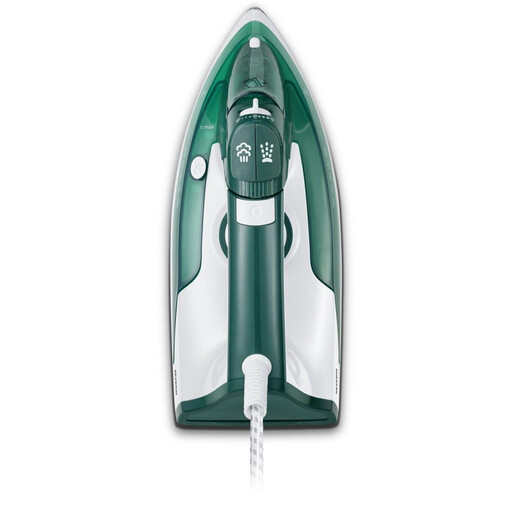
Severin BA 3261 steam iron
A steam iron without a separate steam generator base, for individual aprons between guest changes.
2400 W; variable steam output of 30 g/min; 85 g/min steam boost; removable 175-ml tank; anti-drip function.
View at Joybuy
 No image available
Rowenta DW4320 Express Steam steam iron
A steam iron without a separate base for individual items or smaller ironing sessions.
2500 W; 40 g/min continuous steam; 160 g/min steam boost; Eco function; anti-drip system.
View at Joybuy
 No image available
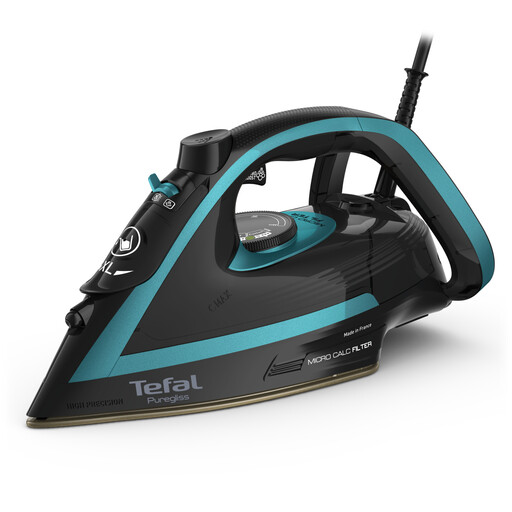
Tefal FV8066 Puregliss steam iron
A steam iron without a separate base; make sure its temperature and steam settings match the care labels on your aprons.
280 g/min steam boost; vertical steaming; large filling opening; automatic shut-off; anti-drip system.
View at Joybuy
 No image available
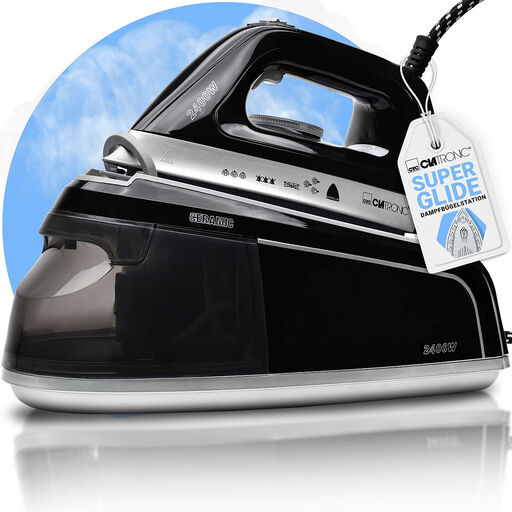
Clatronic DBS 3749 steam generator
A separate steam generator for larger, regular ironing sessions, provided you have room for the base and ironing surface.
3.5 bar; 1.2-l water tank; 80 minutes’ operating time; 2400 W; Superglide soleplate; anti-drip system.
View at Joybuy
 No image available
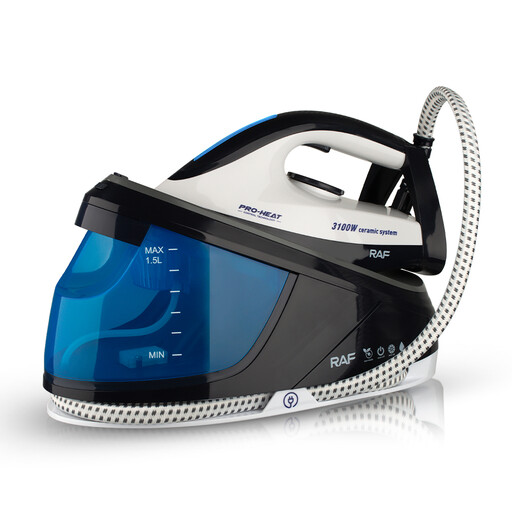
RAF R.1286 steam generator
A steam generator with a separate tank for longer sessions; remember to allow extra space for the base.
3100 W; 180 g/min steam output; removable 1.5-l tank; ceramic soleplate; automatic shut-off; anti-drip function.
View at Joybuy
Frequently asked questions
What temperature should I use for cotton aprons?
Follow the ironing symbol on each apron rather than relying on the word ‘cotton’ alone. GINETEX assigns different maximum permitted temperatures to the symbols; steam can cause damage at a low ironing setting.
Does a steam generator need descaling differently from a steam iron?
The descaling method depends on the model. Braun lists a self-cleaning function for the FI3194BK, while Tefal lists a removable limescale collector for the SV9202. Follow the care instructions for your specific appliance.
Is a manufacturer’s guarantee the same as your statutory rights?
No. In Germany, statutory rights for faulty goods are claims against the seller; a manufacturer’s guarantee is a voluntary offer with its own terms and conditions. Verbraucherzentrale distinguishes between the two. Before buying, check who the seller is and what the guarantee covers.
What markings should I check on an iron sold in Germany?
CE marking is required when the relevant harmonised EU rules expressly require it for the appliance. The European Union explains this condition; Germany’s Federal Network Agency also notes that market surveillance checks whether products can be identified and whether manufacturer details are correct. CE marking is not an independent safety test of an individual product listing.


