Ironing aprons when you’re short on time
If you want to iron an apron after your commute, compare the stated heat-up time and how easy the appliance is to use. These figures won’t tell you when a wet apron will be dry or fully ironed.


If you regularly iron several cotton aprons and have room for a separate base, a steam generator could be a practical choice thanks to its continuous steam and refillable tank. For a single apron, a standard steam iron may be all you need. The key is to follow the care instructions for the specific apron and the maintenance guidance for your chosen appliance. Manufacturers’ steam output figures aren’t measurements taken on cotton aprons, and they don’t promise a particular ironing time or that a wet apron will be dry enough to wear.
If you want to iron an apron after your commute, compare the stated heat-up time and how easy the appliance is to use. These figures won’t tell you when a wet apron will be dry or fully ironed.
If you’re ironing several aprons in a row, continuous steam and a tank that’s easy to refill are useful points to compare. Bear in mind that the separate base also takes up space.
If an apron is wet or dirty, follow its care label and allow for any cleaning and drying steps required. Descaling should also be carried out in accordance with the instructions for your appliance.
| Consideration | What to check before buying | Who should consider this? |
|---|---|---|
| Limited time | The heat-up time and controls of the specific model; don’t confuse heat-up time with ironing or drying time. | If I only have a little time after my commute, I want to be able to get started easily. Consumers whose main concern is having a short window for ironing are likely to account for around 28%. |
| Several aprons | Compare continuous steam separately from the steam boost; consider the tank capacity and how easy it is to refill. | When I’m ironing several aprons in a row, I want to be able to refill the tank as needed during the session. Consumers focused on ironing several items per session are likely to account for around 22%. |
| Wetness and dirt | Follow the care label and permitted treatment for each apron; GINETEX explains that care symbols indicate the maximum permitted treatment. | If an apron is wet or dirty, I want to treat it in a way that’s right for the fabric and care label first. Consumers who prioritise fabric-appropriate care are likely to account for around 22%. |
| Descaling | Check the maintenance system and model-specific instructions; Philips notes that limescale can affect steam output. | If I use the appliance regularly, I want to know what maintenance it needs and how to descale it safely. Consumers who prioritise low-maintenance appliances with clear instructions are likely to account for around 17%. |
| Space for use and storage | Allow room for the separate base and a safe place to set the appliance down; if you iron occasionally, consider using a steam iron you already own. | If space is limited at home, I don’t want to find room for an extra base if an iron I already own will do the job. Consumers for whom storage space is the main concern are likely to account for around 11%. |
A high steam boost figure doesn’t tell you how much steam is delivered continuously while ironing several aprons.
Compare the manufacturers’ separately stated figures in g/min, and take tank capacity and refill options into account.
The care label sets limits on how the fabric can be treated. Ironing doesn’t replace any cleaning the apron needs or dry it completely.
Check the apron and its care label before ironing. Treat heavily soiled areas according to the care instructions.
A steam generator needs room for its base as well as the hand-held iron. Descaling requirements vary by model.
Check where you’ll put it before buying and read the maintenance instructions. Only descale the appliance in the safe state described in the manual.
For the 3000 Series PSG3001/30, Philips states a continuous steam output of 140 g/min and a pump pressure of 6 bar.
According to Tefal, the Express Anti-Calc SV8055E0 has a removable 1,8-l tank, continuous steam output of 120 g/min and a removable limescale collector.
For the CareStyle 5 IS5245BL, Braun states a steam output of up to 140 g/min and a steam boost of 480 g/min.
For the Silence Steam Pro DG9248, Rowenta states that it has five electronic settings, variable steam output of 150 g/min and a removable 1,3-l tank.
According to Polti, the La Vaporella XT90C is a boiler-based steam generator with three programmes and a removable 1,4-l tank.
The Joybuy models below are steam generators that may suit ironing sessions involving several aprons. Compare their stated continuous steam output, tank capacity and controls with what you need.
 No image available
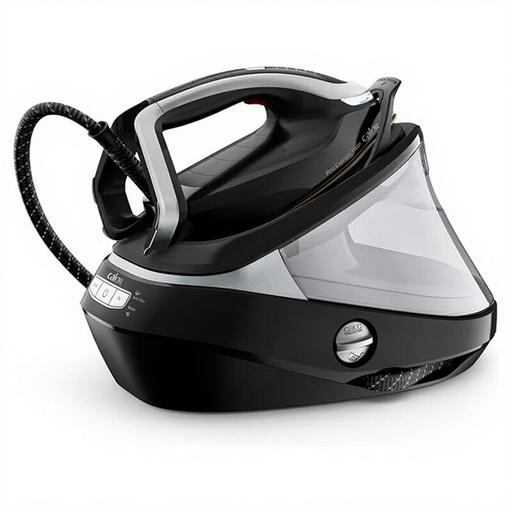
The stated continuous steam output and removable tank are features you can compare when choosing an appliance for ironing several aprons in one session.
180 g/min continuous steam, 800 g/min steam boost, 1,2-l tank and 3000 W, according to the product details. Durilium AirGlide soleplate.
 No image available
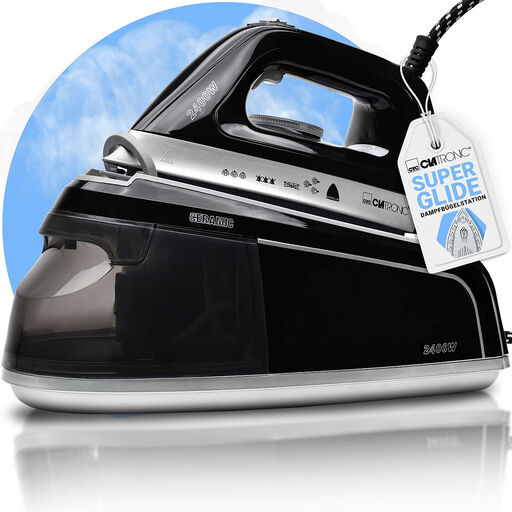
The removable tank and stated operating time are useful points to compare for an ironing session involving several items.
3,5 bar, steam output of up to 90 g/min, removable 1,2-l tank and operating time of up to 80 minutes. 2400 W; figures are for this model.
 No image available
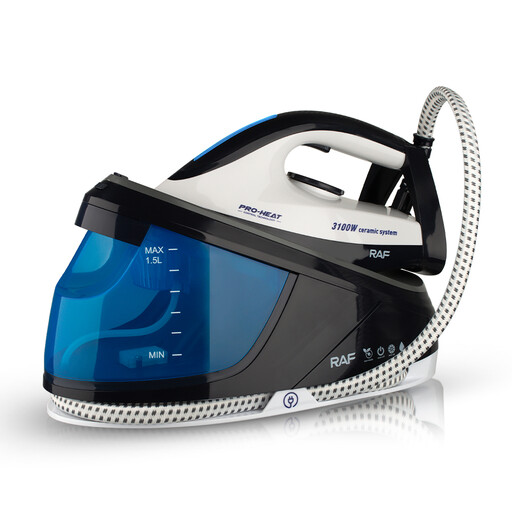
The removable tank is a useful feature if you want to iron several garments in a row.
Steam output of 180 g/min, removable 1,5-l tank, ceramic soleplate and 3100 W, according to the product details.
A steam generator isn’t a substitute for washing an apron when needed or drying it completely. Follow the care label for the specific apron; GINETEX recommends treating stains or heavily soiled fabrics before washing.
Follow the instructions for your specific model. Philips notes that limescale deposits can affect steam output. For certain Easy De-Calc models, Philips says to unplug the appliance and let it cool for two hours before carrying out maintenance while it’s hot. Don’t assume the same procedure applies to other models without checking.
For a consumer purchase in Germany, the seller is liable for defects for at least two years from the date you receive the goods. This is separate from any additional manufacturer’s guarantee; according to the product details, Polti’s advertised ten-year guarantee for the XT90C applies to limescale deposits.
Online purchases in Germany generally come with a right to cancel, usually within 14 days of receiving the goods. Exceptions and the terms of the specific purchase apply. Tell the other party to the contract that you’re cancelling; don’t assume that sending the item back is enough on its own.
Old electrical appliances must be collected separately rather than put in ordinary household waste. The German Environment Agency describes free return options; whether a retailer must offer collection when delivering a replacement depends on the relevant legal requirements.