If you regularly iron several aprons
If you iron several aprons one after another, weigh up the water capacity, space required and maintenance involved together.


For ironing individual cotton aprons, a steam iron with adjustable temperature and steam settings is a sensible place to start. If you regularly have lots of ironable items to get through, a steam generator with a larger tank may be worth considering, provided you have the space. Always check the care label, along with the specific model’s details on automatic shut-off and maintenance. A garment steamer is better suited to a quick refresh than to pressing larger areas.
If you iron several aprons one after another, weigh up the water capacity, space required and maintenance involved together.
When you share an appliance and storage space, clear settings, a stable heat-resistant surface and an automatic shut-off function specific to the model are important things to consider.
If you want to smooth out seams and ties, follow the care instructions for each apron and look for a tip that’s easy to manoeuvre.
A good fit if: you want to iron individual aprons on a suitable ironing surface and adjust the temperature and steam to suit the care label.
Things to weigh up: You may need to refill the tank during longer ironing sessions; automatic shut-off and self-cleaning depend on the model.
A good fit if: you regularly have several ironable aprons and other textiles to get through in your shared flat, and have enough space for the appliance and storage.
Things to weigh up: As well as the iron itself, the base takes up space; the tank and descaling routine need to work for everyone sharing it.
A good fit if: you mainly want to give a hanging apron a quick refresh.
Things to weigh up: A manufacturer’s claim that a model can steam vertically and horizontally does not prove that it’s an equivalent replacement for pressing larger areas.
| Priority | What to check when buying | Who it matters most to |
|---|---|---|
| Smoothing panels and seams | Check the temperature and steam settings, as well as the tip, on the specific model; steam output in g/min is stated by the manufacturer. | If I want to smooth apron panels and hard-to-reach seams carefully, I look for suitable settings and ease of handling. This matters most to around 40% of consumers. |
| Sharing the appliance | Check whether the exact model number has an automatic shut-off function, and make sure there’s a stable, heat-resistant place to set it down. | If several people use the appliance, I want it to be easy to use and put away safely as part of everyday life in a shared flat. Around 30% of consumers prioritise safety when sharing an appliance. |
| Following care instructions | Check the ironing symbol and any additional instructions on each apron; adjust the temperature and steam accordingly. | If my aprons have different details or care limits, I follow the label on each one rather than relying solely on the fact that the fibre is cotton. Around 20% of consumers are most concerned about protecting their textiles. |
| Space and maintenance | Check the space needed for use and storage, how the tank is removed, and the cleaning and descaling instructions for the specific model. | If I share the appliance and the space where it’s stored, I want to be able to organise storage and maintenance easily. Around 10% of consumers put space requirements and maintenance first. |
The care instructions for the whole apron determine how it can be treated, not just the fibre content.
Check the label on each apron before setting the heat and steam.
This feature varies by model: Braun lists it for the FI 3194 BK, while the model specifications say it’s not included on the Rowenta DW5310. It adds a safety measure, but doesn’t replace putting the iron down safely.
Check the full model number, and never leave the appliance unattended.
Depending on the model, appliance care may also include cleaning the filter or descaling.
Compare the maintenance routines for the specific models before buying, and agree on who’ll take care of them in your shared flat.
Make time for regular cleaning and descaling.
FreeStyle 3 and TexStyle 3 are steam irons for occasional or regular ironing; QuickStyle 7 is a garment steamer.
The 3000 Series is a standard steam iron; PerfectCare 6000 is a steam generator.
The Ultimate Pure FV9844E0 is a steam iron with a micro-scale filter specific to the model.
The Focus Excel DW5310D1 is a steam iron with a precision tip for seams and edges.
This selection includes steam irons for pressing on an ironing surface. Before buying, check the care instructions for your aprons, as well as the CE marking and product compliance of the specific appliance on offer.
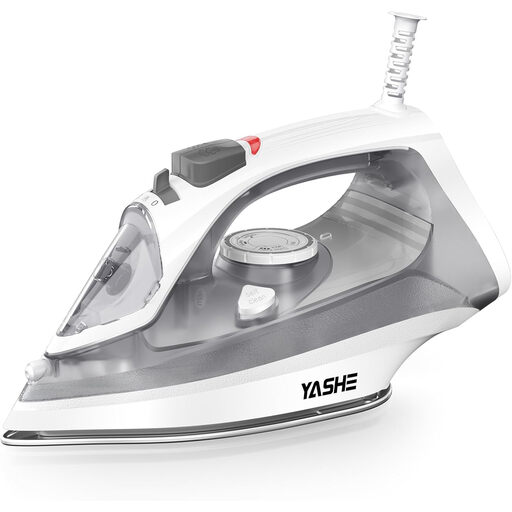 No image available
For ironing aprons on an ironing surface; the product description says the thermostat and steam output are adjustable.
300 ml water tank, 150 g/min steam boost, non-stick soleplate and self-cleaning function.
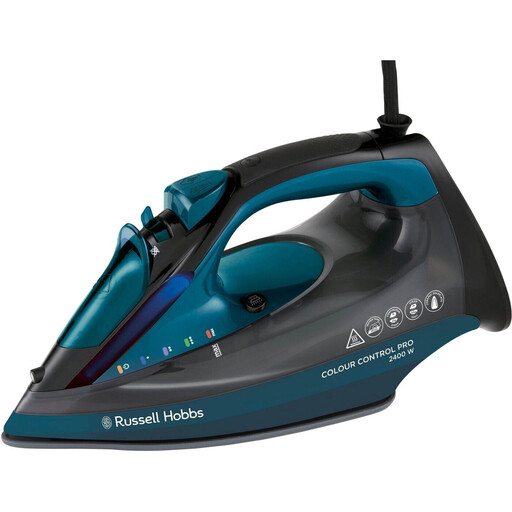 No image available
For ironing aprons on an ironing surface; the product description lists temperature selection and continuous steam output.
380 ml tank, automatic shut-off, anti-scale and self-cleaning functions.
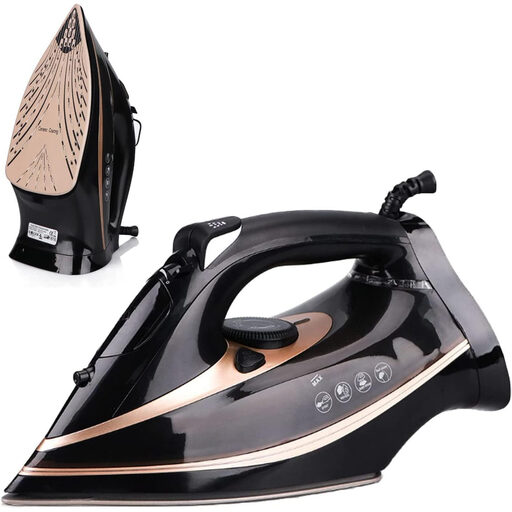 No image available
Listed as a steam iron for pressing on an ironing surface.
70 g/min steam, 120 g steam boost, 300 ml water tank and self-cleaning function.
 No image available
For ironing aprons on an ironing surface; the product description says there are several temperature and steam settings to choose from.
350 ml tank, five temperature settings, non-stick soleplate and self-cleaning function.
 No image available
For ironing aprons on an ironing surface; the product description says the temperature and steam can be adjusted.
280 g/min steam boost, automatic shut-off, anti-drip system and scale filter.
No, you can’t tell from the fibre content alone. The care label states how the specific apron can be treated; if it says do not iron, you must not iron it.
Agree on who’ll check the tank and soleplate after use, and follow the instructions for the specific appliance when descaling. Philips notes that leaving water in the tank for a long time can encourage deposits in its steam irons; you can’t automatically apply the cleaning steps to other brands.
The statutory warranty is the seller’s responsibility and is separate from a voluntary guarantee. If there’s a fault, the first step may be repair or replacement; also check the terms of any manufacturer’s guarantee on offer.
Electrical household appliances covered by the EU Low Voltage Directive must meet safety and conformity requirements, including the required CE marking. The European Commission explains that CE indicates the manufacturer’s declaration that the relevant requirements have been met; it is not an independent quality mark. Check the marking on the specific appliance on offer.
Electrical waste must not go in household rubbish. The German Environment Agency lists recycling centres and suitable return points at retailers, among other options; which collection point is suitable depends on the appliance and the individual site.