People who iron cotton dresses carefully
If you want to smooth fabric, seams and narrow edges, follow the care label when setting the temperature and using steam, and look for a suitable iron tip.


For cotton dresses that you want to press carefully along seams and edges on a flat surface, a standard steam iron is the obvious place to start. You’ll need a suitable, stable ironing surface. A compact garment steamer is better suited to freshening up individual dresses on a hanger, while a steam generator may be worth considering for larger loads if you have room for its separate base. Always follow the care label when setting the temperature and using steam, and check the safety marking on the specific product listing.
If you want to smooth fabric, seams and narrow edges, follow the care label when setting the temperature and using steam, and look for a suitable iron tip.
In a small flat, you need to consider both where to store the appliance and whether you have a suitable ironing surface. A compact garment steamer may be an option for individual dresses on a hanger.
If you usually only iron a few dresses, weigh up ease of use against tank capacity, maintenance and any extra features.
Best for: Smoothing dresses carefully on a flat surface.
Keep in mind: You’ll need space for an ironing surface, and you’ll need to consider the tank, cord and water maintenance.
Best for: Freshening up individual dresses on a hanger, provided their care labels allow it.
Keep in mind: It has not been established whether this type of steamer can press seams and edges precisely for this purpose.
Best for: Regularly ironing larger loads, if you have room for a separate base.
Keep in mind: The base and hose need extra space for use and storage. Stated steam rates do not prove that it is better for ironing individual dresses.
First, decide whether you want to press clothes carefully on a flat surface or mainly freshen up dresses on a hanger. Then compare care requirements, space needed and the features of the complete model.
| Consideration | What to check when buying | Who is it most relevant to? |
|---|---|---|
| Smoothing cotton and details precisely | Check the care label, temperature settings and shape of the iron tip on the specific model. | If I want to treat seams and narrow edges carefully, I look for a suitable setting and a tip that’s easy to guide. Around 36% of consumers put precision pressing first. |
| Space for use and storage | Allow space for the complete appliance, an ironing surface and, where applicable, the base or hose. | If I have little spare space at home, I need to be able to put away both the appliance and the ironing surface after use. Around 29% of consumers prioritise storage space. |
| Ironing a few dresses without fuss | Check the tank capacity, filling opening and cord length of the exact model against the amount you usually iron. | If I usually only iron a few dresses, I want to use the appliance without having to deal with awkward filling or handling. Around 21% of consumers prioritise quick, straightforward use. |
| Safety and maintenance | Check for an automatic shut-off and read the care instructions for the complete model code; follow the dress’s care label. | If a clearly stated shut-off function and straightforward maintenance matter to me, I check these details for the specific model. Around 14% of consumers put safety and maintenance features first. |
A compact design or vertical use doesn’t tell you whether it can press the seams and edges of a cotton dress precisely.
Before you buy, decide whether you want to freshen up dresses on a hanger or press them precisely on an ironing surface.
Product specifications list these figures separately. A steam boost figure is not the same as the continuous steam output.
Compare the figures in g/min separately, and bear in mind that they don’t measure how well the appliance will smooth your dress.
Specifications vary by model: Braun lists the feature for the FI3194BK, while the product sheets for the Tefal FV2838 and Rowenta DW5310 explicitly state that they do not have an automatic shut-off.
Check for the feature using the full model code. Don’t rely on the brand name or product range.
The FreeStyle 3 range includes standard steam irons; the QuickStyle 5 GS5031BL is a separate garment steamer model.
The Express Steam FV2838 is a standard steam iron; the Pro Express Protect GV9225 is a separate steam generator.
The 3000 Series DST3030/70 is a steam iron for smaller loads.
The Focus Excel DW5310 is a steam iron with a narrow tip for edges and seams.
The One Temperature 25090-56 is a steam iron with a single temperature setting.
This selection includes steam irons for smoothing dresses on an ironing surface.
 No image available
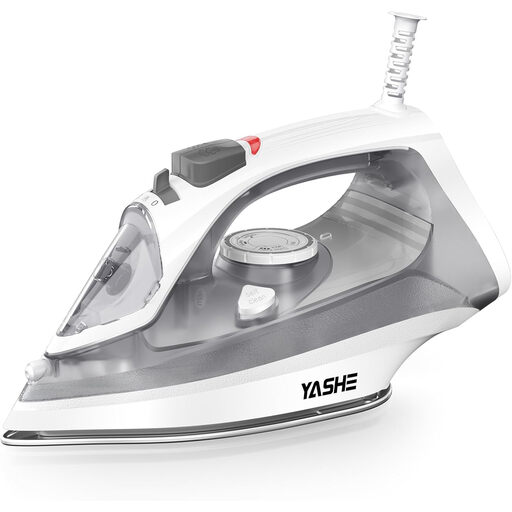
For smoothing clothes on an ironing surface; the product title lists an adjustable thermostat and a 300-ml water tank.
 No image available
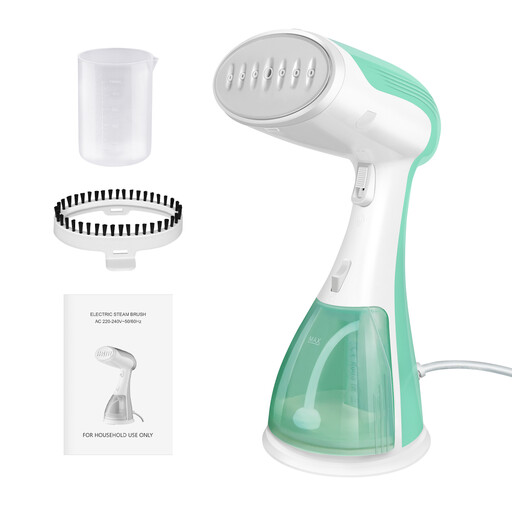
Described as a portable steam iron for home and travel; check that its shape suits your ironing surface and preferred way of ironing.
 No image available
For ironing on a flat surface; before buying, check that the temperature settings suit the care labels on your dresses.
 No image available
For smoothing clothes on an ironing surface; compare continuous steam and steam boost separately rather than treating them as equivalent figures.
 No image available
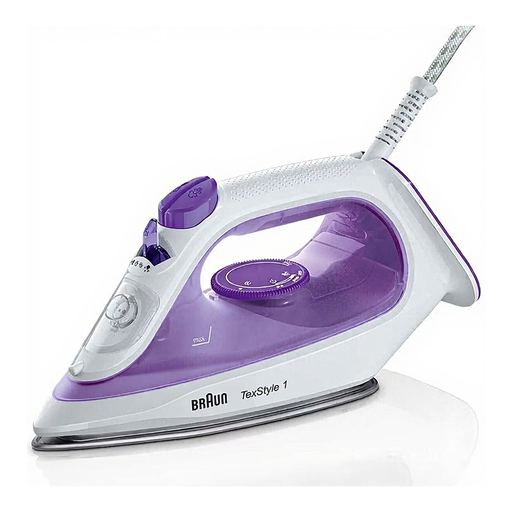
If you want to work on seams and narrow edges, check that the model’s tip and temperature setting suit the way you iron.
No. Always follow the care label on the specific dress. GINETEX specifies maximum ironing temperatures of 200 °C, 150 °C and 110 °C; the symbol for 110 °C indicates that the garment should be ironed without steam.
First, check the instructions for your model. Philips lists limescale build-up, a temperature that is too low for the steam function and using the steam boost too often among the possible causes for its appliances. These recommendations do not automatically apply to every brand.
When you buy online, you generally have 14 days from receiving the goods to cancel your purchase; you must notify the retailer of your decision. The Verbraucherzentrale notes that your statutory rights against the seller are separate from a voluntary manufacturer’s guarantee.
Electrical equipment covered by the EU Low Voltage Directive must meet the relevant safety requirements and carry the CE marking. The European Union explains that CE indicates the manufacturer’s declaration of conformity; it is not an independent test mark. Check the marking on the specific product listing: it cannot be determined from the type of model alone.