For precise ironing of cotton dresses
If you want to press flat areas, hems and seams, you’ll need a suitable, safe ironing surface as well as an iron. Braun describes a precision tip for detailed work on seams and hard-to-reach areas.


For individual cotton dresses that you want to iron flat and with precision, a steam iron paired with a safe, stowable ironing surface is a good place to start. A handheld clothes steamer can save you from setting up a traditional ironing board, but it won’t provide a flat surface for pressing specific areas. A steam generator may be a better choice for longer ironing sessions, but you’ll need space for its base. Always follow the care label on each dress when choosing the heat and steam settings.
If you want to press flat areas, hems and seams, you’ll need a suitable, safe ironing surface as well as an iron. Braun describes a precision tip for detailed work on seams and hard-to-reach areas.
If you mainly want to freshen up dresses while they’re hanging, a handheld clothes steamer could be an alternative. You’ll still need a suitable place to hang the garment and, if necessary, space for a vertical ironing board.
A steam generator may be worth considering for longer ironing sessions, provided you have room for its base as well as the ironing surface. The extra space needed to set it up and store it should be part of your decision.
A good choice if: You want to press hems and seams precisely on a flat surface.
The trade-off: You’ll need a safe ironing surface ready to use, then somewhere to store it afterwards.
A good choice if: Storage space for the iron is your main concern and you only iron small areas occasionally.
The trade-off: A folding handle reduces the space the iron takes up, but you’ll still need an ironing surface.
A good choice if: You mainly want to freshen up dresses while they’re hanging and don’t want to set up a traditional ironing board.
The trade-off: Steaming clothes on a hanger doesn’t provide a flat surface for precisely pressing hems and seams.
A good choice if: You regularly iron several items in one go and have space for the base.
The trade-off: The base takes up extra space, both when in use and in storage. A high steam output figure alone doesn’t guarantee better results on your dress.
| Buying priority | What to check before buying | Who it matters to |
|---|---|---|
| Precise pressing | The soleplate and tip of the specific model; a safe ironing surface and the care label. | If I want to smooth hems and seams precisely, I look for a suitable surface and check the permitted heat setting. Around 36% of consumers also put precise pressing first. |
| Limited space for set-up and storage | Space for the appliance, cord and, if needed, an ironing mat, vertical board or steam generator base. | When every bit of space counts, I want to know in advance where the whole set-up can go while I’m ironing and afterwards. Around 29% of consumers prioritise keeping the footprint as small as possible. |
| Freshening up individual dresses | The model’s stated heat-up time; the surface or hanging space you’ll need and the areas you want to smooth. | If I only freshen up a dress now and then, it’s important that the appliance and set-up suit a quick job. Around 21% of consumers prioritise occasional use like this. |
| Longer ironing sessions | Compare continuous steam separately from the steam boost; consider the tank and the space needed for the complete set-up. | If I iron several items in one go, I make room for the base as well as the ironing surface. Around 14% of consumers prioritise longer ironing sessions. |
A folding handle can make an iron easier to store. You’ll still need space for a safe ironing surface, a vertical board or a steam generator base.
Measure the space you have for the complete set-up and for storing it afterwards, not just for the appliance.
These figures describe different operating modes. A high figure for a short steam boost doesn’t mean the same amount of steam is produced continuously.
For longer ironing sessions, compare the continuous steam figures and consider the steam boost separately.
A handheld clothes steamer can save you from setting up a traditional ironing board, but it won’t provide a flat surface for precisely pressing hems and seams.
Think about which parts of the dress you want to smooth, and check the care label before ironing.
The models listed range from a steam iron for precise jobs to a steam generator for longer ironing sessions.
The product ranges listed include a folding travel iron and a standard steam iron.
The models listed are designed for steaming clothes on a hanger or ironing flat with a steam iron.
The 5000 Series DST5021/20R0 is a steam iron without a separate steam generator base.
This selection focuses on steam irons for ironing flat, if you can use a safe ironing surface that you can put away afterwards.
 No image available
For ironing flat, if you can set up a suitable, safe ironing surface.
The product description lists a non-stick soleplate. You’ll still need a suitable ironing surface for precise pressing.
 No image available
An option for ironing flat, if you can set up and store the ironing surface safely.
Rowenta lists continuous steam of up to 40 g/min and a steam boost of 160 g/min for the DW4320. These figures refer to different operating modes.
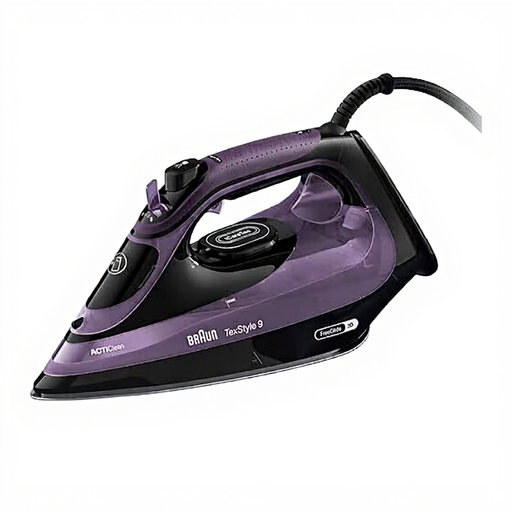 No image available
For ironing flat, if you want to work on garment panels as well as hems.
The product description lists a precision tip. You’ll still need a suitable, safe ironing surface.
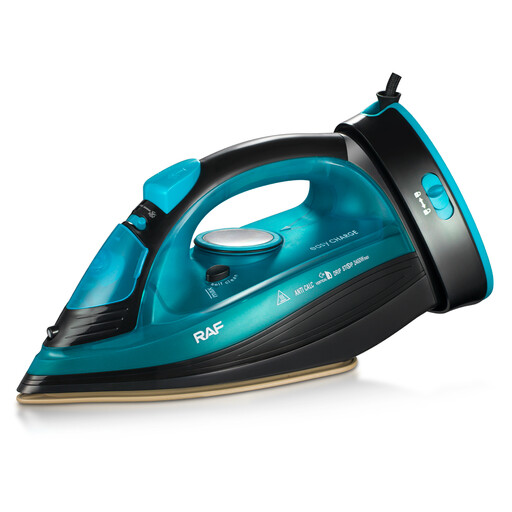 No image available
For ironing flat, provided you can use a safe surface and find room for the charging base too.
The product description lists a ceramic soleplate and a steam output of 15–25 g/min. Remember to allow for the charging base when planning where to store it.
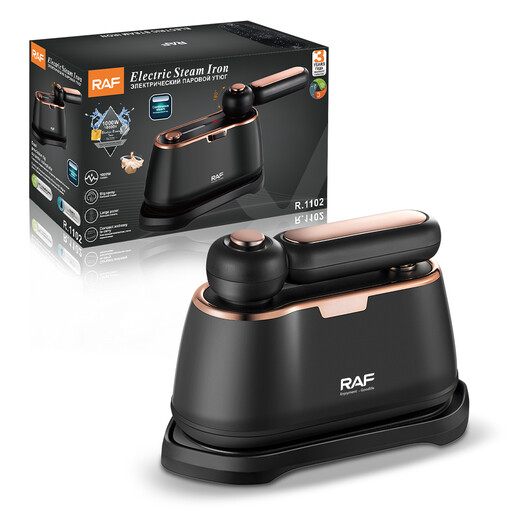 No image available
For occasional use, if you’re looking for a portable iron and can provide a safe ironing surface.
The product name specifies a handle that rotates through 180°; the product description also lists vertical steaming. Check whether it suits the areas you want to smooth.
No. The care label on each dress tells you how to treat it. GINETEX distinguishes between maximum temperatures of 200 °C, 150 °C and 110 °C, as well as the ‘do not iron’ symbol. For the 110 °C symbol, the symbol guide advises ironing without steam. Don’t rely on the word cotton on its own.
Follow the descaling instructions for the specific model. Philips explains that, in steam generators, limescale can build up more quickly in hard water, and that deposits may contribute to discolouration or leaks. Don’t apply these care instructions to another iron without checking first.
For a distance purchase from a business seller, you generally have a 14-day right to cancel from the date of delivery; exceptions and any return postage costs should be taken into account. Faulty goods are also covered by a statutory warranty of at least two years, which applies against the seller. This is separate from any voluntary manufacturer’s guarantee.
Check the specific product for any required markings and manufacturer information. For appliances that require it, the CE marking is the manufacturer’s declaration that the product meets the relevant EU requirements; it isn’t an independent quality mark.