
Lieferung heute & morgen

Qualitätsgarantie

Willkommens-Angebote freischalten: KOSTENLOSE Lieferung | Bis zu 80 % RABATT | Kostenlose 30-Tage-JoyPlus-Testphase
App herunterladen
A cotton fitted sheet measuring 90 x 200 cm is suitable for many single beds, but it won’t necessarily fit every mattress. Common problems aren’t usually down to the basic size, but to an insufficient depth, an unsuitable elasticated edge or unclear material details. Check these points before you buy to avoid unnecessary returns and a fitted sheet that comes loose during the night or no longer fits properly after washing.
The 90 x 200 cm measurement usually refers to the sleeping surface. You’ll also need to take the mattress depth into account. A standard model may be too shallow for a mattress with a topper or a particularly deep construction.
For example, a 90 x 200 x 30 cm fitted sheet offers more room for mattresses and toppers up to a suitable total depth. Always check the specific manufacturer’s details, though. A sheet with too much depth can also be a problem, as excess fabric may bunch up.
The word cotton alone doesn’t tell you much about the exact finish. Before you buy, check:
Washed cotton can have a more matt, textile-like finish. A cotton sateen fitted sheet, by contrast, has a smoother appearance and a sateen weave. This doesn’t automatically mean a particular quality of sleep; the fabrics simply have different textile properties.
An elasticated edge keeps the sheet in place on the mattress. If you change your bedding often or tend to move around in your sleep, a fitted sheet with all-round elastic can be useful, as the elastic runs all the way around the edge. The product description should make it clear whether the elastic runs around the entire sheet or is only fitted to certain sides.
90 x 200 cm is a common mattress size for a single bed. Before ordering, measure:
A model labelled 90 x 200 + 30 cm is designed for a 90 x 200 cm sleeping surface with an additional depth of 30 cm. Whether it will actually fit depends on the mattress construction and the amount of spare fabric.
Material details are the key point of comparison when choosing a cotton fitted sheet. 100% cotton may appeal if you prefer a natural fibre. However, washed cotton and cotton sateen differ in their surface, finish and care instructions.
Check the washing temperature, drying and ironing instructions. A machine-washable fitted sheet is particularly practical for households that change their bedding regularly, families and students. Always follow the temperature stated on the care label.
White is easy to pair with different bedding colours and is often a straightforward choice for guest rooms or student accommodation. Grey has a subtle look and can make signs of everyday use less noticeable. Green or blue add a splash of colour. However, the colour won’t affect the fit or fabric composition.
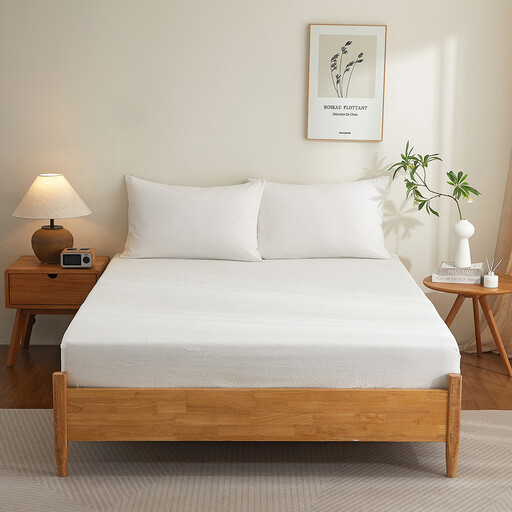
Why this product suits this profile: The combination of 100% cotton, a 90 x 200 cm size and an additional depth of 30 cm covers key requirements for a single bed. The white colour is easy to pair with your existing bedding.
The product name clearly states the material, basic size and additional depth. This makes it easy to compare the details with your mattress.
100% cotton; designed for 90 x 200 cm with an additional depth of 30 cm.
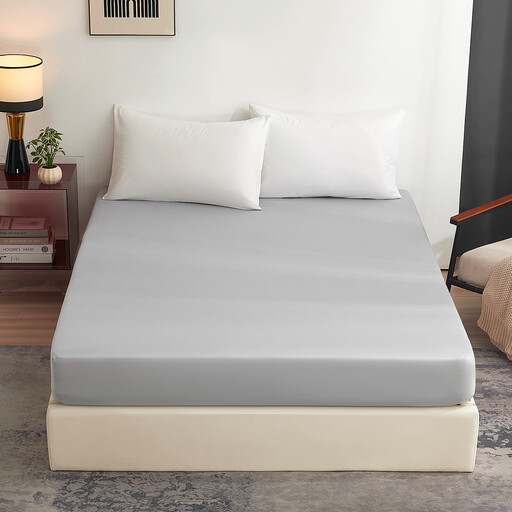
Why this product suits this profile: The grey cotton sateen finish is a good choice if you prefer a smoother look and need a 30 cm depth for a 90 x 200 cm single bed.
The product name makes the weave, colour and additional depth clear. This helps you choose a sheet that better matches your preferred finish and mattress depth.
Cotton sateen finish; grey colour; 90 x 200 cm with an additional depth of 30 cm.
We’ve put together a complete, regularly updated list of products that meet these strict selection criteria and fully comply with the safety regulations in force in the EU.
How long a fitted sheet lasts depends in part on how often it’s washed, the washing temperature, friction and drying. Follow the care label and avoid overloading the washing machine. Drying at too high a temperature or too often can put extra strain on textile fibres and elastic.
If you change your bedding regularly, it can be useful to have a second sheet. That way, one is ready to use while the other is being washed. Make sure the sheet is completely dry before putting it on the bed. Start by pulling the corners over the mattress, then smooth the edge evenly around it to minimise creases.
Not necessarily. As well as the length and width, you’ll need to consider the mattress depth and the depth of any topper. Also check that the product is designed for your mattress depth.
Follow the care label for the product. Even if a model is described as machine washable, the recommended washing temperature, spin speed and drying method may vary.
There’s no reliable way to give a set lifespan that applies to every sheet. Frequent changes, incorrect care, heavy wear and reduced elasticity can all affect how long it lasts. Visible thinning, damaged seams or elastic that has become permanently loose are practical signs that it may be time for a replacement.