A heated clothes airer could be a good fit if you regularly dry cotton shirts indoors, want the option of adding heat when needed and have enough floor space while your laundry is drying. Compare its dimensions when open, hanging options and rated power. Manufacturer claims about drying times don’t guarantee a particular result in your home. If space or electricity use matters more, you could also consider a slim, unheated airer or – if suitable for your home – a ceiling-mounted option. Whichever you choose, good ventilation is important.
Which option is right for you?
Drying shirts with limited space
If you hang shirts indoors but have limited space, compare the airer’s dimensions when open, its hanging options and how much room it takes up when folded away. A compact folded size alone doesn’t tell you whether it will fit in your room while your laundry is drying.
Drying shirts when you’re short on time
If you’d like the option of adding heat when needed, check the airer’s actual design and rated power. A manufacturer’s claim that it reduces drying time isn’t a guaranteed drying time for your shirts or your home.
Balancing electricity use and room humidity
If you want to factor in the extra electricity use, consider how long you’ll use the airer for, too. Damp washing releases moisture into the air, so the German Environment Agency recommends ventilating regularly when drying laundry indoors.
What should you look for when buying?
Folding heated airer
A good fit if: You have floor space while your laundry is drying and want to fold the airer flat afterwards. Adler lists the AD 7821’s dimensions as 148 × 52,5 × 90 cm when open and 113 × 52,5 × 8 cm when folded, with a rated power of 220 W.
Worth considering: The rated power doesn’t tell you how long your shirts will take to dry or how much electricity each one will use.
Compact heated airer
A good fit if: You only hang a few items at a time and need a small footprint. The HOMCOM 850-032 is listed with five rails, a rated power of 100 W and dimensions of 58 × 39 × 105 cm.
Worth considering: Check that the layout gives your shirts enough room to hang with space between them.
Slim, unheated airer
A good fit if: You can do without optional heat and are looking for an airer with a narrow footprint. Leifheit lists the Pegasus 150 Solid Slim as 55 cm wide, with 15 m of drying line.
Worth considering: This model has no heating function, and drying time still depends on your laundry and room conditions.
Ceiling-mounted option with air circulation
A good fit if: You want to keep your floor clear and can install a suitable ceiling-mounted unit. Foxydry lists the Air model with two fans and space for 18 to 24 hangers.
Worth considering: You’ll need to plan for installation and a power connection. The fans listed are not the same as heated rails.
| What matters to you |
What to check |
Who it matters most to |
| Floor space and hanging options |
Compare the dimensions when open and folded, as well as the rail or hanger layout, with your chosen spot and the number of shirts you need to dry. |
If I set the airer up in my living space, there needs to be room for it and my shirts without blocking walkways. Around 31% of consumers focus primarily on floor space, hanging options and storage. |
| Heat and drying |
Check which parts are heated and whether you can use the airer without the heat on. |
If I want the option of adding heat when needed, I look at the heating function and how my shirts will hang. Around 25% of consumers prioritise the option of using heat. |
| Humidity in the room |
Choose a spot where you can ventilate regularly and, if needed, monitor the room’s humidity. The German Environment Agency and the consumer advice centre recommend regular ventilation when there is moisture in the home. |
If I dry laundry at home, I want to be able to clear the moisture from the room afterwards. Around 25% of consumers put this concern first. |
| Electricity and garment care |
Consider the rated power and expected usage time separately, and check the care label and appliance instructions. |
When weighing up electricity use and how to care for my shirts, I consider both how long the airer will run and the instructions on the garment. Around 19% of consumers focus primarily on electricity use and garment care. |
Common misconceptions
-
A heated airer makes the room less humid
Heated rails don’t remove the moisture that wet laundry releases into the air. The German Environment Agency recommends taking particular care to ventilate regularly when drying damp laundry indoors.
Choose a spot where you can ventilate, and keep an eye on the room’s humidity if needed.
-
The folded size tells you whether the airer will fit in your home
The folded size helps you work out how to store the airer after use. While your laundry is drying, the airer and hanging shirts need room; a small number of rails may also limit your hanging options.
Compare the dimensions when open and folded, and the hanging layout, separately with your chosen spot and the number of shirts you usually wash.
-
Fans and heated rails use the same technology
A model with fans and an airer with heated tubes use different stated technologies. You can’t assume they’ll offer comparable drying times.
Check whether the specific model actually has heated rails, and compare the design that suits your needs rather than treating drying claims as equivalent.
Key brands and product ranges
Adler
The AD 7821 is a folding heated airer for households with space to set it up while in use and store it flat afterwards.
- The manufacturer lists 18 heating elements, a rated power of 220 W, and dimensions for the airer both open and folded.
- The advertised reduction in drying time is not an independently verified drying time for cotton shirts.
HOMCOM
The models covered here have different designs: model 850-032 is a compact heated airer for a few items, while model 850-048 is a folding, two-tier option.
- According to the product information, you can switch off the heat function on model 850-048.
- The models aren’t interchangeable, so compare the specific design and hanging options with your needs.
Leifheit
The Pegasus 150 Solid Slim is an unheated alternative if a narrow footprint matters more to you than optional heat.
- Leifheit lists a width of 55 cm and 15 m of drying line.
- This model has no heating function, so check its dimensions against the space you have available.
Foxydry
Foxydry Air is a ceiling-mounted option with air circulation, designed for situations where keeping the floor clear and hanging shirts on hangers are priorities.
- The manufacturer lists two fans and space for 18 to 24 hangers.
- You’ll need to plan for installation and a power connection; the fans aren’t described as heated rails.
Joybuy products
This selection includes a folding heated clothes airer and an extendable single-rail airer. Before buying the single-rail model, check whether the specific version has the heating function you need.
 No image available
Folding heated clothes airer, 45–55 °C, 144 × 53 × 96 cm
Could be a good fit if you want the option of adding heat and folding the airer away after drying.
The product information lists a rated power of 230 W and dimensions of 144 × 53 × 96 cm. Check that its folded size will fit your storage space, too.
Before buying a mains-powered heated airer, check the rated voltage and the CE marking that applies to the specific appliance.
View on Joybuy
 No image available
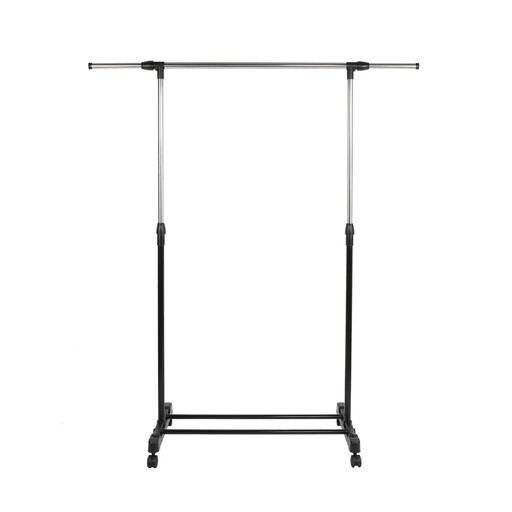
Extendable single-rail clothes airer
Could be a good fit if you’re looking for a single rail for shirts and want to adapt the airer to changing space requirements.
The product information lists an adjustable height of 90 to 158 cm, adjustable width, four wheels and a foldable design.
Before buying, check whether the specific version has the heating function you need.
View on Joybuy
Frequently asked questions
How can I tell whether a heated airer will fit in my home?
Measure the space you’ll need for the airer when fully open and loaded, as well as the storage space you’ll need once it’s folded. Adler lists the AD 7821’s dimensions in both configurations; Leifheit gives the unheated Pegasus 150 Solid Slim a width of 55 cm.
Does a heated clothes airer mean I don’t need to ventilate?
No. The German Environment Agency identifies damp laundry as a source of moisture in the home and recommends taking particular care to ventilate regularly. The consumer advice centre recommends using a hygrometer to check indoor humidity if needed.
How can I estimate a heated airer’s electricity use?
At a rated power of 220 W, four hours of continuous use at that assumed power would work out at 0,88 kWh (0,220 kW × 4 h). This is a calculation, not a measured consumption figure; actual electricity use depends on factors including how long and how the airer is used.
Which marking is relevant for a mains-powered heated airer in Germany?
Electrical equipment covered by the EU Low Voltage Directive, including equipment rated for 50 to 1.000 V AC, must meet the relevant EU requirements, including conformity assessment and CE marking. EUR-Lex explains that CE marking does not guarantee an independent inspection of an individual product. Check the information provided for the specific appliance and its rated voltage.


