Ironing shirts with limited space
If you iron the occasional cotton shirt, you need an easy-to-store option that lets you work precisely around collars and button plackets.


For the occasional cotton shirt, a steam iron with an easy-to-reach tip, adjustable temperature and clear descaling instructions is a sensible starting point. The care label on each shirt should always take priority. If you regularly have large loads of laundry to iron, a steam generator with a separate tank may be a better fit, but it needs more room to use and store. A garment steamer is better suited to freshening up clothes on a hanger than to pressing collars and button plackets precisely. Before choosing a specific model, check that it has the required CE marking and read its product documentation.
If you iron the occasional cotton shirt, you need an easy-to-store option that lets you work precisely around collars and button plackets.
When several people use the same appliance, clear settings, a safe place to rest it and a simple care routine are important.
If you often iron a lot of laundry in one go, weigh up the tank capacity and steam output against the extra space a steam generator needs.
A good fit if: You iron one or more cotton shirts on an ironing board and need to work carefully around collars and button plackets.
The trade-off: Its built-in tank makes it more compact than a steam generator, but you may need to refill it during longer ironing sessions.
A good fit if: Several housemates regularly iron large loads in one go and you have room for the generator and ironing board.
The trade-off: The separate tank can mean fewer refills during longer sessions, but setting it up, storing it and following the model-specific care instructions all become more important.
A good fit if: You mainly want to freshen up a garment on a hanger and sharp creases are not a priority.
The trade-off: Steaming a garment on a hanger is not a straightforward substitute for using an iron soleplate to press collars and button plackets precisely.
If you’re choosing an iron for cotton shirts in a German shared house, the approximate proportions below give an idea of what consumers tend to prioritise.
| Priority | What to check when buying | Who it matters most to |
|---|---|---|
| Pressing shirts precisely | A precision tip and temperature control; compare continuous steam output in g/min separately from the steam shot in g. | If you want to press collars, seams and button plackets carefully and set the temperature according to the care label, shirt results are likely to be your priority; around 36% put them first. |
| Ease of use for everyone | Check that the instructions are clear, that there’s a stable place to rest the iron and whether the specific model lists an automatic shut-off function. | When several housemates use the appliance, easy-to-understand settings and a safe place to rest it are particularly important; around 28% of consumers prioritise ease of use for everyone. |
| Longer ironing sessions | Compare tank capacity in ml, continuous steam output in g/min and the space needed for the iron and ironing board separately. | If you regularly iron lots of items one after another and want to minimise refills, pay particular attention to the tank and steam output; around 18% of consumers put this first. |
| Care and water marks | Check the model-specific descaling instructions and whether an anti-drip function is explicitly listed. | If you want to keep the care and descaling routine for a shared appliance straightforward, you may want to give maintenance extra weight; around 18% of consumers prioritise this. |
A single burst of steam doesn’t tell you how much steam is available while you’re ironing continuously.
Compare figures for steam shots in g and continuous steam in g/min separately. Manufacturer figures are not independent test results.
A separate tank is most useful during longer ironing sessions. If you only have a few shirts to iron, the extra space it takes up should be justified by your needs.
Base your decision on the amount of laundry you usually iron and the space available in your shared house.
Specifications can vary even between models from the same brand.
Check the feature against the full model number, and never leave a hot iron unattended.
The FreeStyle 3 FI 3194 BK is worth considering for detailed shirt ironing, thanks to its open handle design and precision tip.
The DST7040/80 steam iron is an option if you’re looking for a 300-ml tank, anti-drip function and Quick Calc Release.
According to Tefal, the FV6846E1 combines a precision tip with a removable limescale collector; the FV2838E0 has fewer features.
The Pro Master DW8210D1 is an option for longer ironing sessions, with a precision tip and 310-ml tank.
The One Temperature 25090-56 is designed for households that want to minimise manual adjustments when switching between ironable fabrics.
The Joybuy products below are steam irons designed for use on an ironing board. For cotton shirts, check the temperature controls and specifications that suit the way you iron.
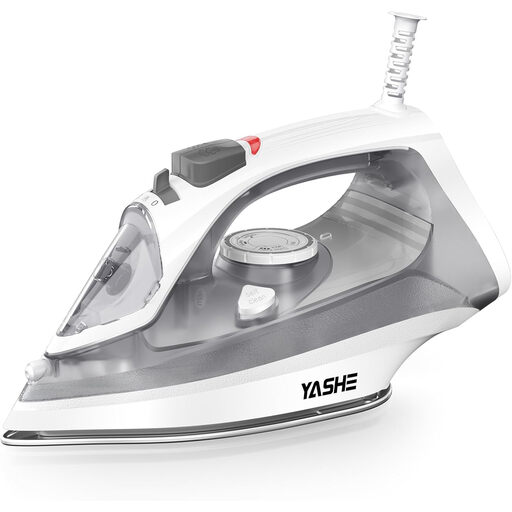 No image available
An option if you want to take different fabric settings into account when ironing.
2300 W; 300-ml water tank; steam shot 150 g/min.
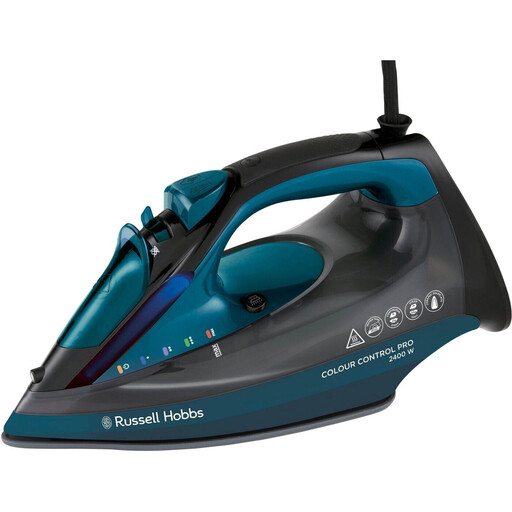 No image available
An option for households where different temperature settings matter when ironing clothes shared between housemates.
 No image available
An option if you want to take different temperature settings into account when ironing different garments.
2400 W; 350-ml water tank.
 No image available
An option if continuous steam output is an important factor in your choice for longer ironing sessions.
2500 W; continuous steam 40 g/min; steam shot 160 g/min; 250-ml water tank.
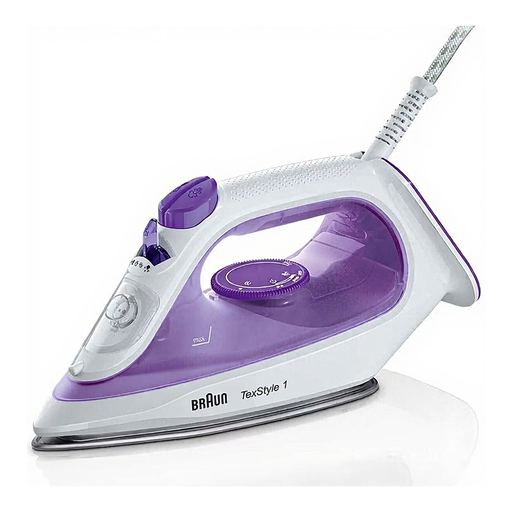 No image available
An option if a precision tip would be useful for ironing narrow areas and around button plackets.
Follow the ironing symbol on the care label of the shirt in question: the dots indicate temperature ranges. The word ‘cotton’ on its own doesn’t tell you which setting is right for every shirt, particularly if it’s a blended fabric or has a coating.
Agree who will check the tank and soleplate after use, and who will descale the iron in line with the instructions for that model. A limescale collector and Quick Calc Release are different manufacturer systems; don’t assume the care instructions for one model apply to another.
In Germany, your statutory rights against the retailer are separate from any voluntary manufacturer’s guarantee. The Verbraucherzentrale explains that the retailer covers the costs of transport, labour and materials when putting things right.
For a new mains-powered iron in the voltage range in question, the relevant EU conformity requirements and required CE marking must be observed. According to the European Commission, the manufacturer uses the marking to declare conformity; it is not an independent quality mark. Before buying, check the marking and product documentation for the specific model.