If you regularly iron small batches of cotton shirts, a steam iron is a sensible starting point if you want to tackle the whole shirt, including the collar, cuffs and button placket. A handheld garment steamer is better suited to a quick refresh, while a steam generator is more suited to longer ironing sessions. If you’d rather iron without a water tank, consider a dry iron. For mains-powered appliances covered by EU regulations, check the CE marking on the specific product listing before you buy.
Which appliance is right for you?
After-work shirt ironers
If you often iron just one or two shirts, you’ll want an appliance that’s easy to get started with and use, and simple to store away. The F.A.Z. Kaufkompass says a steam iron is enough for many households that don’t have large piles of laundry.
Detail-focused shirt ironers
If you want to smooth collars, cuffs and button plackets precisely, look for an accessible iron tip and controllable steam. Braun describes the FI3194BK as having a precision tip, while Russell Hobbs says its model 20630-56 has grooves at the tip to help with button plackets.
Care- and safety-conscious shoppers
If you’re thinking about drips, limescale care and handling a hot appliance, check the features and care instructions for the exact model variant. Braun lists an automatic shut-off for the FI3194BK; Rowenta explicitly says the DW7320D1 does not have one.
What should you look for when buying?
Steam iron
A good fit if: You regularly iron a few cotton shirts from top to bottom and want to tackle details precisely.
Things to consider: You’ll need to manage the water tank, temperature settings and descaling. Steam figures are manufacturer specifications for individual models, not a guarantee of ironing results.
Dry iron
A good fit if: You’d rather iron without a water tank or steam from the appliance. SEVERIN describes the BA 3211 as an iron without a steam function and with adjustable temperature.
Things to consider: There’s no steam from the appliance to help with stubborn creases, so you can’t assume it will smooth them as quickly as a steam iron.
Handheld garment steamer
A good fit if: You mainly want to quickly freshen up a shirt that’s already hanging.
Things to consider: For tricky areas such as collars and cuffs, Philips recommends using the model reviewed horizontally on a flat surface. Using it vertically only isn’t the same as precise ironing.
Steam generator
A good fit if: Your ironing loads or individual sessions are getting bigger and you want to iron for longer without refilling.
Things to consider: Tefal says the Power Pro Compact 200 has a 1.7-l tank and takes two minutes to heat up. The extra generator unit may mean more set-up for ironing just one shirt.
| Priority |
What to check before buying |
Who is it important to? |
| Get started quickly |
Check the stated heat-up time for the relevant setting and how easy the iron is to handle; don’t assume a higher wattage means faster ironing in practice. |
If you only iron one or two shirts after work, you’ll want to get going with as little preparation as possible. Around 31% of consumers prioritise a quick start for small loads. |
| Smooth shirt details |
Check the shape and accessibility of the tip, along with suitable steam and temperature settings; a powerful steam boost alone doesn’t tell you how precise the iron is. |
If you want to smooth collars, cuffs and button plackets precisely, control as you guide the iron matters. Around 31% of consumers focus on precise shirt details. |
| Drips and limescale care |
Check for an anti-drip function and an accessible descaling process using the full model reference; listed features are no guarantee against drips. |
If you want to avoid water marks and keep maintenance manageable, make sure the tank and descaling process suit your routine. Around 19% of consumers put drips and limescale at the top of their list. |
| Handling and safety |
Check the handle and weight, and whether the specific model has an automatic shut-off; this doesn’t replace putting the iron down safely and switching it off. |
If you often iron for short periods, the appliance should be easy to handle and its shut-off feature should suit your safety needs. Around 19% of consumers prioritise handling and safety. |
Common buying mistakes
-
Choosing by wattage or steam boost alone
Specifications alone don’t tell you how easy an appliance is to handle or how it performs when ironing a single shirt. ARD Marktcheck reports differences between the appliances it tested.
Alongside the specifications, look for precise handling, adjustable settings and reviews of the exact model.
-
Assuming a vertical garment steamer can iron a shirt from top to bottom
For tricky areas such as collars and cuffs, Philips says the handheld model it reviewed works better horizontally on a flat surface.
Decide in advance whether a quick refresh is enough or whether you want to iron collars and cuffs precisely.
-
Assuming every model has the same limescale system and automatic shut-off
Care systems vary by model. Rowenta explicitly says the DW7320D1 does not have an automatic shut-off.
Check the limescale care system and automatic shut-off using the full model reference and the relevant manual.
Brands to consider
Braun
The FreeStyle 3 range includes steam irons for shorter, detail-focused ironing sessions.
- Braun lists 45 g/min of continuous steam, manual temperature selection and a precision tip for the FI3194BK.
- These specifications apply to this model; the F.A.Z. Kaufkompass notes that the dial on this particular appliance isn’t entirely convincing.
Philips
The range includes steam irons and handheld garment steamers for different ironing routines.
- Philips lists up to 85 g/min of continuous steam and a 260 g steam boost for the Azur 8000 DST8050/20.
- For the handheld garment steamer it reviewed, Philips recommends working horizontally on a flat surface for tricky areas of shirts. The different appliance families and variants shouldn’t be treated as interchangeable.
Tefal
The models listed include steam irons with filter maintenance and a steam generator for longer sessions.
- Tefal lists a micro-limescale filter and automatic shut-off for the Ultimate Pure FV9844E0.
- The filter needs cleaning. An Ultimate Pure appliance tested by ARD Marktcheck dripped heavily, but this result can’t be definitively attributed to the FV9844E0.
Rowenta
The Everlast Anticalc DW7320D1 is an option if you’re comparing a precision tip with a removable limescale collector.
- Rowenta lists 45 g/min of continuous steam and a 300-ml tank for this model.
- The manufacturer explicitly says there is no automatic shut-off; these specifications don’t prove it’s better than other models.
Russell Hobbs
The Powersteam Ultra 20630-56 is a steam iron with grooves at the tip to help with button plackets.
- The manufacturer lists up to 45 g/min of continuous steam, a 350-ml tank, a 3-m cable and a self-cleaning function.
- A larger tank may not be necessary for ironing individual shirts; the manufacturer’s specifications don’t prove it’s easier to handle day to day.
Joybuy products for small batches of shirts
These steam irons are designed for ironing small batches of shirts from top to bottom. For mains-powered appliances covered by EU regulations, check the CE marking on the specific product listing; general CE marking requirements don’t confirm that an individual appliance conforms.
 No image available
Rowenta DW4320 Express Steam
As a steam iron, it’s suited to regularly ironing small batches of shirts from top to bottom. Check that the tank and handling suit shorter sessions.
2500 W, 40 g/min continuous steam and a 160 g/min steam boost; 250-ml tank and 2-m cable.
An anti-drip system and vertical steam are listed.
View at Joybuy
 No image available
Tefal FV8066 Puregliss
This steam iron is worth considering for ironing shirts from top to bottom if maintaining the anti-limescale component fits your routine.
The product name lists a 280 g/min steam boost, vertical steam, an XL filling opening and a stable base while heating up.
Follow the care instructions for the exact model when maintaining the anti-limescale component.
View at Joybuy
 No image available
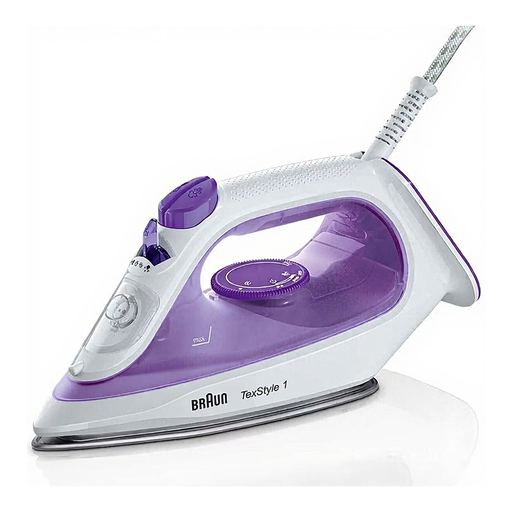
Braun TexStyle 1 SI1080VI
This steam iron is an option if you want to iron small batches of shirts from top to bottom. Check the listing details to make sure its handling and temperature settings meet your needs.
View at Joybuy
 No image available
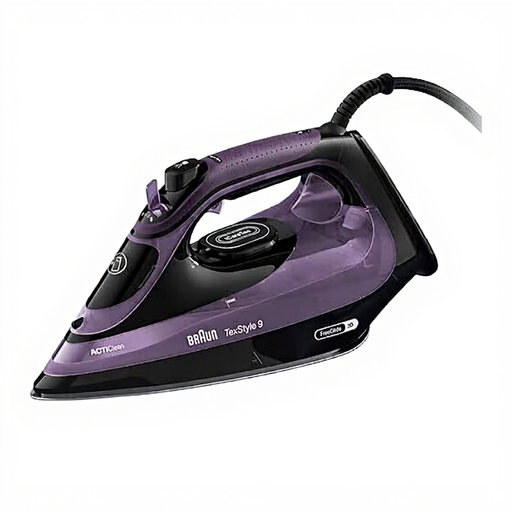
Braun TexStyle 9 SI9661VI
This steam iron is suited to ironing small batches of shirts from top to bottom, provided you check the exact model variant and its care instructions before buying.
View at Joybuy
 No image available
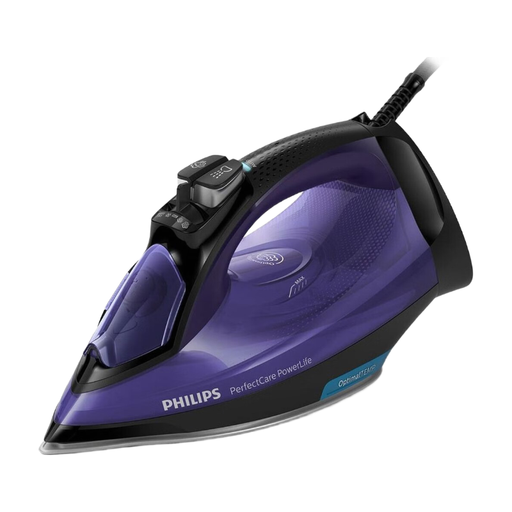
Philips PerfectCare GC3925/30
This steam iron is worth considering if you want to iron a whole shirt using steam from the appliance. Check that the temperature control is suitable for caring for your shirt.
The product name lists 2500 W and a SteamGlide Plus soleplate.
View at Joybuy
Frequently asked questions
Is a handheld garment steamer enough for collars and cuffs?
A handheld garment steamer can be a good choice for a quick refresh. For one model it reviewed, Philips says collars and cuffs come out better when you work horizontally on a flat surface. So check whether you can get the results you want without an ironing board.
What temperature should I use for a cotton shirt?
Follow the care label on the specific shirt rather than relying on the fibre description alone. The iron symbol indicates temperature settings up to 200 °C, 150 °C and 110 °C, as well as “do not iron”; take care when using steam on the lowest setting. Verbraucherzentrale’s guidance on ironing symbols draws on information from GINETEX Germany.
How do you care for a steam iron?
Follow the instructions for the exact model variant: the Tefal FV9844E0 has a micro-limescale filter that needs cleaning, while the Rowenta DW7320D1 has a removable limescale collector. The care instructions for these two systems aren’t interchangeable.
Is a manufacturer’s guarantee the same as your statutory rights?
No. Your statutory rights are against the seller, while a manufacturer’s guarantee is voluntary and subject to its own terms. If a product is faulty, you may first be entitled to have it repaired or replaced. Verbraucherzentrale clearly distinguishes between these two rights.
What does the CE marking mean when buying in Germany?
Mains-powered irons covered by the relevant EU regulations must carry the CE marking. It’s a declaration of conformity by the manufacturer, not individual approval from a central EU body; a test listing or product description alone doesn’t confirm that the specific item for sale carries the marking. The European Union explains CE marking and Directive 2014/35/EU.


