Commuters short on time
You want to get a creased shirt back into shape quickly, and need to work out whether it is simply creased or still wet from the rain.


If you regularly iron several badly creased cotton shirts, a steam generator with consistent steam, a refillable tank and an easy-gliding soleplate could be a good choice. For a single shirt and limited storage space, a steam iron is more compact. ETM TESTMAGAZIN highlights steam output while ironing, how smoothly the soleplate glides and ergonomics as important factors to consider. If your shirt is still noticeably damp from the rain, the steam function is not a proven substitute for drying it.
You want to get a creased shirt back into shape quickly, and need to work out whether it is simply creased or still wet from the rain.
You iron several cotton shirts in one go and value consistent steam, an easy-to-guide soleplate and as few refills as possible.
You tend to care for individual shirts and are weighing up the benefits of a steam generator against the space needed for a larger appliance.
First, check whether the shirt is dry enough to iron. After that, the main considerations are how many shirts you iron, how creased they are and how much space you have for the appliance.
A good choice if: you often iron several shirts or tackle deep creases in cotton on the ironing board.
What to consider: the tank and base unit need space on your worktop and in storage; a high steam boost does not indicate the steam output throughout ironing.
A good choice if: you occasionally iron a single shirt and prefer a more compact appliance.
What to consider: when ironing several shirts in one go, the water capacity and need for frequent refills may become more noticeable.
A good choice if: you want to freshen up light creases in a suitable garment without setting up an ironing board.
What to consider: for a crisp finish and pronounced creases in cotton, an appliance with a soleplate and ironing surface is the more obvious choice.
ETM TESTMAGAZIN considers steam irons and steam generators suitable for heavily creased or thicker fabrics, while garment steamers are better suited to lighter creases and delicate materials. This is a guide to different uses, not a blanket comparison of all models.
| What you need | What to check when buying | Who will find this most important? |
|---|---|---|
| Ready to use quickly, while allowing for residual dampness | Check the model’s stated heat-up time and steam settings; don’t confuse ironing with drying. | If I have little time after my commute, I want to know whether the shirt is still damp and when I can start ironing. Around 36% of consumers prioritise being ready to use quickly and dealing with residual dampness. |
| Smooth out cotton creases precisely | Compare continuous steam rather than just the steam boost; check how easily the soleplate moves around the collar and button placket, and follow the care label. | If I want collars, button plackets and shirt panels to look neat, I look for steam during ironing and precise control. Around 29% of consumers prioritise smoothing out pronounced creases. |
| Several shirts in one go | Check the tank capacity, whether it can be removed and the refill instructions for the specific model variant. | If I have several shirts to iron one after another, I want to be able to plan around refills as easily as possible. Around 21% of consumers prioritise ironing several shirts per session. |
| Care and storage space | Check the model’s descaling instructions and how much space it needs before buying. | If I only iron a few shirts, I compare the space needed for a steam generator with the benefits of a more compact appliance and the care it requires. Around 14% of consumers prioritise maintenance and storage space. |
Manufacturers state steam boost and continuous steam output separately. A high peak figure on its own does not show how much steam is produced while ironing or guarantee faster results.
Compare the same measurement across models. For shirts, also consider how easily the soleplate moves, the settings and the tank. ETM TESTMAGAZIN also highlights glide and ergonomics as important factors.
The care label on the specific garment determines how it can be treated, not just the fact that it is made of cotton.
Check the ironing symbol before using heat or steam. GINETEX distinguishes, among other things, between ironing without steam and ‘do not iron’.
A steam generator needs space and regular care. For occasional ironing, a standard steam iron may be more compact.
Compare how often you actually iron, the storage space available and the descaling instructions for the model you’re considering.
The details below relate to specific model ranges. Steam output, tank capacities and features come from the manufacturers and are not a direct comparison of quality.
The Express Protect SV9202 and Pro Express Ultimate II GV9720 differ in their steam control: the SV9202 automatically adjusts temperature and steam, while the GV9720 offers three selectable settings, according to Tefal.
The PerfectCare 8000 Series PSG8200/80 is aimed at buyers looking for automatic steam delivery and a setting for a range of ironable fabrics.
The CareStyle 7 Pro IS7286BK is an option for buyers who want to compare the stated continuous steam output and ironing modes of a specific model.
The Steam Pro DG9642 has selectable settings, a removable tank and a limescale collector.
The La Vaporella XT120C is worth considering if you’re looking for a boiler, multiple programmes and the terms of a boiler warranty.
This selection features steam generators for smoothing cotton shirts and longer ironing sessions. For mains-powered appliances covered by the relevant EU rules, checking for the required CE marking should form part of your purchase checks. It is a declaration by the manufacturer, not the result of an independent test (European Commission).
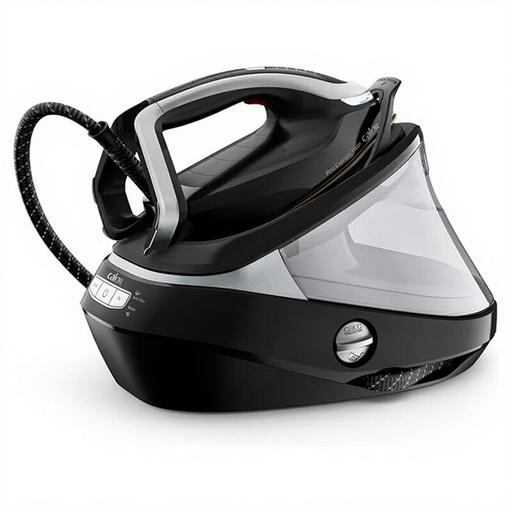 No image available
The stated continuous steam output and removable tank are worth considering for ironing shirt panels and longer sessions.
180 g/min continuous steam; 1,2-l tank; ceramic soleplate; 3000 W.
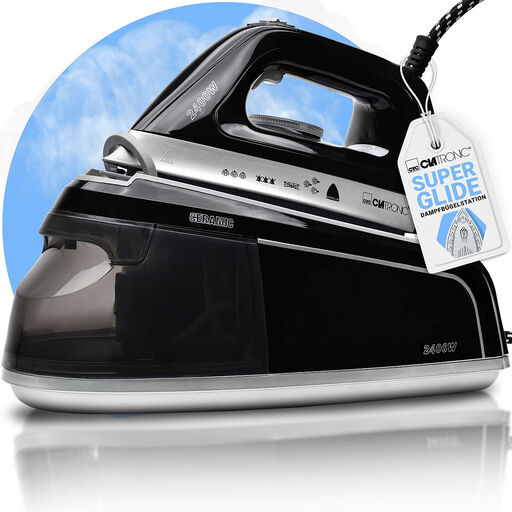 No image available
The stated continuous steam output and tank capacity are useful points of comparison if you plan to iron several garments one after another.
Up to 90 g/min consistent steam; 1,2-l tank; ceramic soleplate; 3,5 bar; 2400 W. The stated operating time of up to 80 minutes is based on average use.
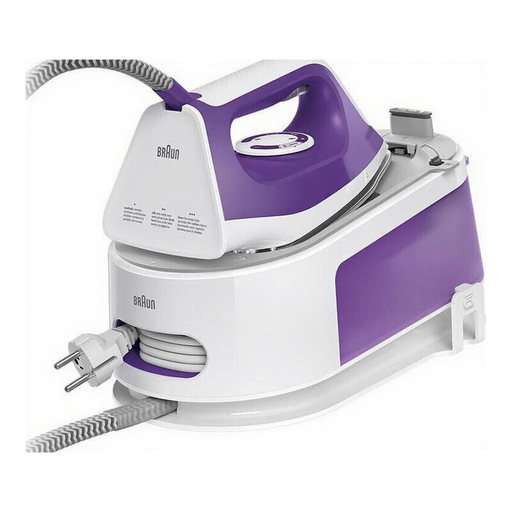 No image available
The tank and stated continuous steam output are useful details if you’re planning to iron several items in one session.
120 g/min continuous steam; 1,5-l tank; ceramic soleplate. Temperature selection, vertical steam and self-cleaning are also listed.
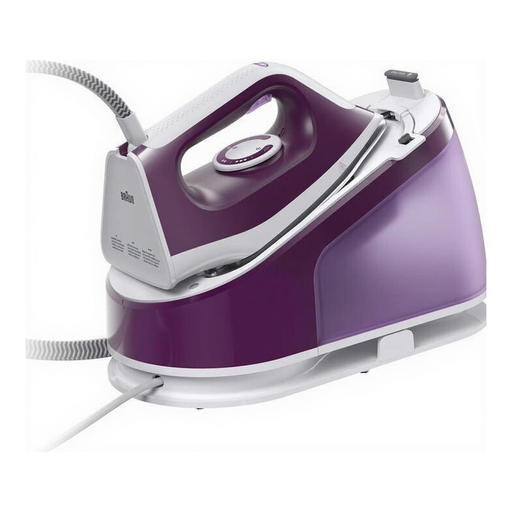 No image available
If you iron several garments in one go, you can compare the tank capacity with the continuous steam output stated for this model.
120 g/min continuous steam; 1,7-l tank; ceramic soleplate; four temperature settings. Vertical steam, anti-drip and automatic shut-off are also listed.
 No image available
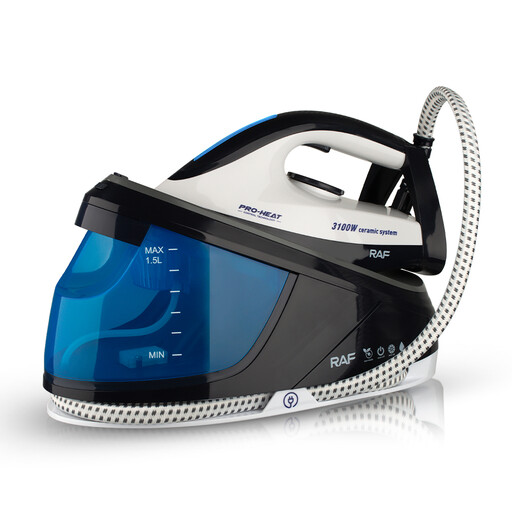
The stated steam output and removable tank are worth taking into account when planning longer ironing sessions.
180 g/min steam output; 1,5-l tank; ceramic soleplate; 3100 W. Vertical steam, anti-drip, automatic shut-off and self-cleaning are also listed.
There is no evidence that it can dry clothes soaked by rain. Philips’ claim about fewer damp patches relates to ironing with the PSG8200/80 under specific comparison settings, not to drying a soaking-wet shirt. So consider how damp the shirt is separately from the ironing result.
Check the ironing symbol on the specific shirt; the word ‘cotton’ alone is not enough. GINETEX distinguishes, among other things, between ironing without steam and ‘do not iron’. Always follow the care label.
Follow the descaling instructions for the model range. Philips describes Easy De-Calc for certain PerfectCare series and warns against opening the cap while the appliance is hot. The manufacturer also notes that limescale can cause staining and reduce steam output.
No. The European Commission describes CE marking on covered electrical appliances as a declaration by the manufacturer that the relevant EU requirements have been met. It is not a substitute for an independent performance test or for checking the marking on the specific appliance being offered.
Your statutory rights against the seller are separate from any voluntary manufacturer’s guarantee. According to consumer advice centres, online orders generally come with a 14-day cancellation period from the date you receive the goods. Check the details provided by the specific seller before buying; cancellation rights and your rights when goods are faulty are separate matters.