A single shirt after your commute
You want to smooth out a shirt after a wet journey to work without having to set up bulky equipment.


For a single creased cotton shirt after your commute, a handheld steam iron is usually the obvious place to start, provided the care label allows steam. A pointed tip that gives you easy access is useful for collars and button plackets. A steam generator is better suited to regular, larger ironing loads and needs a separate base, while a dry iron has no water tank but does not produce steam. If your shirt is soaked through, let it drip or dry first, and set the temperature and steam according to the care label.
You want to smooth out a shirt after a wet journey to work without having to set up bulky equipment.
Collars, cuffs, button plackets and narrow seams matter more to you than a high steam output alone.
You iron shirts along with other laundry and are weighing up whether a handheld iron or a separate steam generator is better suited to your routine.
| What matters | What to check before you buy | Who is it important to? |
|---|---|---|
| A single shirt without a big set-up | Handheld iron or separate steam generator; don’t assume tank size guarantees a particular run time. | If I’m only smoothing out one shirt after my commute, I want to be able to get the iron ready without a separate base. Short, one-off ironing sessions are the top priority for around 36% of consumers. |
| Shirt details | Shape of the iron’s tip, plus temperature and steam settings to suit the care label. | For collars, cuffs and button plackets, access to narrow areas matters most to me. Precision on details comes first for around 29% of consumers. |
| Larger ironing sessions | Typical laundry load, space to store the appliance, and how it is refilled and descaled. | If I regularly iron several shirts and other laundry, the type of appliance needs to suit my ironing routine. Larger loads are the main concern for around 21% of consumers. |
| Minimal appliance maintenance | Whether you need integrated steam; for steam irons, follow the care instructions for the specific model. | If I want to keep maintenance of the water tank and steam system to a minimum, an appliance without an integrated water system could be an option. Minimal maintenance is the main consideration for around 14% of consumers. |
New electric irons covered by the EU Low Voltage Directive must meet the relevant safety requirements. EUR-Lex says that, before making them available, retailers should check the CE marking and the required documentation and safety information, among other things. The CE marking is not an independent quality mark.
A steam boost is not the same as continuous steam. Philips and Rowenta list these figures separately for their respective models.
When comparing irons with a similar design, compare the same type of steam output; you can’t use it to work out a guaranteed ironing time.
The care label on your particular shirt may limit the temperature and use of steam.
Check the care symbols on the shirt before ironing.
According to the manufacturer, the Severin BA 3211 has no steam function. It therefore has no built-in steam to tackle stubborn creases.
Choose a dry iron only if you’re happy to go without integrated steam and the care label says the shirt can be ironed.
Manufacturer specifications vary by model: Tefal lists this feature for the FV6842, while Rowenta does not list it for the DW5310.
Check the full model number and never leave a switched-on iron unattended.
The details relate to the specific ranges and models mentioned; they are not a general assessment of each brand’s entire product range.
The models mentioned include handheld steam irons and a separate steam generator.
The TexStyle 7 Pro range is a series of handheld steam irons with features designed for shirt details.
The Focus Excel DW5310 is a handheld model with manually adjustable steam.
The Ultragliss Plus FV6842 is a steam iron with model-specific descaling and shut-off features.
The BA 3211 is a dry iron without an integrated water system.
The Joybuy picks below are handheld steam irons. Product specifications vary by model, so set the temperature and steam according to the shirt’s care label.
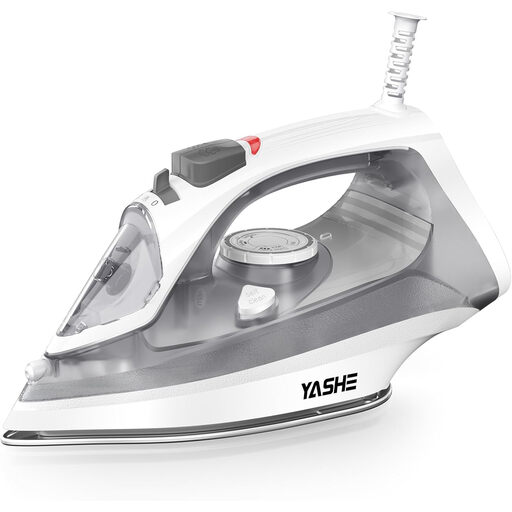 No image available
An option if you’re looking for a handheld steam iron for creased shirts. The product name lists a 300-ml water tank, a 150 g/min steam boost, a non-stick soleplate, self-cleaning and an anti-drip function.
 No image available
The handheld design could suit you if you want to iron a single shirt without a separate steam generator base. The product name specifies 2400 W.
 No image available
This handheld iron could be a good option if you’re looking for continuous steam and an anti-drip function for shirts. The product name lists 2500 W, continuous steam of up to 40 g/min, a 160 g/min steam boost and an Eco function.
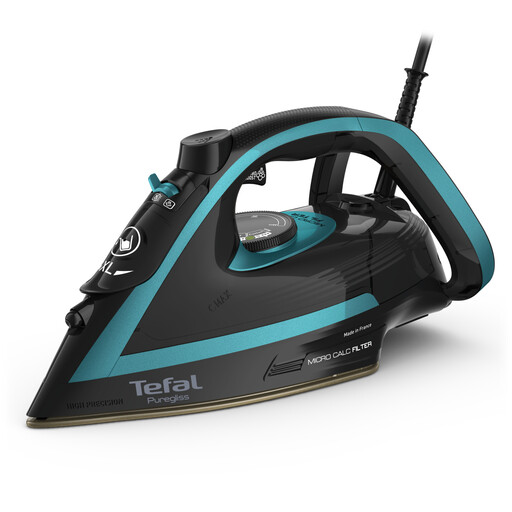 No image available
An option if you’re considering features such as vertical steam and automatic shut-off in a handheld model. The product name lists a 280 g/min steam boost, an XL filling opening, an anti-drip function and anti-scale technology.
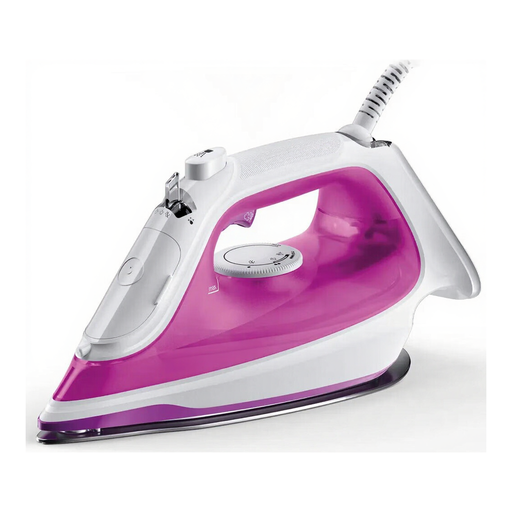 No image available
This model is listed as a handheld steam iron. If collars and button plackets are your priority, check the iron’s tip and the temperature and steam settings suitable for your shirt.
Don’t rely on the word “cotton” alone: check the ironing symbol on the specific shirt and any restrictions on using steam. If the shirt is soaked through, let it drip or dry first; a quick pass with the iron doesn’t mean it will be completely dry afterwards. Keep the appliance, plug and your hands away from moisture.
Look for an easily accessible iron tip, and set the temperature and steam according to the care label. Braun describes a precision tip in its TexStyle 7 Pro range; Rowenta says the DW5310 has a tip designed for narrow areas. This doesn’t guarantee better ironing results.
Follow the instructions for water and descaling in the manual for your specific iron. Philips notes that limescale in the steam system can cause marks and reduce steam output; the maintenance needed also depends on your water supply.
Yes, if the electrical appliance falls within the scope of the EU Low Voltage Directive. EUR-Lex says that, before making an appliance available, retailers should check the CE marking and required information, among other things. According to the European Union, the CE marking is not an independent quality mark; on its own, it does not confirm that a specific product listing is compliant.