Occasional ironers
If you only smooth out a few pairs of shorts now and then, you’ll want to put the iron away without taking up too much space and leave it somewhere safe to cool.


For ironing a single pair of cotton shorts in holiday accommodation, a steam iron with adjustable settings is a sensible starting point, provided the care label allows steam. If you’d rather not use the appliance’s steam function, you could choose a dry iron. A steam generator is more suitable if you regularly have larger loads of laundry to iron and enough room to set it up and let it cool. The care label on the shorts themselves is what matters, not just their cotton content.
If you only smooth out a few pairs of shorts now and then, you’ll want to put the iron away without taking up too much space and leave it somewhere safe to cool.
If you pay particular attention to pockets, hems and seams, look for a soleplate that’s easy to guide around narrow areas.
If you regularly iron several garments one after another, you’ll often need to weigh up how frequently you’ll have to refill the iron against the space needed for a separate steam generator.
A good choice if: You’re ironing a few pairs of shorts in short sessions and the care label allows steam.
Things to consider: The built-in water tank needs looking after, and you’ll still need a safe place to put the iron down and let it cool.
A good choice if: You want to iron without using the appliance’s steam function and the care label allows ironing.
Things to consider: A dry iron has no water tank, but it also can’t produce its own steam to help smooth out creases.
A good choice if: You regularly iron larger loads of laundry and have room for the base, hose and cooling.
Things to consider: The German Environment Agency notes that steam generators generally use more electricity than steam irons in domestic use. There’s no proven time or results benefit for ironing a single pair of shorts.
| Priority | What to check before buying | Who is this important to? |
|---|---|---|
| Quick use, limited space | Check the design and stated heating time of the specific model. | If I’m only ironing a few pairs of shorts, I want to avoid having to set up a bulky appliance. Around 36% of consumers prioritise quick use and a small footprint. |
| Pockets, hems and seams | Compare the shape of the soleplate tip and how easy the specific model is to guide. | When ironing narrow areas, I want to be able to guide the soleplate precisely rather than relying on a steam output figure alone. Around 29% of consumers prioritise ironing details. |
| Care label and temperature | Check the ironing symbol and adjust the temperature and, if applicable, steam accordingly. | When care labels vary, I want to tailor the treatment to each pair of shorts. Around 21% of consumers prioritise the right temperature and steam settings. |
| Several garments in a row | Consider your usual laundry load, access to the tank and available space. | If I regularly iron several garments in one go, the effort involved in refilling matters to me. Around 14% of consumers prioritise tank capacity and ease of refilling. |
The care label sets out how the finished garment can be treated. Using too high a temperature could damage the shorts.
Check the ironing symbol before switching on and adjust the temperature and steam accordingly. GINETEX distinguishes between several temperature settings and the ‘do not iron’ symbol.
Manufacturers list continuous steam and steam boost separately. The figure for a short burst doesn’t tell you how much steam is produced during a longer ironing session.
Compare continuous steam output and ease of access to the tank separately from the short-duration steam boost.
A large tank doesn’t prove that a steam generator will save time when ironing a single pair of shorts, or that there’s enough room for the base and hose in your accommodation.
Only weigh up a steam generator against a hand-held iron if you regularly have other garments to iron and enough room to set it up and let it cool.
Automatic shut-off depends on the model and doesn’t replace the need to put a hot iron down carefully.
Check the specifications for the exact model variant and plan for a safe place to put it down, whatever its features.
The FreeStyle 3 FI3194BK is a steam iron designed for short ironing sessions and hard-to-reach areas.
The 7000 Series DST7040/80 combines adjustable steam with Quick Calc Release.
The range includes steam irons and a separate steam generator for different ironing loads.
The BA 3211 dry iron is an option if you don’t want integrated steam.
The Focus Excel DW5310 is a steam iron with a clearly specified precision tip.
This selection includes steam irons for quick ironing sessions, with different options for storage, tank capacity and manoeuvrability. Always adjust the temperature and steam according to the care label on the shorts themselves.
 No image available
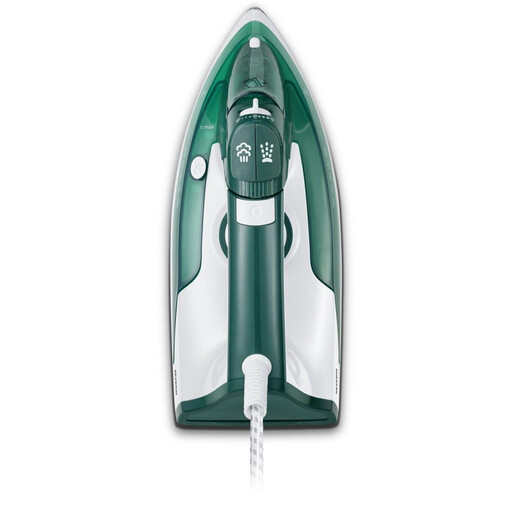
For quick ironing sessions where you want to adjust the temperature and steam to suit the care label.
Joybuy lists a removable 175-ml tank, continuously adjustable temperature control and variable steam output of up to 30 g/min. An anti-drip function and self-cleaning are also listed.
 No image available
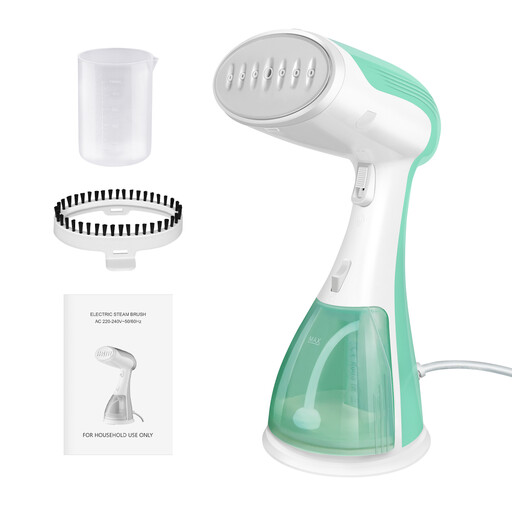
Its compact design is described as suitable for quick ironing sessions and limited storage space; according to the product information, it can be used horizontally or vertically.
Joybuy lists a 150-ml tank and a weight of around 0.8 kg. Keep the steam nozzle away from your hands during use and the appliance out of reach of children.
 No image available
For consumers who want to choose between dry ironing and continuous steam, and adjust the temperature.
Joybuy lists five temperature settings, a 350-ml tank and 50 g/min continuous steam. Dry ironing and a spray function are also listed.
 No image available
An option for consumers looking to compare continuous steam and vertical steaming in one appliance.
Joybuy lists a 250-ml tank and 40 g/min continuous steam, with a steam boost of 160 g/min. According to the product information, the model has an anti-drip function.
 No image available
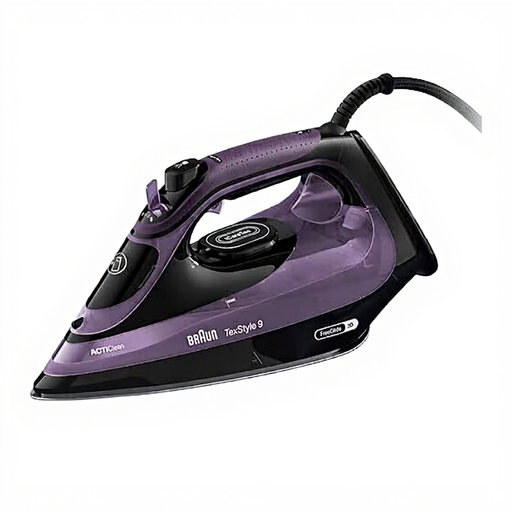
For consumers who want a clearly specified precision tip for ironing pockets, hems and seams.
Joybuy lists a 330-ml tank, 60 g/min continuous steam, an iCare temperature setting and automatic shut-off. Vertical refreshing is also listed.
No. The care label on the shorts themselves sets out how they can be treated. GINETEX specifies maximum temperatures of 110, 150 and 200 °C, as well as a ‘do not iron’ symbol. According to its symbol guide, the 110 °C symbol means you shouldn’t use steam.
Follow the cleaning and descaling instructions for your chosen model and leave a safe space for it to cool. When buying, the German Environment Agency recommends looking for features such as overheating protection and automatic shut-off; these don’t replace the need to put the iron down carefully.
There’s no proven time or results benefit to using a steam generator for a single pair of shorts. Consider one if you regularly have larger loads of laundry to iron and have room for the base, hose and cooling. The German Environment Agency notes that steam generators generally use more electricity than steam irons in domestic use.
The German Federal Network Agency lists criteria for its market surveillance that include CE marking, identifiable manufacturer details and German-language instructions covering use and safety warnings. Check this information for the specific appliance and listing; the marking isn’t an independent assessment of ironing performance.