Commuters short on time
If you want to smooth out a pair of shorts after a wet commute, treat ironing and drying as two separate things. An appliance’s ironing specifications don’t tell you how quickly a garment will dry or be ready to wear.


For individual pairs of cotton shorts that can be ironed according to their care label, a steam iron is a sensible place to start if you want to smooth the hems, waistband and fabric on a suitable ironing surface. The temperature and steam settings must be right for the garment and any trims. A garment steamer is better suited to freshening clothes while they’re hanging, while a steam generator is worth considering mainly if you regularly have other laundry to iron as well. Ironing doesn’t replace drying, so check whether the shorts are still damp before putting them on.
If you want to smooth out a pair of shorts after a wet commute, treat ironing and drying as two separate things. An appliance’s ironing specifications don’t tell you how quickly a garment will dry or be ready to wear.
If your shorts have pockets, seams or details made from other materials, the care label on the garment itself is the key guide. Adjustable temperature and steam settings give you more control, but they’re no substitute for checking the label.
If you regularly have other laundry to iron as well as your shorts, tank capacity, storage space and appliance maintenance may matter more. A larger steam generator isn’t automatically the right choice for the occasional item.
| Buying priority | What to check | Who is it important to? |
|---|---|---|
| Smoothing one pair of shorts quickly | Check that you have a suitable ironing surface, that the appliance is easy to use and that its model-specific heat-up time meets your needs. | If I only want to deal with one item after my commute, I value an uncomplicated ironing task; around 36% of consumers put quickly smoothing a single pair of shorts first. |
| Taking care of the label and trims | Check the care symbols and any delicate details. If the label says ‘do not iron’, don’t iron; if it says ‘do not steam’, don’t use steam. | When fabrics or trims vary, I want to be able to choose the temperature and steam setting to suit the care label; around 29% of consumers prioritise treating the fabric and trims appropriately. |
| Pressing seams, pockets and hems | Check the shape of the iron’s tip and how easily you can reach the areas in question. | If I want to smooth the waistband, hem or pockets precisely, a well-designed soleplate matters to me; around 21% of consumers prioritise pressing these areas accurately. |
| Storage space and maintenance | Consider how much you usually iron, how much space you have and the care instructions for the specific model. | If I plan to use the appliance for other laundry too, its tank and storage space need to suit my household; around 14% of consumers prioritise space requirements and ironing other laundry. |
Steam and tank specifications describe the ironing function, not how damp the shorts are or whether they’re ready to wear.
Consider smoothing and drying separately, and check whether the garment is still damp before putting it on.
The fibre content alone doesn’t determine how the whole garment can be treated. The care symbol may rule out ironing or specify a lower temperature or dry ironing.
Check the label and trims before setting the temperature and steam.
A garment steamer is used on hanging clothes and works differently from an iron’s soleplate on a flat surface. Philips notes that steam brushes may give different results on thick cotton.
If you want to press edges or hems precisely, compare irons with a suitable soleplate. A garment steamer is more appropriate for freshening clothes while they’re hanging.
A large separate tank can be useful for longer ironing sessions, but it doesn’t remove the need for extra space for the steam generator.
Consider whether you regularly have other laundry to iron and whether you have enough room for the base and hose.
The TexStyle range includes steam irons for precise work on individual garments.
The range includes individual steam irons such as the Ultimate Pure FV9844, as well as steam generators such as the Express Easy SV6131.
The Azur range includes steam irons, while Philips also offers garment steamers for a different way of smoothing clothes.
According to the manufacturer, the One Temperature 25090-56 is designed for people who want to make as few temperature adjustments as possible when ironing suitable fabrics.
This selection features steam irons for smoothing clothes on an ironing surface. Always check the care label on each garment first and make sure the settings listed are suitable.
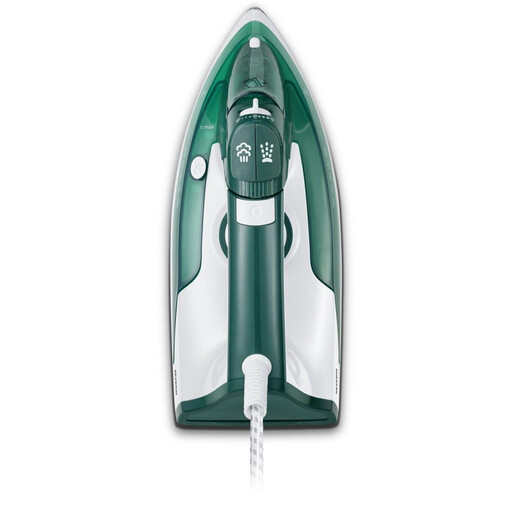 No image available
For ironing individual pairs of shorts on an ironing surface; the listed stepless temperature control and variable steam output offer a choice of settings.
2400 W; steam boost 85 g/min; variable steam output 30 g/min; removable tank of approximately 175 ml; stainless steel soleplate.
Check the care label: if it says ‘do not iron’, don’t iron; if it says ‘do not steam’, don’t use steam.
 No image available
For adjustable ironing on an ironing surface; the description lists five temperature settings, as well as dry ironing and steam options.
2400 W; 350 ml tank; continuous steam, steam boost and vertical steam.
Check the care label: if it says ‘do not iron’, don’t iron; if it says ‘do not steam’, don’t use steam.
 No image available
For ironing individual pairs of shorts on an ironing surface; continuous steam and a steam boost are listed features.
2500 W; continuous steam up to 40 g/min; steam boost 160 g/min; 250 ml tank; stainless steel soleplate.
Check the care label: if it says ‘do not iron’, don’t iron; if it says ‘do not steam’, don’t use steam.
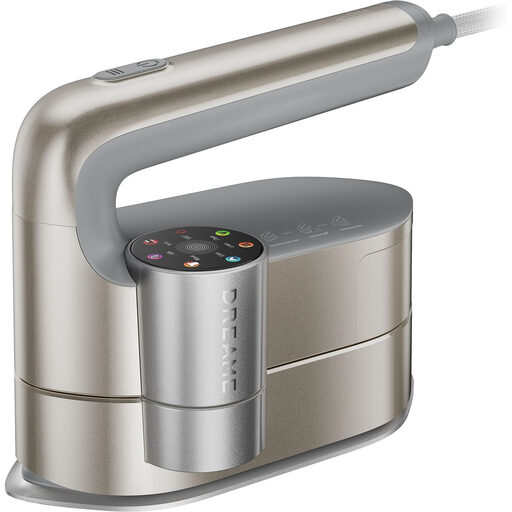 No image available
The description lists four steam settings and a dry mode for different textiles; the care label remains the key guide.
The description also lists a soleplate that rotates through 90°, self-cleaning and automatic shut-off.
Check the care label: if it says ‘do not iron’, don’t iron; if it says ‘do not steam’, don’t use steam.
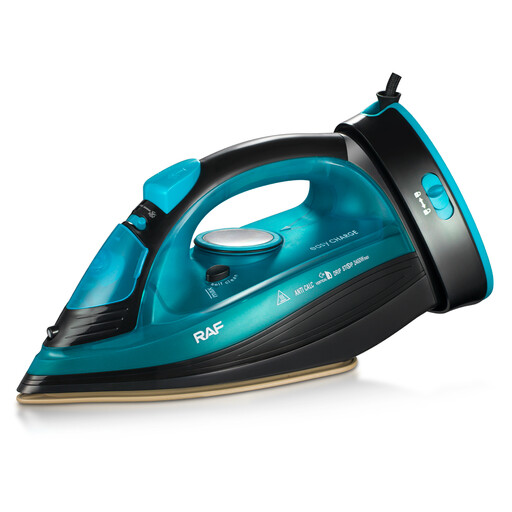 No image available
For ironing on an ironing surface; the description lists cordless operation with a 360° charging base.
2400 W; ceramic soleplate; 320 ml tank; steam output 15–25 g/min.
Check the care label: if it says ‘do not iron’, don’t iron; if it says ‘do not steam’, don’t use steam.
You can’t choose a suitable temperature based on ‘cotton’ alone. Check the care label and any trims first: GINETEX Germany distinguishes between maximum temperatures and the instructions ‘do not steam’ and ‘do not iron’. There’s no evidence that ironing is a shortcut to shorts that are completely dry and ready to wear straight away.
Place only a garment that can be ironed according to its care label on a suitable, stable ironing surface, and set the temperature and steam according to the label. If it says ‘do not steam’, don’t use steam. After ironing, check whether the shorts are still damp.
It depends on the model: Tefal says the micro-limescale filter on the FV9844 needs cleaning, while Braun lists a self-cleaning function for the SI 3055 BK. Follow the instructions for your specific model rather than assuming there’s one general descaling routine.
In Germany, the seller is generally responsible for dealing with a faulty product under the statutory warranty; the Verbraucherzentrale states that this lasts for two years from delivery. An additional manufacturer’s guarantee is voluntary and may come with its own terms.
For new electrical products covered by low-voltage regulations, the Federal Institute for Occupational Safety and Health explains that the voltage range is 50 to 1000 V AC. Products within this scope must be CE marked by the manufacturer or its authorised representative before being made available. This marking doesn’t prove that the appliance is suitable for the care instructions on your shorts.