If your shared flat has a suitable clothes airer, drying room or outdoor space, washing and then air-drying is often all you need – and you can skip the tumble-drying. If there’s no room to dry clothes and space for only one appliance, a washer-dryer could be a good fit. Just bear in mind that its capacity for a complete wash-and-dry cycle is usually lower, and that the shared machine will be occupied for longer.
Which option is right for you?
Shared flat with no drying space
If there’s nowhere practical to hang your shorts and room for only one appliance, check the care label and the capacity for a complete wash-and-dry cycle. The Verbraucherzentrale (German consumer advice centre) describes washer-dryers as a space-saving option for households without room for a separate tumble dryer or clothes airer.
Shared flat with a tight washing schedule
If several people share one machine, make sure a complete programme fits into your schedule. Also compare the maximum drying load with the amount you want to dry in one go.
Shared flat with a clothes airer
If you can hang your shorts up, you can avoid tumble-drying. If you dry them indoors, remember to air the room regularly: the Umweltbundesamt (German Environment Agency) points out that wet laundry adds moisture to the air.
What should you look for when buying?
Washing machine and air-drying
A good fit if: you have a clothes airer, drying room or outdoor space for your shorts.
What to consider: If you dry clothes indoors, you’ll need to account for the extra moisture by airing the room.
Washer-dryer
A good fit if: there’s no drying space and the care label says your shorts can be tumble-dried.
What to consider: You only need space for one appliance and there’s no need to transfer the washing. However, the full load must be within the drying capacity.
Washing machine and separate tumble dryer
A good fit if: you have space for two appliances and regularly tumble-dry clothes in your shared flat.
What to consider: The appliances take up more space, and you’ll need to transfer the washing between them.
| What matters |
What to check before buying |
Who should consider this? |
| Drying and installation space |
Compare the appliance dimensions and door clearance with the space available; check whether a clothes airer or drying room is an option. |
If there’s no room to hang washing in your shared flat, a solution that needs space for just one appliance could be important. Around 31 % of consumers are likely to prioritise drying and installation space above all. |
| Time the machine is in use |
Check how long the complete wash-and-dry programme takes and the maximum load it allows. |
If you share set washing times with several flatmates, you’ll need to be able to plan when the machine is free. Around 25 % of consumers are likely to focus mainly on how long the machine is in use. |
| Caring for your shorts |
Check the washing and drying symbols on each garment; don’t exceed the temperature shown in the washing symbol. |
If your cotton shorts need different care, follow the label on each garment – the fabric alone isn’t enough to determine how to care for it. Around 25 % of consumers are likely to prioritise fabric care in particular. |
| Electricity and water consumption |
Compare figures for washing and for a complete wash-and-dry cycle separately; only compare figures for the same operating mode. |
If you regularly tumble-dry clothes, you’ll want to understand the ongoing electricity and water costs. Around 19 % of consumers are likely to prioritise consumption in particular. |
Common buying mistakes
-
Assuming washing capacity and drying capacity are the same
For the models listed here, the maximum load for a continuous wash-and-dry cycle is lower than the washing capacity alone. An oversized load could mean running extra drying cycles or keeping the shared machine occupied for longer.
Compare both capacity figures in kilograms and plan your load according to the limit for the programme you choose.
-
Comparing consumption figures for washing only
Figures for washing don’t automatically cover a complete wash-and-dry cycle. If you tumble-dry regularly, the operating mode you choose can affect how you compare consumption.
Compare figures for the same operating mode and check the units they’re given in.
-
Planning to use a quick programme for a full shared-flat load
Programme duration and maximum load depend on the cycle you choose. So a short programme isn’t necessarily comparable to a complete cycle for a larger load.
Check the programme requirements, load size and duration of the wash-and-dry cycle you actually plan to use.
-
Assuming air-drying won’t affect humidity
Wet laundry increases humidity indoors. The Umweltbundesamt recommends paying particular attention to airing rooms regularly when there are extra sources of moisture, such as damp washing.
Make use of any drying rooms or outdoor spaces; if you dry clothes indoors, plan to air the room regularly.
Brands and models to consider
Bosch
The Bosch WNA14441 is an example of a washer-dryer with separate capacities for washing and for a complete wash-and-dry cycle.
- Bosch Hausgeräte Deutschland lists a washing capacity of 9 kg and a capacity of 5 kg for a complete wash-and-dry cycle.
- The lower limit applies when you want to run a load through without removing any items. The stated appliance dimensions are 848 × 598 × 565 mm.
LG
According to LG Deutschland, the LG W4WR7096YB has separate capacity figures for washing and drying.
- The manufacturer lists a washing capacity of 9 kg and a drying capacity of 6 kg.
- For a continuous cycle, the load must stay within the drying capacity; also check the programme requirements for your shorts.
AEG
According to AEG Deutschland, the AEG L9WEF80690 is a washer-dryer with heat pump technology.
- AEG lists a washing capacity of 9 kg and a drying capacity of 6 kg for this model.
- For complete wash-and-dry cycles, AEG lists 252 kWh per 100 cycles and energy efficiency class C. These are figures for the model, not a measurement of consumption in your shared flat.
Siemens
The Siemens WN44G243 shows why washing capacity alone isn’t enough for continuous drying.
- Siemens Hausgeräte lists a washing capacity of 10,5 kg and a capacity of 6 kg for washing and drying.
- The manufacturer gives a noise level of 70 dB(A) for this model. In a shared flat, you’ll also need to consider where it’s installed and when it’s used.
Washer-dryers at Joybuy
These washer-dryers are an option for households looking to wash and tumble-dry clothes in one appliance. Compare the stated washing capacity with the drying limit, and plan continuous loads according to whichever figure is lower.
 No image available
Roborock Zeo Lite washer-dryer, white, 10 kg/6 kg
The stated washing capacity of 10 kg and drying capacity of 6 kg make it easier to plan a continuous load around the drying limit.
Washing: 10 kg; drying: 6 kg; energy class E. Other features include Zeo-Cycle drying, LintClear and automatic dosing.
View at Joybuy
 No image available
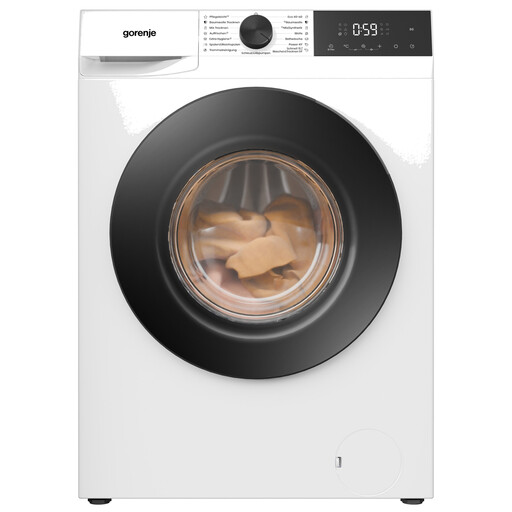
Gorenje WD5G2P1174A2DP2 washer-dryer, white, 11 kg/7 kg
The separate capacity figures make it easier to plan if you want to dry a load without transferring it to another appliance.
Washing: 11 kg; drying: up to 7 kg.
View at Joybuy
 No image available
LG WT1210WWF washer-dryer, 12 kg/10 kg
The stated drying capacity helps you work out the size of a continuous load for your shared machine.
Washing: 12 kg; drying: 10 kg; Dual Inverter Heat Pump.
View at Joybuy
 No image available
Beko BM3DT4944W washer-dryer, 9 kg/6 kg
When planning a continuous wash-and-dry cycle, remember that the stated capacity is 6 kg.
Washing: 9 kg; drying: 6 kg; 1.400 rpm; energy class D.
View at Joybuy
 No image available
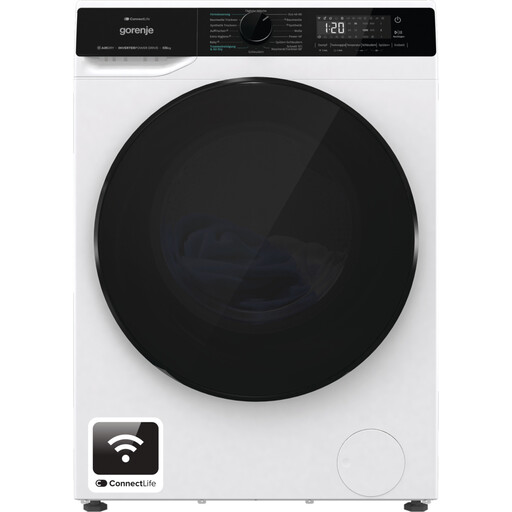
Gorenje WD2PA854ADW, DE washer-dryer, 8 kg/5 kg
The stated limit for a combined wash-and-dry cycle matters if you want to dry your shorts without removing them from the machine.
Washing: 8 kg; washing and drying: 5 kg; 1.400 rpm.
View at Joybuy
Frequently asked questions
Can cotton shorts always go in a washer-dryer?
No. The fabric label alone isn’t enough to tell you. Check the washing and drying symbols on each garment, and don’t exceed the temperature shown in the washing symbol. Choosing a suitable programme doesn’t override any restrictions on the care label.
Can you dry a full washing load without taking anything out?
Only if the load is within the maximum capacity for the wash-and-dry programme you choose. For example, Bosch Hausgeräte Deutschland lists a washing capacity of 9 kg and a capacity of 5 kg for a continuous cycle on the Bosch WNA14441.
What should I check before installing one in a shared flat?
Compare the appliance dimensions with the space available and allow enough room for the door to open. Also check the installation instructions for the specific model before planning where to put it.
What do energy labels and claims for faulty goods mean when buying in Germany?
The EU energy label for washer-dryers includes information such as the energy efficiency class, energy consumption per 100 cycles, water consumption per cycle, programme duration and noise emissions. If an appliance is faulty, your statutory rights against the seller are separate from any voluntary manufacturer’s warranty. For relevant claims concerning defects in purchased goods, the standard limitation period under § 438 BGB is generally two years from delivery.


