If you can hang your washing up in a well-ventilated utility room, a washing machine with air-drying will often be enough. A washer-dryer is most useful when you don’t have space to dry clothes or room for a second appliance, or you want to dry clothes without transferring them between machines. The key things to check are the care label on your shorts, the lower capacity for a complete wash-and-dry cycle, and the appliance’s energy use and installation requirements.
Who is a washer-dryer suitable for?
Households short on drying space
If there’s hardly any suitable space to hang clothes in your utility room, or room for two appliances, check whether your usual load will fit in a complete wash-and-dry cycle. The Verbraucherzentrale highlights the space-saving advantage of washer-dryers.
Shorts wearers who take care with laundry
If your shorts come in different colours or have prints or detailing, make sure the wash programme and drying method are suitable for each item’s care label. GINETEX Germany explains that the number inside the wash tub symbol indicates the maximum permitted washing temperature.
Frequent laundry-doers keeping an eye on costs
If you wash and dry regularly, compare the energy and water use for a complete cycle rather than looking only at the washing rating. The European Commission lists information on energy labels including energy use per 100 cycles and water use per cycle.
What should you look for when buying?
Washing machine and air-drying
A good fit if: you have enough space to hang clothes and your shorts don’t need to be dry straight away.
The trade-off: damp washing needs a suitable place to dry and good ventilation.
Washer-dryer
A good fit if: there’s no room for a second appliance or a practical place to hang clothes, and the care labels allow tumble drying.
The trade-off: drying capacity may be lower than washing capacity, so compare the figures for a complete cycle.
Washing machine and separate tumble dryer
A good fit if: you have the floor space and connections for both appliances and want to tumble-dry regularly.
The trade-off: two appliances take up space, and you’ll need to transfer the washing between them.
For a cost comparison, look at the figures for a complete wash-and-dry cycle. The European Commission lists energy and water use separately on the EU label; the Verbraucherzentrale notes that washer-dryers use more electricity and water than separate appliances.
| What matters to you |
What to check before buying |
Who should pay particular attention? |
| Floor space and drying space |
Check the appliance dimensions, door opening, route for delivery and connections; make sure any drying space is genuinely practical and well ventilated. |
If I don’t have space to hang clothes, the appliance needs to fit in the space, including its door opening and connections. Lack of drying space is a key concern for around 33 % of consumers. |
| Care and load size |
Check the care symbols, programme limits and separate capacity figures for washing and washing/drying. |
I follow the care label for temperature and drying, and don’t want to exceed the permitted drying load. Around 25 % of consumers prioritise suitability for their laundry and usable load size. |
| Energy and water use when drying |
Compare kWh per 100 complete cycles and water use for washing/drying separately from the washing figures. |
If I regularly run complete wash-and-dry cycles, I compare the figures for that cycle rather than looking only at the washing rating. Around 25 % of consumers put running costs first. |
| Time and effort |
Check the duration and permitted load for the specific wash-and-dry programme you want to use. |
If I want small loads to be ready without transferring them, I check the duration and maximum load for the specific programme. For around 17 % of consumers, this convenience and ease of use is the main priority. |
Common misconceptions
-
The washing capacity also applies to a complete cycle
The permitted load for washing and drying may be lower. Bosch, for example, lists a 9 kg washing capacity and a 5 kg wash-and-dry capacity for the WNA13441 washer-dryer.
Plan your usual load around the figure for a complete cycle and the limit for the programme you’ve chosen.
If the washing load is too large, you’ll need to take some of it out and hang it up separately, or run another drying cycle.
-
A good washing rating means efficient drying
The EU label gives separate figures for washing and washing/drying. The European Commission lists the energy and water use for each cycle separately.
Compare complete cycles on a like-for-like basis and consider how often you actually use the machine to dry clothes.
If you regularly run complete cycles, ongoing electricity and water costs can add up. The Verbraucherzentrale notes that washer-dryers use more electricity and water than separate appliances.
-
All cotton shorts can go in the tumble dryer
The fibre content alone doesn’t tell you whether a garment can be tumble-dried. Care symbols relate to how that specific item should be treated.
Check the care label before choosing a temperature, wash programme or drying method.
-
Air-drying doesn’t add moisture to the room
Damp washing releases moisture into the room. The Verbraucherzentrale identifies persistently high humidity as a factor that can encourage mould growth.
When comparing air-drying with machine drying, consider the room’s ventilation and condition.
If ventilation is poor, you may need to take extra steps to remove moisture.
Relevant brands and model examples
Bosch
The Bosch WNA13441 is an example of a washer-dryer with a programme for small loads.
- Bosch lists a 9 kg washing capacity, a 5 kg wash-and-dry capacity and dimensions of 848 × 598 × 590 mm.
- The Wash & Dry 60' programme isn’t intended for full loads of cotton washing. Bosch gives this model an E rating for washing and drying.
LG
The HPWD096C is a heat pump model whose complete-cycle figures are worth comparing.
- LG lists a 9 kg washing capacity, a 6 kg drying capacity and an A/A rating for the two modes.
- The advertised 150-minute cycle is the manufacturer’s stated time for the specified programme, not a guaranteed duration for every load of shorts.
AEG
The AEG LWR7B65480 from the 7000 series is an 8/5 kg model with published figures for a complete cycle.
- AEG lists a D rating for washing and drying, and 265 kWh per 100 complete cycles.
- AEG describes this model as a condenser dryer; its specifications don’t apply to other product ranges.
Beko
The Beko BM3DT4844W1 is another 8/5 kg model to compare for dimensions and programmes.
- Beko lists the appliance dimensions as 84,9 × 60 × 57 cm.
- The claim about AquaWave movement comes from the manufacturer and, on its own, doesn’t prove an independently verified care result for cotton shorts.
Samsung
The Samsung WD9BHG5U34BXEG is an example of why washing and washing-and-drying figures should be considered separately.
- Samsung lists a D rating for washing and drying and an A −35 % rating for washing alone.
- The advertised 39 minutes applies to a wash programme with a specified load, not a complete wash-and-dry cycle.
Washer-dryers at Joybuy
The Joybuy models below are washer-dryers that combine washing and drying in one cycle. Before buying, check that the programme and permitted load suit the care label and your usual load of shorts.
 No image available
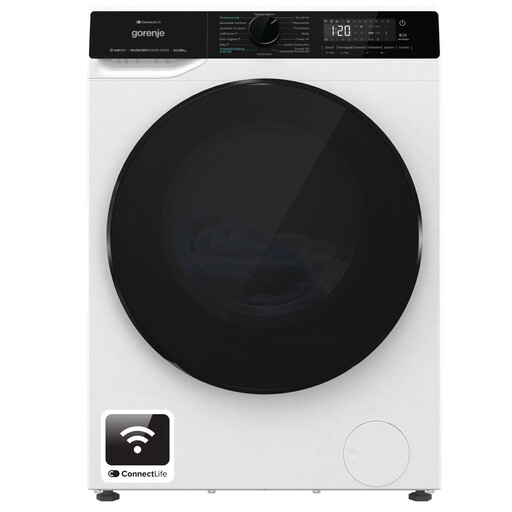
Gorenje WD2PA1X64ADW DE washer-dryer
This model could suit you if you want a single washer-dryer rather than a separate tumble dryer.
The product description lists 10,5 kg, 16 programmes and Wash & Dry 60'. Check the permitted load and duration for the specific programme.
View at Joybuy
 No image available
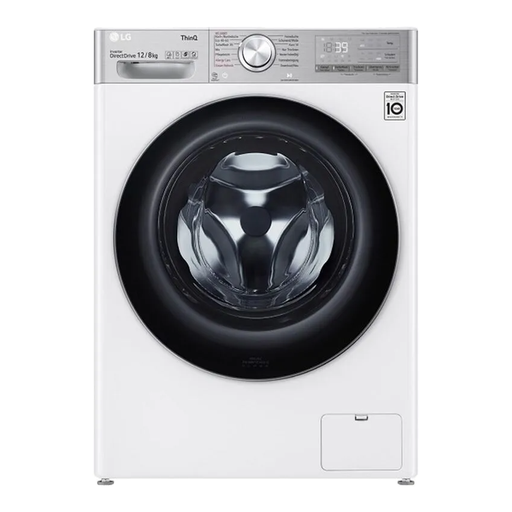
LG V9WD128H2 AI DD washer-dryer, 12 kg
This model may appeal if you want to consider a washer-dryer with a specifically listed Cotton programme for cotton washing.
The product details list 14 programmes, including a Cotton programme. Check the care label on your shorts before drying them.
View at Joybuy
 No image available
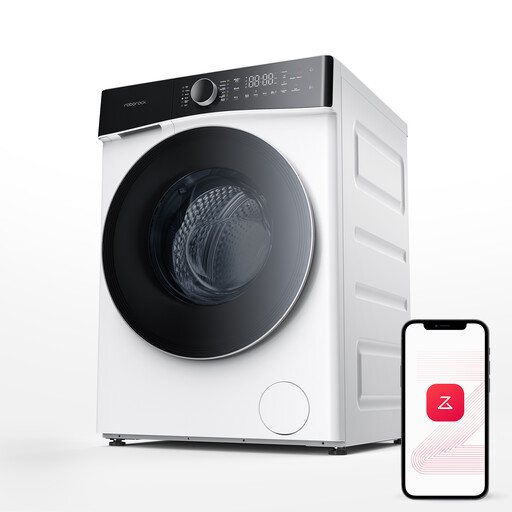
Roborock Zeo Lite washer-dryer
A single appliance could be a good option if you want to wash and dry clothes without transferring them between two machines.
The product description lists a 10 kg washing capacity and a 6 kg drying capacity, so the drying load is smaller than the washing load.
View at Joybuy
 No image available
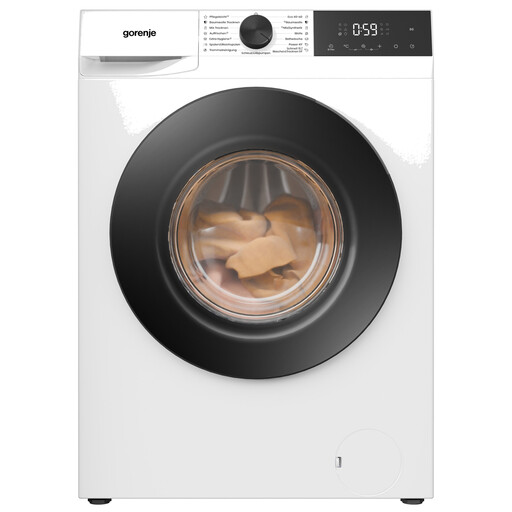
Gorenje WD5G2P1174A2DP2 washer-dryer, 11/7 kg
The separate capacities and stated energy use may be useful if you’re comparing complete cycles.
11 kg washing capacity and up to 7 kg drying capacity; 342 kWh per 100 wash-and-dry cycles. Temperature selection and 15 programmes are also listed.
View at Joybuy
 No image available
LG WT1210WWF front-loading washer-dryer, 12/10 kg
This model may interest anyone comparing heat pump washer-dryers and looking at the capacity for both modes.
12 kg washing capacity and 10 kg drying capacity; the drying capacity is lower than the washing capacity. The product description lists a Dual Inverter heat pump.
View at Joybuy
Frequently asked questions
Can all cotton shorts be dried in a washer-dryer?
No, the fibre content alone isn’t enough to tell you. Check the washing and drying symbols on each pair of shorts, and only use a method that the care label allows.
Do I need to take some washing out before the drying cycle?
You may need to if the washing load is larger than the permitted drying load. For example, Bosch lists a 9 kg washing capacity but a 5 kg capacity for a continuous wash-and-dry cycle on the WNA13441.
What should I consider when installing the appliance and air-drying clothes in the utility room?
Check the appliance dimensions and connections against the space where it will actually go. If you hang your shorts in the room, make sure it’s well ventilated. As the Verbraucherzentrale explains, persistently high humidity can encourage mould growth.
What running costs should I consider when buying?
For the way you plan to use your appliance, compare the energy and water use for a complete wash-and-dry cycle, not just the washing figures. Your actual costs will also depend on how often you dry clothes and the electricity and water tariffs you pay.
Does a new washer-dryer listed online in Germany need to show an EU energy label?
Yes. The EU energy label must be clearly visible in German online listings for new household washer-dryers that require one. Your Europe explains the EU rules on energy labelling.


