Skirts and limited space
If you’re ironing individual skirts, you’ll need room for the appliance, ironing surface and hanging laundry, even in a small space.


For individual cotton skirts where you want to press specific hems or pleats, a handy steam iron is a sensible place to start. A steam generator iron is a better fit if you regularly have larger loads of laundry and room for both the base unit and an ironing surface. A garment steamer is mainly for freshening up hanging clothes, rather than creating equally crisp pressed edges. Check the care label for the whole skirt, and make room for drying and air circulation even when using steam.
If you’re ironing individual skirts, you’ll need room for the appliance, ironing surface and hanging laundry, even in a small space.
If smooth hems and well-defined pleats matter more to you than freshening clothes on a hanger, look for an iron soleplate that gives you controlled contact with the fabric.
If your skirt has a lining, trim or mixed fabrics, the care label for the whole garment will tell you which treatments are suitable.
Best for: smoothing individual cotton skirts on a suitable ironing surface and pressing hems or pleats.
Things to consider: Tank capacity and steam output vary by model, and damp patches will need room to dry afterwards.
Best for: regular larger loads of laundry as well as skirts, if you have room for both the base unit and an ironing surface.
Things to consider: The separate base unit takes up space. A large water tank doesn’t automatically make a steam generator iron as space-saving as a single iron.
Best for: mainly freshening up hanging skirts when you don’t need sharply pressed edges.
Things to consider: Steaming without the pressure of an iron soleplate is a different method. You’ll still need a secure place to hang the garment and room for it to dry.
| What matters | What to check before buying | Who it matters most to |
|---|---|---|
| Space and drying | Compare the space needed for the whole set-up, not just the handheld appliance. Think about where you can hang the skirt to dry with good air circulation after steaming. | If I’m ironing individual skirts in a small space, I need to fit both the appliance and damp clothes in. That’s why around 29% of consumers put limited space and drying at the top of their list. |
| Pressing hems and pleats | Look at the soleplate and check that its tip is suitable for narrow sections. A higher advertised steam boost alone doesn’t mean better pressing results. | If you want crisp hems and defined pleats rather than clothes that have simply been freshened up, you’ll need a suitable ironing surface and controlled contact with the fabric. Around 36% of consumers prioritise pressing when buying. |
| Care label and fabric blends | Check the care label for the whole skirt, including its lining and trim. An automatic temperature setting doesn’t override an instruction not to iron. | If my skirt has a delicate lining or trim, I follow the care instructions for the whole garment. Around 21% of consumers prioritise protecting items made from delicate materials. |
| Appliance care | Compare the model-specific information about self-cleaning or an anti-scale collector, and follow the instructions for your particular appliance. | If you want to choose an appliance with a cleaning routine that suits the way you use it, check the model’s care features. Around 14% of consumers prioritise appliance maintenance. |
A garment steamer works without the pressure of an iron soleplate. If you want clearly defined pleats in a skirt, freshening it up on a hanger isn’t the same as pressing it.
Choose a garment steamer mainly for freshening up hanging clothes. For sharply pressed edges, look for an option with an iron soleplate.
If you need defined edges, you may also need a suitable ironing surface and an iron.
Damp laundry adds moisture to the air, which can be a concern in small rooms. Using steam doesn’t change how much space the skirt needs to dry.
Make room to hang the skirt after ironing and allow for adequate air circulation. The German Environment Agency recommends taking particular care to ventilate when drying damp laundry indoors.
The cotton in the outer fabric alone doesn’t tell you what treatment the lining, trim or whole garment can withstand.
Check the care label for the whole skirt before applying heat or steam. GINETEX explains that care symbols indicate the maximum permitted treatment.
The FreeStyle 3 range includes steam irons for individual garments and detailed work; specifications vary by model.
The range includes steam irons such as the Ultragliss Plus FV6830, as well as garment steamers for hanging clothes.
Azur steam irons are designed for individual ironing jobs. PerfectCare steam generator irons are separate base units for larger ironing loads, and need suitable space.
The Focus Excel DW5310 is a steam iron with a precision tip for seams and narrow edges.
The models below are steam irons for pressing individual skirts on a suitable ironing surface. Before buying, check for the CE marking on the specific appliance, and set the temperature and steam according to the skirt’s care label.
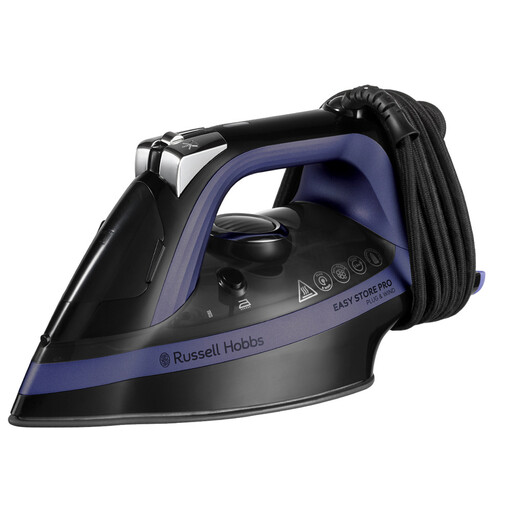 No image available
The integrated cord storage can be handy when storage space is limited; you’ll still need a suitable ironing surface for skirt pleats.
One-Temp technology, 40 g/min continuous steam, 200 g/min steam boost, 320-ml water tank and ceramic soleplate. Automatic shut-off is stated in the product name.
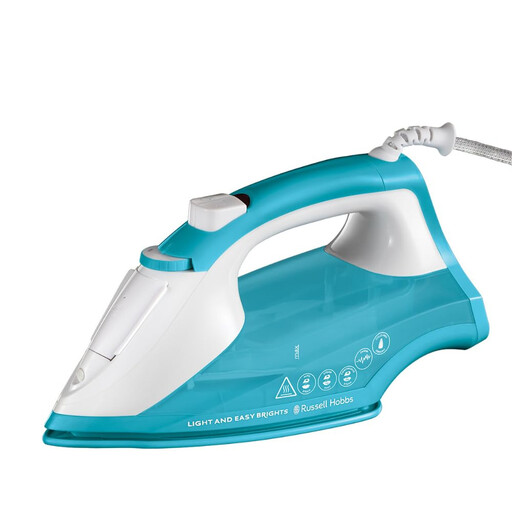 No image available
The soleplate is designed for pressing on a suitable ironing surface. Check the skirt’s care label, even when using an automatic steam function.
Ceramic soleplate, automatic steam function, 35 g/min continuous steam, 135 g/min steam boost and 240-ml water tank.
 No image available
A soleplate and several temperature settings are useful if you want to press hems or pleats. Choose the setting according to the care label.
50 g/min continuous steam, 180 g steam boost, 350-ml tank and five temperature settings. The product name also lists a non-stick soleplate, automatic cleaning and anti-drip protection.
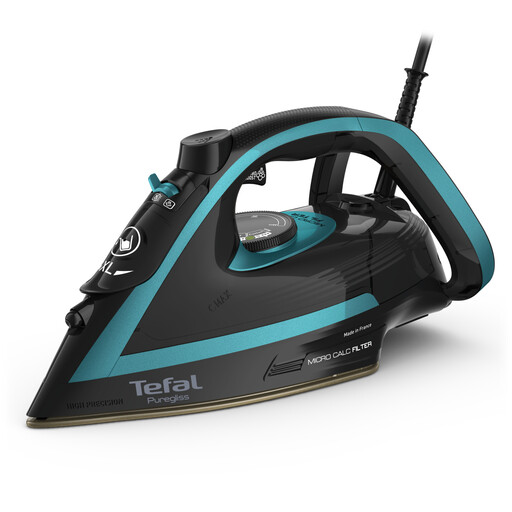 No image available
This model combines a soleplate for pressing with vertical steam for freshening up hanging clothes; vertical steam won’t give you a pressed edge.
Continuous steam of up to 50 g/min, 280 g/min steam boost and limescale filter. The product name also lists automatic shut-off.
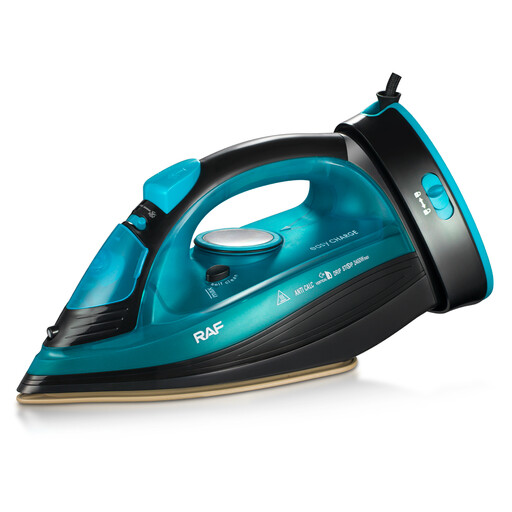 No image available
Cordless operation can make it easier to move the iron around; you’ll still need a suitable ironing surface for well-defined skirt pleats.
15–25 g/min steam output, 320-ml tank, ceramic soleplate and self-cleaning function. The product name lists a power rating of 2000 W; the description specifies a 360° charging base.
No. The care label for the specific skirt is what matters, including the lining and trim. GINETEX explains that care symbols indicate the maximum permitted treatment; an instruction not to iron doesn’t mean you can use a garment steamer instead.
No. A different appliance may change how much ironing space you need, but damp laundry still needs suitable space and air circulation. The German Environment Agency recommends taking particular care to ventilate when drying damp laundry indoors.
A garment steamer is mainly for freshening up hanging clothes; it doesn’t press with the pressure of an iron soleplate. If you want defined edges, consider a steam iron and a suitable ironing surface.
Follow the instructions for your specific model. Braun lists a self-cleaning function for the FI3194BK; Tefal notes that limescale care depends, among other things, on water hardness and the appliance’s features.
Mains-powered appliances covered by the EU Low Voltage Directive, including equipment with a rated voltage of 50 to 1,000 V AC, must meet the relevant conformity requirements; CE marking is required for products placed on the EU market. EUR-Lex describes the scope of the directive and its marking requirements. Check the marking on the specific appliance you’re buying: CE is a declaration by the manufacturer, not proof that every individual appliance on offer has already been tested.