If you want to smooth a cotton skirt across the fabric or work on its hems, a steam iron and a safe, stowable ironing surface are usually a better starting point than a handheld garment steamer. For a quick refresh on a hanger, a handheld steamer saves you having to set up an ironing surface. A steam generator is worth considering if you regularly iron larger loads and have room for both the base unit and an ironing surface. The skirt’s care label is always the deciding factor: GINETEX assigns a maximum soleplate temperature of 200 °C to the three-dot ironing symbol.
Which ironing solution is right for you?
For ironing cotton skirts in a small space
If you want to smooth skirts across the fabric and work on their hems, but can’t leave a steam generator set up, consider the appliance and a safe ironing surface together. The care label on the particular skirt sets the temperature limits; GINETEX explains what the ironing symbols mean.
For a quick refresh
A handheld garment steamer can be a space-saving choice for light creases on a hanging skirt. Philips points out that a garment steamer won’t deliver the same results as an iron on heavier cotton.
For frequent ironing, with room to store it
If you regularly iron several cotton items and have space for a base unit and ironing surface, a steam generator may be worth considering. Philips lists continuous steam output of up to 140 g/min for the PSG3001/30; this manufacturer figure is not the result of a comparison test on a particular skirt.
What matters when space is limited?
Steam iron with a stowable ironing surface
Best suited to you if: you want to smooth cotton directly with the soleplate and work carefully on hems and seams.
The trade-off: for safe pressing, you’ll need a heat-resistant surface as well as the appliance, and that will also need to be stored.
Compact handheld garment steamer
Best suited to you if: you want to freshen up a lightly creased skirt on a hanger without setting up an ironing surface.
The trade-off: Philips points out that a garment steamer won’t deliver the same results as an iron on thicker cotton.
Steam generator
Best suited to you if: you frequently iron larger loads or several heavy cotton items in one session.
The trade-off: as well as the iron, you’ll need room for the base unit and ironing surface, plus somewhere to store them.
| What matters |
What to check before buying |
Who it matters most to |
| Space and storage |
Check the dimensions of the appliance and ironing surface, both in use and when stored, as well as a safe place to leave the iron to cool. Tefal describes the DT3041 as foldable. |
If I need to put the appliance and ironing surface away after ironing, the size of the complete setup matters to me; around 36% of consumers put space requirements first. |
| Smoothing cotton across the fabric |
Check the care label, temperature and steam settings, and use a heat-resistant surface. GINETEX assigns a maximum soleplate temperature of 200 °C to the three-dot symbol. |
If I want to smooth deep creases in cotton across the fabric, direct contact with the soleplate matters more to me than minimising set-up; around 29% of consumers prioritise pressing performance. |
| Hems, seams and details |
Check whether the iron’s tip can reach narrow areas and whether the care label allows steam or a high temperature. Rowenta lists a precision tip for the DW5310; Braun does too for the SI 5256 BL. |
When I’m working on hems and seams, I want to take care over the details rather than treating them based only on the main fabric; around 21% of consumers prioritise this kind of detailed ironing. |
| Care and ease of use |
Check the manual for the exact model to see what water to use, how to descale it and whether it has an automatic shut-off. Braun and Tefal list these features on certain models. |
If cleaning and day-to-day use are especially important to me, I check these features on the specific model; around 14% of consumers prioritise ease of care. |
Common misconceptions about ironing cotton skirts
-
“No ironing surface” doesn’t mean “just as well pressed”
A handheld garment steamer saves you setting up an ironing surface, but Philips says it won’t deliver the same results as an iron on thicker cotton.
Use one to freshen up a skirt on a hanger. For smooth results across the fabric, plan to use the soleplate and a suitable heat-resistant surface.
-
Cotton doesn’t automatically tolerate the highest temperature
The care label may specify a lower temperature or a particular treatment. The fabric alone isn’t enough to determine the right setting.
Check the symbol on the garment before ironing and take care with any delicate details.
-
Looking only at the size of the iron misses the bigger picture
For safe pressing, even a standard iron needs a suitable surface; a steam generator also comes with a separate base unit.
Check the dimensions of the complete ironing setup when in use and when stored.
Relevant brands for this ironing task
Philips
The range includes steam irons and separate steam generators, with different space requirements.
- Philips lists a 300 ml tank and continuous steam output of up to 40 g/min for the DST3041/80 steam iron; the PSG3001/30 steam generator is listed with continuous steam output of up to 140 g/min.
- These appliance types and steam figures aren’t directly comparable, and they don’t show which model will smooth a particular skirt more effectively. A steam generator also needs extra space.
Braun
The TexStyle 5 SI 5256 BL is an option for shoppers who want to check for a precision tip and model-specific care features.
- Braun lists a precision tip, self-cleaning and automatic shut-off for the SI 5256 BL.
- These features apply to the model named and shouldn’t be assumed to apply to other Braun irons. Always check the skirt’s care label.
Tefal
Tefal offers the FV6842 steam iron and the DT3041 compact handheld garment steamer, which is designed for a different way of ironing.
- Tefal lists a removable limescale collector and automatic shut-off for the FV6842; the DT3041 folds away for compact storage.
- There’s no evidence that a handheld garment steamer can replace an iron for pressing thicker cotton. Features vary by model.
Rowenta
The Focus Excel DW5310 steam iron is worth considering if you want to work carefully on narrow edges and seams.
- Rowenta lists a precision tip, a 300 ml tank and continuous steam output of up to 45 g/min for the DW5310.
- The manufacturer’s figures don’t represent a comparison test on a cotton skirt. Automatic shut-off isn’t listed for this particular model.
Russell Hobbs
The One Temperature 25090-56 is a steam iron option for shoppers looking for straightforward operation.
- CHIP rates the model’s ease of use positively.
- CHIP notes that it’s heavy and difficult to fill with water. The review doesn’t specifically assess how well the model removes creases from cotton skirts.
Joybuy products for ironing cotton skirts
The products below are steam irons designed for direct ironing with a soleplate. Remember to allow for a suitable ironing surface and somewhere to store it.
 No image available
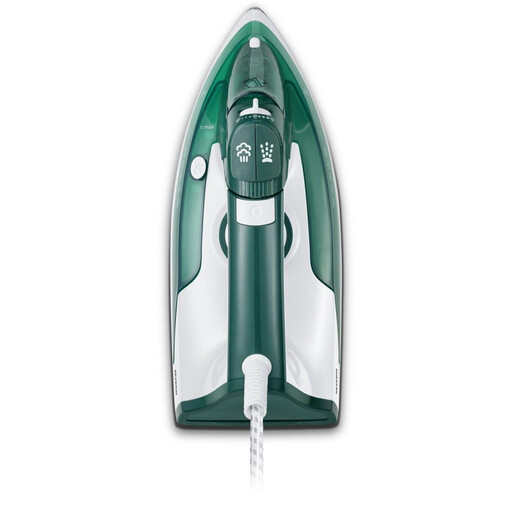
Severin BA 3261 steam iron
The stainless-steel soleplate and continuously adjustable temperature are designed for direct ironing; check the skirt’s care label to choose the right setting.
2,400 W; variable steam output of 30 g/min; 85 g/min steam boost; 175 ml water tank.
The product description also lists a removable water tank, an anti-drip function, and anti-limescale and self-cleaning functions.
View at Joybuy
 No image available
Rowenta DW4320 Express Steam steam iron
This steam iron, with its stainless-steel soleplate, is designed for direct smoothing. Match the temperature and steam settings to the care label.
2,500 W; 250 ml water tank; continuous steam output of up to 40 g/min and steam boost of up to 160 g/min.
The product description also lists vertical steaming, an Eco function and an anti-drip system.
View at Joybuy
 No image available
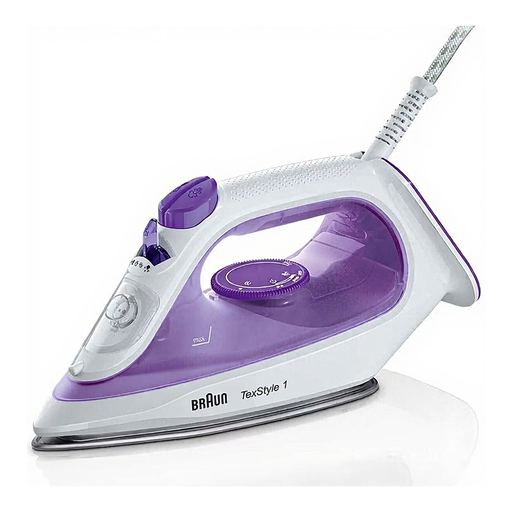
Braun TexStyle 1 SI1080VI steam iron
The product description lists a precision tip for hard-to-reach areas, such as hems. Set the temperature according to the care label.
Ceramic soleplate; continuous steam output of 25 g/min in Turbo mode; 130 g/min steam boost.
A self-cleaning function is also listed.
View at Joybuy
 No image available
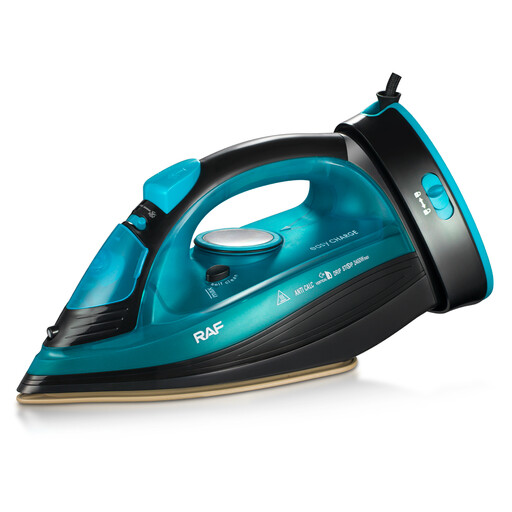
RAF R.1210B cordless steam iron
This model is described as a cordless steam iron with a ceramic soleplate. Check that its intended use suits your ironing surface.
2,400 W; 320 ml water tank; steam output of 15–25 g/min.
The product description lists self-cleaning and an anti-drip function.
View at Joybuy
 No image available
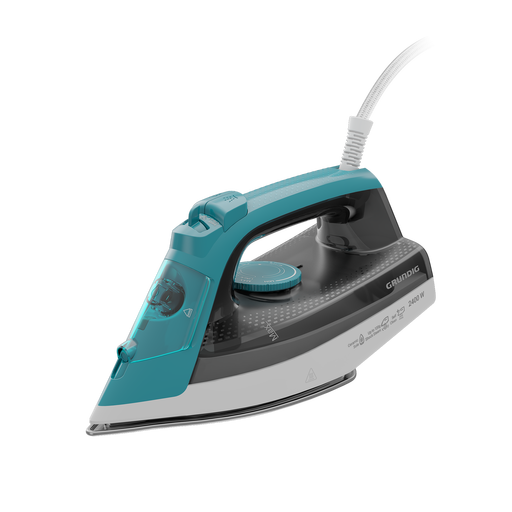
Grundig SI 3550 steam iron
The ceramic soleplate and continuous steam are designed for direct ironing. A vertical steam function is also listed for steaming a hanging skirt.
Continuous steam output of 25 g/min; 120 g/min steam boost.
The product description lists anti-limescale and self-cleaning functions.
View at Joybuy
Frequently asked questions
Can I iron every cotton skirt on the highest setting?
No. Always follow the care label on the particular skirt. GINETEX assigns a maximum soleplate temperature of 200 °C to the three-dot ironing symbol; other symbols may indicate a lower temperature or that you should iron without steam. Take care with delicate details, too.
Can I do without an ironing surface altogether when using a handheld garment steamer?
A handheld garment steamer can be used without an ironing surface to freshen up a hanging skirt. Philips notes that the results on thicker cotton differ from ironing with a soleplate; for that, you’ll need a suitable heat-resistant surface.
How can I prevent limescale build-up and stains?
Follow the instructions for your specific model on which water to use and how to descale it. Philips explains that limescale build-up can affect steam output and cause discolouration in steam generators; the descaling process varies by model.
Is a manufacturer’s guarantee the same as your statutory rights?
No. If a product is faulty, your statutory rights apply to the retailer; a guarantee is an additional voluntary service provided under its own terms. The consumer advice centre lists repair or replacement as ways of putting things right.
What safety information should I check when buying in Germany?
Household appliances designed for 220–240 V AC must meet the relevant EU requirements. Check the specific appliance for the required CE marking and safety and operating information in German; the Federal Network Agency advises checking both the marking and the accompanying documentation.


