Travelling at short notice
If you want to pack your socks dry before setting off after a late wash, without moving them to another machine, check the length of the full wash-and-dry programme – not just the quick wash time.


A washer-dryer can be a good option for cotton socks before a trip if you need to dry them without moving them to another machine and don’t have a suitable place to hang them. The key things to check are the drying capacity and the length of the full wash-and-dry programme, as well as the care label. A short wash time doesn’t tell you when the socks will be dry. If you have enough time and space to air-dry your socks, or regularly wash larger loads, consider air-drying or separate appliances too. According to the Verbraucherzentrale, separate appliances use less electricity and water than typical washer-dryers.
If you want to pack your socks dry before setting off after a late wash, without moving them to another machine, check the length of the full wash-and-dry programme – not just the quick wash time.
If you don’t have room for a separate tumble dryer or a clothes airer, a washer-dryer could be an option for manageable laundry loads.
If you’ll use the appliance between trips too, compare its energy use for washing and for washing and drying with the drying instructions for your particular socks.
A good fit if: You regularly need to wash and dry clothes in one continuous cycle before travelling, and don’t have room for a tumble dryer or clothes airer.
Consider: The drying capacity may be lower than the washing capacity. A quick wash doesn’t mean the full cycle will be short.
A good fit if: You have enough time and a suitable place to dry your clothes before you leave, or the care label says not to tumble dry them.
Consider: Drying depends on having enough time and space. If you dry clothes indoors, you’ll also need to consider moisture and ventilation.
A good fit if: You regularly wash larger loads and have room for both appliances.
Consider: You’ll need more floor space and have to move the washing between appliances. The Verbraucherzentrale rates separate appliances as more efficient than typical washer-dryers in terms of electricity and water use.
| What matters | What to check before buying | Who should pay particular attention? |
|---|---|---|
| Drying socks in time | Check the duration and maximum load for the full wash-and-dry programme, along with the drying level you want. | If I do a wash before travelling, what matters is how long it takes for the socks to be completely dry, not just the washing time. Around 33% of consumers prioritise having socks ready to pack before departure. |
| Limited space for appliances and drying | Compare the appliance dimensions, space for the door and connections, and the washing and drying capacities. | If there’s no room for a clothes airer or separate tumble dryer, I need an appliance that fits the space available. Around 27% of consumers put available drying space first. |
| Running costs | Check the EU label’s electricity consumption figures separately for washing and for the full wash-and-dry cycle. Also consider water use and how you plan to use the appliance. | If the appliance will be used between trips too, I want to understand how much energy it uses for my usual laundry routine. Around 20% of consumers prioritise running costs. |
| Caring for your socks | Check the washing and tumble-drying symbols on each type of sock. If tumble drying is not allowed, plan to air-dry them. | If I’m drying cotton socks, I follow the care label on the particular pair rather than relying on the material description alone. Around 20% of consumers prioritise fabric care. |
The maximum load for washing may be greater than the permitted load for drying afterwards. So a larger wash load won’t necessarily fit in a continuous wash-and-dry cycle.
Choose your load based on the drying capacity of the programme you plan to use, and check whether you’ll need to take some items out before drying.
LG states that TurboWash takes 39 minutes on the W4WR7096YB model when half-loaded. This figure doesn’t refer to the duration of a full wash-and-dry cycle.
Check the total duration with the load you plan to wash, and leave yourself extra time before departure.
The washing figure on an energy label doesn’t represent the full combined cycle.
For the models you’re considering, compare the separate figures for washing and for washing and drying, as well as water consumption.
The word ‘cotton’ alone doesn’t tell you whether a particular pair can be tumble-dried or which temperature is suitable.
Check the tumble-drying symbol on the care label. If tumble drying isn’t allowed, plan to air-dry them.
According to LG, the W4WR7096YB model has a 9 kg washing capacity and a 6 kg drying capacity.
The Series 6 WNG24442 washer-dryer is listed with a 9 kg washing capacity and a 6 kg drying capacity.
The LWR9W81609 is listed as a heat-pump washer-dryer with a 10 kg washing capacity and a 6 kg drying capacity.
Samsung lists the WD90DB7B85GWU2 with a 9 kg washing capacity, a 6 kg drying capacity and dimensions of 600 × 850 × 600 mm.
According to Miele, the WT1 WTR870WPM PWash&TDos has an 8 kg washing capacity, a 5 kg drying capacity and TwinDos.
The selection includes full-size washer-dryers as well as portable mini washing machines with drying functions. Their capacities and intended uses differ considerably, so for travel, remember to check the programme duration and your socks’ care labels.
 No image available
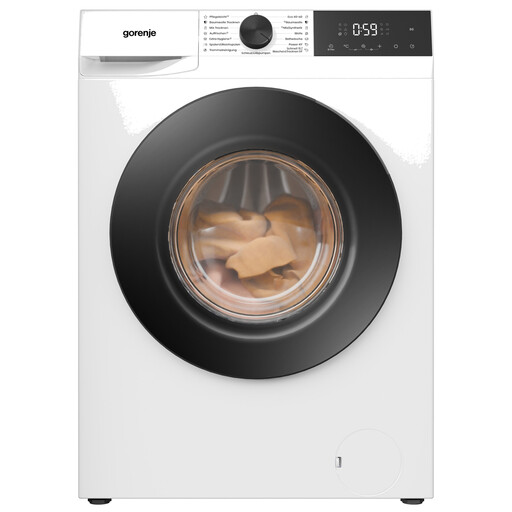
For households looking to combine washing and drying in one unit; the product name states that it includes a heat-pump tumble dryer.
12 kg washing capacity and 10 kg drying capacity; the product name lists AI DD, TurboWash 360°, the ThinQ Smart App and 1.350 rpm.
 No image available
For anyone who wants to wash and dry clothes in one appliance without moving them between machines.
11 kg washing capacity and up to 7 kg drying capacity. The stated wash-and-dry programme duration is 465 minutes. The product also features 15 programmes, temperature selection and an adjustable drying time.
 No image available
For households looking for a wash-and-dry cycle with separate washing and drying capacities.
The product name lists Dual Inverter heat-pump technology, AI DD, TurboWash 360°, a Steam function and the ThinQ app.
 No image available
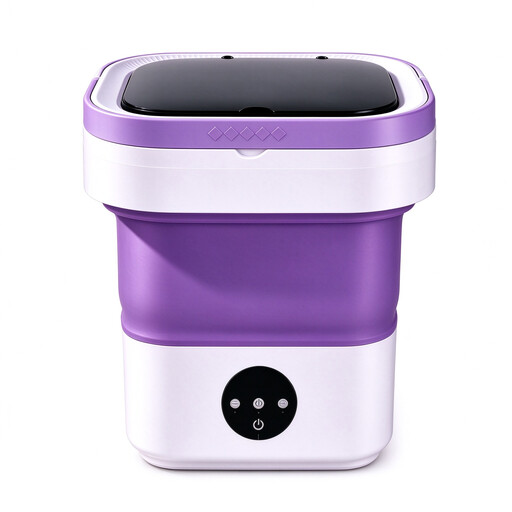
For small loads while travelling, when you need a portable appliance rather than a full-size household washing machine.
Described as a foldable 12 L appliance with washing, drying and sterilising functions; the product description states that it holds up to 1.5 kg of laundry.
 No image available
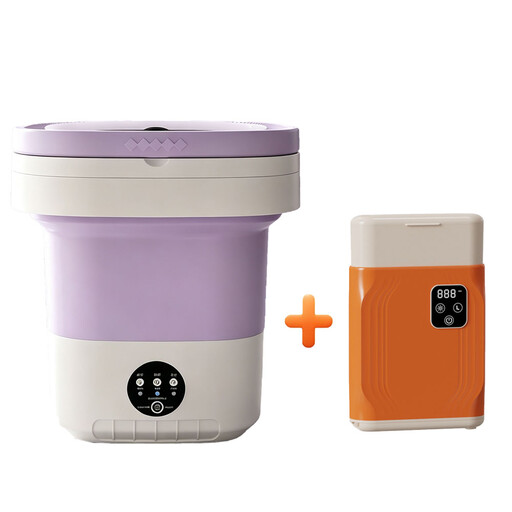
For small loads while travelling or camping; described as a foldable mini washing machine.
The product description lists three washing modes, as well as spin and clothes-drying functions.
No. LG states that TurboWash takes 39 minutes with a half load. When you’re packing, what matters is the length of the wash-and-dry cycle you’ve selected.
No, you can’t tell from the material name alone. The tumble-drying symbol on the label for that particular pair shows whether they can be tumble-dried and at what temperature. The number inside the wash tub indicates the maximum recommended washing temperature.
Measure the space and the route for delivery, and check the connections and instructions for the specific appliance. If you live in rented accommodation, the Verbraucherzentrale recommends checking the installation with your landlord and making sure you’re protected against water damage. Leaving a damp washing machine closed can lead to unpleasant smells.
For washer-dryers, the EU label distinguishes between the wash cycle and the full wash-and-dry cycle. The European Commission lists energy consumption per 100 cycles and water consumption per cycle among the information shown on the label. Products covered by the rules must also display the label when sold online.
No. Statutory consumer rights generally apply against the seller, while any additional manufacturer’s guarantee is subject to its own terms. For Germany, the Verbraucherzentrale explains that since 31 July 2026, the warranty period may be extended from two to three years if, when a fault occurs within the first two years, you choose a repair rather than a replacement.