Which type suits whom

Households with regular T-shirt loads

Choose a drum size that suits your usual laundry loads, then check the selected programme’s maximum load against the care labels on your cotton T-shirts. The German Environment Agency recommends choosing a drum size that matches your household’s laundry needs.

Buyers with a narrow utility room

If width is limited, the dimensions and loading access of a top-loader may make it a good option. The North Rhine-Westphalia Consumer Advice Centre recommends checking the type of machine and the space it needs at the intended location.

Buyers keeping an eye on running costs

When comparing energy and water use, make sure you’re using the same programme basis, and consider delivery, installation and any repair services separately. The German Environment Agency notes that quick programmes don’t automatically save energy.

What to look for when buying

Front-loader

A good fit if: There’s enough width and depth, with sufficient space in front of the door.

Bear in mind: The door needs room to swing open. A higher stated capacity is of little benefit if your usual loads are much smaller.

Top-loader

A good fit if: There isn’t enough width for a front-loader and there’s room above the machine to open the lid.

Bear in mind: The model examples listed here each have a stated capacity of 6 kg. Check that this suits your usual loads.

What matters when buying What to check Who it matters to
Load size and care labels Your usual laundry load and the programme’s maximum load; care labels and suitable cotton or Eco 40–60 programmes. I want to match my usual loads to the care labels on my cotton T-shirts; around 36% of consumers put a suitable load size and fabric care first.
Space and access The dimensions of the specific model, the space needed for the door or lid to open, and access to the connections. If my utility room is narrow, I need a machine that’s easy to load there; around 29% of consumers prioritise space and access.
Consumption and spin performance kWh per 100 Eco 40–60 cycles, water consumption and spin performance figures on a comparable basis. I want to compare running costs on a consistent basis; around 21% of consumers put consumption first.
Installation and ongoing costs Check the connections and drain, the model’s specific water protection features, and what’s included in delivery, installation and old-appliance collection. If I’m arranging delivery or installation, I want to know exactly which services are included; around 14% of consumers prioritise installation and ongoing costs.

Common buying mistakes

  • Choosing the largest drum based on capacity alone

    A larger capacity won’t necessarily suit you if your usual loads are much smaller. The German Environment Agency recommends choosing a drum size based on your actual laundry needs.

    Think about your most frequent and largest loads, then check the maximum load for the programmes you’re considering.

  • Assuming a quick programme is an energy-saving programme

    A shorter cycle doesn’t automatically use less energy. EU energy label figures are based on the specified Eco 40–60 programme, not every cotton programme.

    Compare label figures on the same basis, and choose a programme that suits the care label and how soiled the clothes are.

  • Measuring only the width of the space

    A front-loader needs room in front of the door, while a top-loader needs clearance above the lid. The space available alone won’t tell you whether you can load the machine easily in its intended position.

    Check the dimensions of the specific model, including the space needed for the door or lid to open, as well as access along the delivery route.

Brands and specific model examples

Bosch

According to Bosch Hausgeräte DE, the Bosch WGG244140 is a front-loader with a stated capacity of 9 kg and a maximum spin speed of 1400 U/min.

  • Its capacity may suit households with regular larger loads.
  • If the load is unbalanced, the machine may automatically reduce the spin speed.

Bauknecht

According to Bauknecht DE, the top-loader DTL 6B BK W FF has a stated capacity of 6 kg.

  • A top-loader may be an option if width is limited.
  • Check that the lid can open fully in its intended position.

AEG

According to AEG DE, the LTR5N30260 is a top-loader with a stated capacity of 6 kg and a time-saving option.

  • This option may appeal to buyers looking for shorter cycle times.
  • A shorter cycle time doesn’t prove that the machine uses less energy.

Miele

According to Miele DE, the WSA123 WCS 8kg Active is a front-loader with an 8 kg capacity and a maximum spin speed of 1400 U/min.

  • CapDosing and AddLoad are listed for this model.
  • Whether these features suit your usual T-shirt laundry depends on how you use the machine.

Beko

According to Beko DE, the freestanding front-loader BM3WFU4841W has a stated capacity of 8 kg and a maximum spin speed of 1400 U/min.

  • This model gives you another capacity to compare with your usual loads.
  • Check the full model name, including its suffix.

Joybuy products for cotton laundry

The following Joybuy products are front-loaders. Compare their capacity and listed programmes with your usual loads and the care labels on your T-shirts.
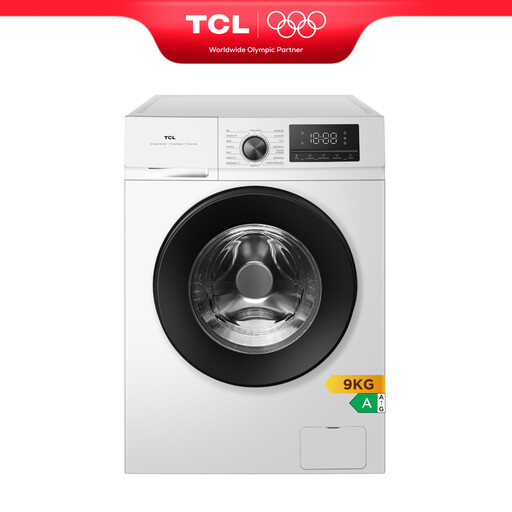
TCL washing machine FF0109WA2AMDE

TCL washing machine FF0109WA2AMDE, 9 kg

May suit you if your usual loads are a good match for its stated capacity of 9 kg.

9 kg; 1400 U/min; steam wash; 15-minute quick programme; energy efficiency class A.

View at Joybuy
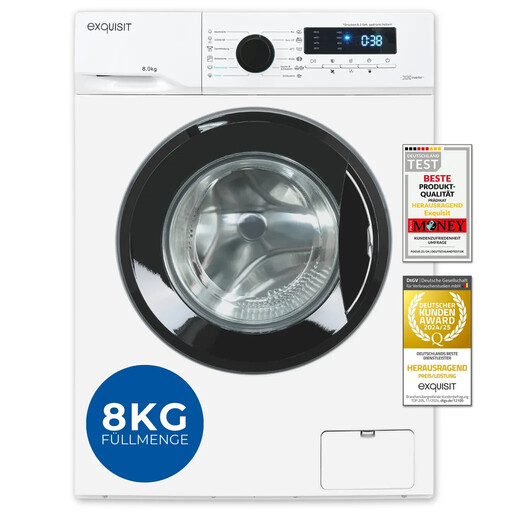
Exquisit washing machine WA58014-020A, white, 8 kg

Exquisit washing machine WA58014-020A, white, 8 kg

An option if 8 kg suits your usual loads and you’re looking for a freestanding front-loader.

8 kg; maximum 1400 U/min; energy efficiency class A; 13 programmes; delayed start.

View at Joybuy

LG F4WR5035 front-loader, 13 kg

LG F4WR5035 front-loader, 13 kg

Consider its stated capacity of 13 kg only if it suits the loads you regularly wash.

13 kg; 1.360 U/min; energy rating A-20%.

View at Joybuy
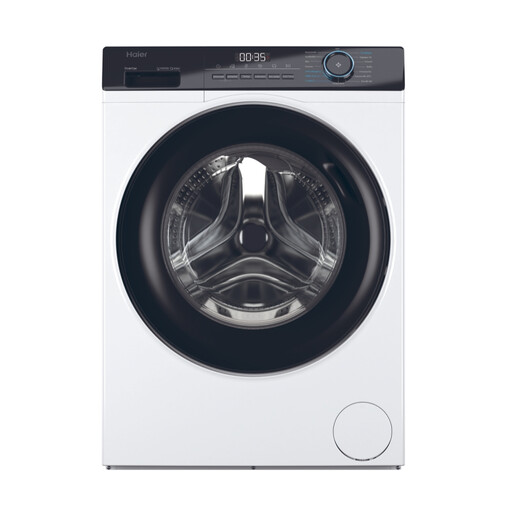
Haier I-PRO SERIES 3 washing machine, 9 kg

Haier I-PRO SERIES 3 washing machine, 9 kg

This freestanding front-loader may suit you if its stated capacity matches your usual loads.

9 kg; maximum 1400 U/min; energy efficiency class A.

View at Joybuy
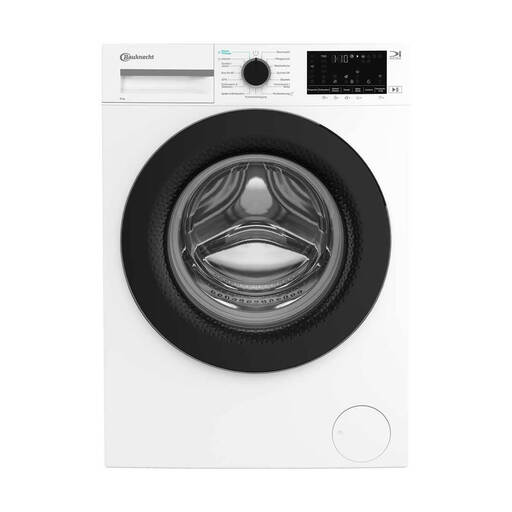
Bauknecht BW 8A10 BS washing machine, 8 kg

Bauknecht BW 8A10 BS washing machine, 8 kg

An option if 8 kg suits your loads and you’re looking for a freestanding front-loader.

8 kg; 1400 U/min; energy efficiency class A; Steam Therapy; Adaptive Wash.

View at Joybuy

Frequently asked questions

Can every cotton T-shirt be washed on the Eco 40–60 programme?

No, not simply because it’s made of cotton. According to the European Commission, this programme is intended for normally soiled cotton garments that are labelled as washable at 40 °C or 60 °C. Check the label on each T-shirt: the number in the wash symbol indicates the maximum recommended washing temperature.

What can I do if my washing machine smells unpleasant?

The Consumer Advice Centre recommends taking damp laundry out promptly, drying the seal and detergent drawer, leaving the door and drawer open to dry, and cleaning the lint filter as instructed. An occasional 60 °C white wash with powder detergent for whites is only suitable if the items being washed can be treated that way.

Which costs and rights should I consider separately when buying online?

Check which delivery, installation and old-appliance collection services are included in the specific offer. If a product is faulty, distinguish your statutory consumer rights against the seller from any additional manufacturer’s guarantee, which may be subject to conditions.

Do online retailers in Germany have to take back old electrical appliances?

Yes, online retailers are also subject to take-back obligations. According to the German Federal Environment Ministry, collection points must be available within a reasonable distance. Free collection from home for certain old appliances is subject to the agreement mentioned in the Ministry’s FAQ being made when the purchase contract is concluded. Check the return arrangements when you place your order.

How do I compare the energy labels on washing machines?

Compare figures on the same programme basis: the stated consumption relates to Eco 40–60, not every programme. According to the European Commission, EU energy labelling and ecodesign requirements apply to household washing machines covered by the rules. The energy label in use since March 2021 runs from A to G.